Egypt
 Libya
 Morocco
 Sudan
 Tunisia
 Benin
 Burkina Faso
 Cabo Verde
 Côte d'Ivoire
 Ghana
 Guinea
 Guinea-Bissau
 Liberia
 Mali
 Mauritania
 Niger
 Nigeria
 Senegal
 Sierra Leone
 The Gambia
 Togo
 Cameroon
 Central African Republic
 Chad
 DR Congo
 Equatorial Guinea
 Gabon
 Republic of the Congo
 São Tomé and Príncipe
 Burundi
 Comoros
 Djibouti
 Eritrea
 Ethiopia
 Kenya
 Madagascar
 Malawi
 Mauritius
 Mozambique
 Rwanda
 Seychelles
 Somalia
 South Sudan
 Tanzania
 Uganda
 Angola
 Botswana
 Eswatini
 Lesotho
 Namibia
 South Africa
 Zambia
 Zimbabwe
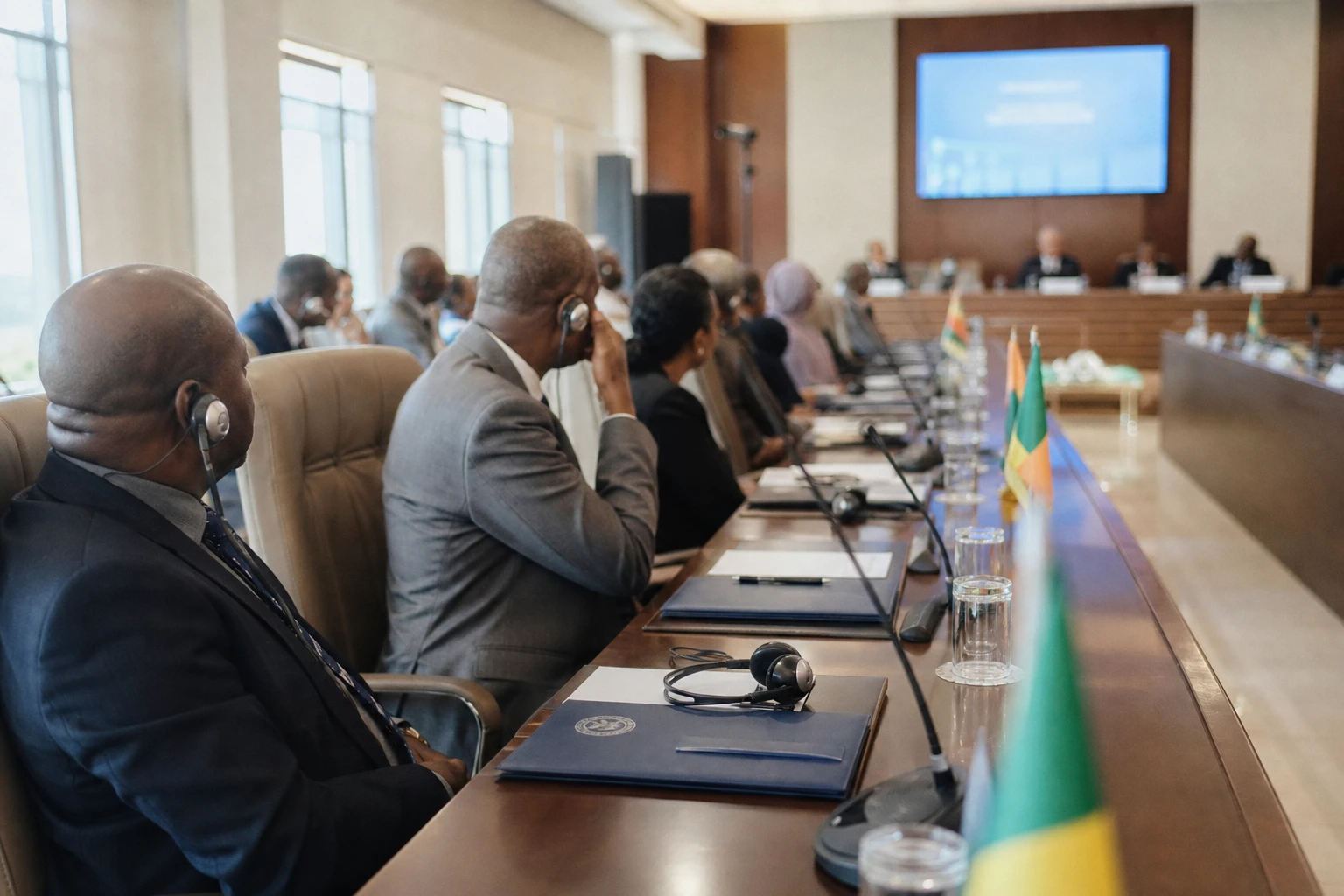
Training minds before deploying machines
In Algeria, artificial intelligence is no longer just a matter of software. It is becoming an issue of training, administration and sovereignty. Behind this shift lies a simple idea: a country that wants to use AI on a large scale must first develop its own expertise.
This approach is part of a broader programme of public-sector modernisation under way in Algiers, where the authorities want to connect universities, digital technology and public services. The aim is not limited to creating tools. It also involves building a national ecosystem capable of designing, adapting and controlling them.
A national strategy taking shape around Algiers
On 25 May 2026, the Algerian government examined the draft national artificial intelligence strategy. The plan is based on three clearly identified pillars: data, digital infrastructure and human skills. At the same time, the executive also considered the rollout of the national digital services portal, “Dzair digital services”, designed to make administrative procedures easier to access.
A few weeks earlier, in April 2026, the Ministry of Vocational Training and Education had launched a national artificial intelligence training programme in El Rahmania, in the suburbs of Algiers. Here, too, the message is clear: AI policy is not confined to the highest levels of government. It is reaching training centres, universities and public services.
In Sidi Abdellah, the “Chahid Abdelhafid Ihaddaden” science and technology hub serves as a showcase for this ambition. It brings together several national schools, including the National Higher School of Artificial Intelligence, ENSIA, which has become one of the programme’s symbols. The site also hosts initiatives linked to startups, applied research and practical uses of AI in higher education.
Figures, schools and a target of 30,000 specialists
Algeria’s roadmap is based first and foremost on training. The Ministry of Higher Education has set a target of training 30,000 artificial intelligence specialists by 2030. This goal gives a sense of the challenge. The aim is not simply to graduate a handful of experts, but to create a critical mass of people able to support the state, universities, businesses and startups.
ENSIA plays a leading role in this model. The school trains state-certified engineers in AI and data science. It is part of a larger hub designed to bring scientific disciplines closer to economic needs. This link between science and entrepreneurship is no minor detail. It reflects the ambition to make universities places where value is created, rather than mere centres for awarding qualifications.
The expansion also relies on larger-scale programmes. The national “7.77” digital empowerment scheme had already attracted 64,508 registered participants by the end of May 2026, including 15,221 in Algiers province. The programme targets broad sections of the public, extending beyond the university community. This is significant. Algeria is not betting solely on a technological elite. It is also seeking to spread digital skills among the population.
Another indicator: the 2026-2027 academic year is expected to incorporate more AI tools into student programmes. The authorities have announced personalised support, as well as a language model developed for Algerian universities. This kind of tool could help teachers create educational activities and assess some assignments. It also raises a sensitive question: how can academic standards be maintained while using digital assistants in higher education?
Digital sovereignty as a political priority
Algeria’s official discourse stresses one point: AI must be based on sovereign, open-source solutions adapted to national data. This approach is not simply a technical preference. It is a question of control. At a time when public data and administrative services are becoming strategically important, full dependence on foreign solutions carries risks related to security, cost and dependency.
This choice aligns with other initiatives under way in the country. Algeria has also made progress on information systems security, the digitisation of services and the networking of higher education institutions with the needs of the knowledge economy. The message is consistent: the state wants to build a more autonomous, integrated digital architecture that is easier for users to navigate.
But success will depend on implementation. Training 30,000 specialists in fewer than five years will require teachers, platforms, equipment, high-quality data and career opportunities. Without these links, the strategy risks producing graduates without an ecosystem capable of absorbing them. The challenge is therefore also industrial and budgetary. It affects public procurement, startups, research centres and the ability of government departments to adopt these tools in practice.
An Algerian path with implications beyond its borders
Across Africa, Algeria’s experience illustrates a broader trend. More and more states on the continent are now linking digital technology, skills and sovereignty. Algeria is moving forward with its own instruments, but it raises a question shared by many African countries: how can they prevent artificial intelligence from reinforcing a new technological dependency, rather than supporting local production?
The regional context adds weight to this approach. In North Africa, competition is already centred on infrastructure, talent and the ability to keep data on the continent. For Algiers, the challenge is also to establish itself as a hub of influence between the Maghreb, the Sahel and the Mediterranean region. Projects involving corridors, digital services and applied research all point in the same direction: connecting knowledge, mobility and economic integration.
The next stage will be as political as it is technical. Attention will turn to the final adoption of the national strategy, the budgetary resources allocated to it and the pace of its rollout in universities, ministries and vocational training. In practice, that is where it will become clear whether Algeria is turning artificial intelligence into a tool for national development or merely a showcase for modernisation.