
 Algeria
 Egypt
 Libya
 Sudan
 Tunisia
 Benin
 Burkina Faso
 Cabo Verde
 Côte d'Ivoire
 Ghana
 Guinea
 Guinea-Bissau
 Liberia
 Mali
 Mauritania
 Niger
 Nigeria
 Senegal
 Sierra Leone
 The Gambia
 Togo
 Cameroon
 Central African Republic
 Chad
 DR Congo
 Equatorial Guinea
 Gabon
 Republic of the Congo
 São Tomé and Príncipe
 Burundi
 Comoros
 Djibouti
 Eritrea
 Ethiopia
 Kenya
 Madagascar
 Malawi
 Mauritius
 Mozambique
 Rwanda
 Seychelles
 Somalia
 South Sudan
 Tanzania
 Uganda
 Angola
 Botswana
 Eswatini
 Lesotho
 Namibia
 South Africa
 Zambia
 Zimbabwe
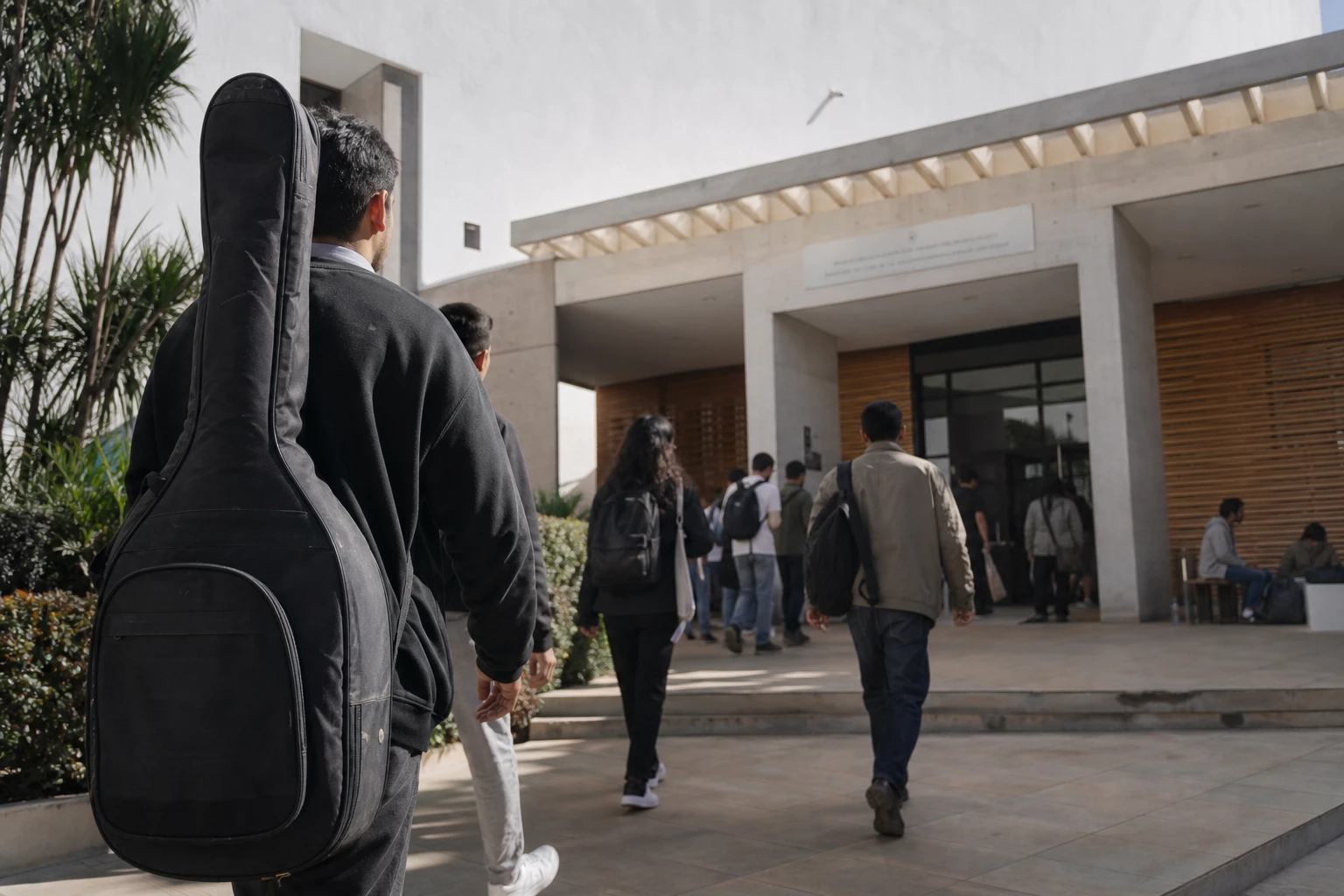
When an ancient instrument still tells the story of Morocco today
In the hands of Moroccan musicians, some instruments do more than make music. They carry a memory, a technique and a way of thinking about music. The oud Ramal belongs to this rare group. Long overlooked, it is now returning to the heritage sphere as a sign of continuity, at a time when Morocco is also stepping up efforts to safeguard its living arts. The question goes beyond instrument-making: it touches on transmission, education, workshops and the place of Andalusian repertoires in contemporary cultural life.
Morocco is part of a broader musical space shaped by exchanges between the Maghreb, historical Andalusia and the Near East. Cities such as Tétouan, Fez and Oujda have preserved schools and repertoires that testify to this longstanding back-and-forth between local heritage and Mediterranean influences. In Rabat, Morocco’s capital, recent heritage policies also show growing interest in cultural practices passed down by communities themselves, whether music, crafts or associated skills.
A Moroccan lute older than its disappearance
The oud Ramal is not a recent invention. Research and archival records indicate that it is mentioned in manuscripts dating from the late 17th century, during the reign of Sultan Moulay Ismaïl, and that it remained part of scholarly traditions until the 1932 Cairo Congress of Arab Music. Held in Cairo under the patronage of royal Egypt, the congress played a major role in documenting the music of the Maghreb, including that of Morocco.
This lute differs from the eastern oud in its structure. Specialist sources describe an instrument with four pairs of strings, while the eastern oud later spread in other, more expansive configurations. The oud Ramal also has a distinctive playing style, with the outer strings played open and the central strings requiring a more specific hand position. This construction is more than a technical detail. It shapes the repertoire, fingering and ear.
Its gradual disappearance can be explained by a shift in musical taste during the 20th century. The rise of great Arab singers, the spread of the eastern oud and the imitation of models from the Mashriq changed the habits of Moroccan orchestras. Gradually, luthiers in the kingdom began making instruments that conformed to these new standards. The oud Ramal then lost its place in ensembles and was passed on only by a handful of enthusiasts. This rupture illustrates a common phenomenon in musical heritage: when an instrument leaves the stage and the classroom, it quickly disappears from collective memory.
The patient work of musicians, luthiers and researchers
Since the 1990s, several musicians and craftspeople have set out to reconstruct it from old models, some preserved in museums in Morocco and abroad. The use of heritage collections is essential here. Without reference pieces, manuscripts or surviving instruments, reconstruction would have been impossible. This work calls for musicology, instrument-making and a keen ear for historical practices. It also shows that safeguarding an instrument is never the work of a single artist, but of a network of knowledge.
Morocco is not alone in this trend. For several years, the country has pursued a heritage policy covering popular arts, ritual music and scholarly repertoires. UNESCO’s inscription of malhoun in 2023 was a reminder that traditional instruments remain at the heart of these forms of expression. From the Andalusian nouba to popular songs, the question is therefore not simply how to preserve an object, but how to maintain a whole ecosystem: repertoires, gestures, materials and places of practice.
From this perspective, the oud Ramal is not of interest only to specialists. It also matters to music schools, cultural associations, craftspeople and the Moroccan diaspora in Europe, where many young people are discovering these repertoires through social media, concerts and workshops. The stakes are tangible: without instruments to play or teachers to pass on their knowledge, heritage becomes decorative. With them, it comes alive again.
An instrument of culture, but also of symbolic healing
The oud Ramal also carries a broader significance, linked to the intellectual history of the medieval Muslim world. Sources recall that it was sometimes associated with the four elements and the four humours of Hippocratic medicine, a sign of an old dialogue between music, philosophy and medicine. At the Sidi Frej maristan in Fez, Andalusian music sessions were still held for patients suffering from mental disorders, as a way of easing their condition through sound. This practice is no folkloric legend: it forms part of the documented history of care institutions in Morocco.
This is where the oud Ramal takes on a wider symbolic significance. It connects Morocco to a scholarly, urban and Mediterranean history, far removed from caricatures that often reduce the continent to its most pressing crises. It also recalls that the country’s cultural capitals, from Fez to Tétouan, were long places of exchange where music served as art, a means of transmission and, at times, a form of social mediation. In this respect, preserving this instrument is part of a broader African debate: how to protect demanding cultural forms without freezing them or turning them into folklore.
The continental significance is clear. At a time when the African Union and UNESCO are emphasising the safeguarding of intangible heritage, the case of the oud Ramal offers a useful approach for many other African countries: document, compare, teach and pass on knowledge before the break becomes irreversible. The issue is not only Moroccan. It concerns all the continent’s societies seeking to keep their arts alive without severing them from their social uses, languages and territories.



