Algeria
 Egypt
 Libya
 Morocco
 Sudan
 Tunisia
 Benin
 Burkina Faso
 Cabo Verde
 Côte d'Ivoire
 Ghana
 Guinea
 Guinea-Bissau
 Liberia
 Mali
 Mauritania
 Niger
 Nigeria
 Senegal
 Sierra Leone
 The Gambia
 Togo
 Cameroon
 Central African Republic
 Chad
 DR Congo
 Equatorial Guinea
 Gabon
 Republic of the Congo
 São Tomé and Príncipe
 Burundi
 Comoros
 Djibouti
 Eritrea
 Ethiopia
 Kenya
 Madagascar
 Malawi
 Mauritius
 Rwanda
 Seychelles
 Somalia
 South Sudan
 Tanzania
 Uganda
 Angola
 Botswana
 Eswatini
 Lesotho
 Namibia
 South Africa
 Zambia
 Zimbabwe
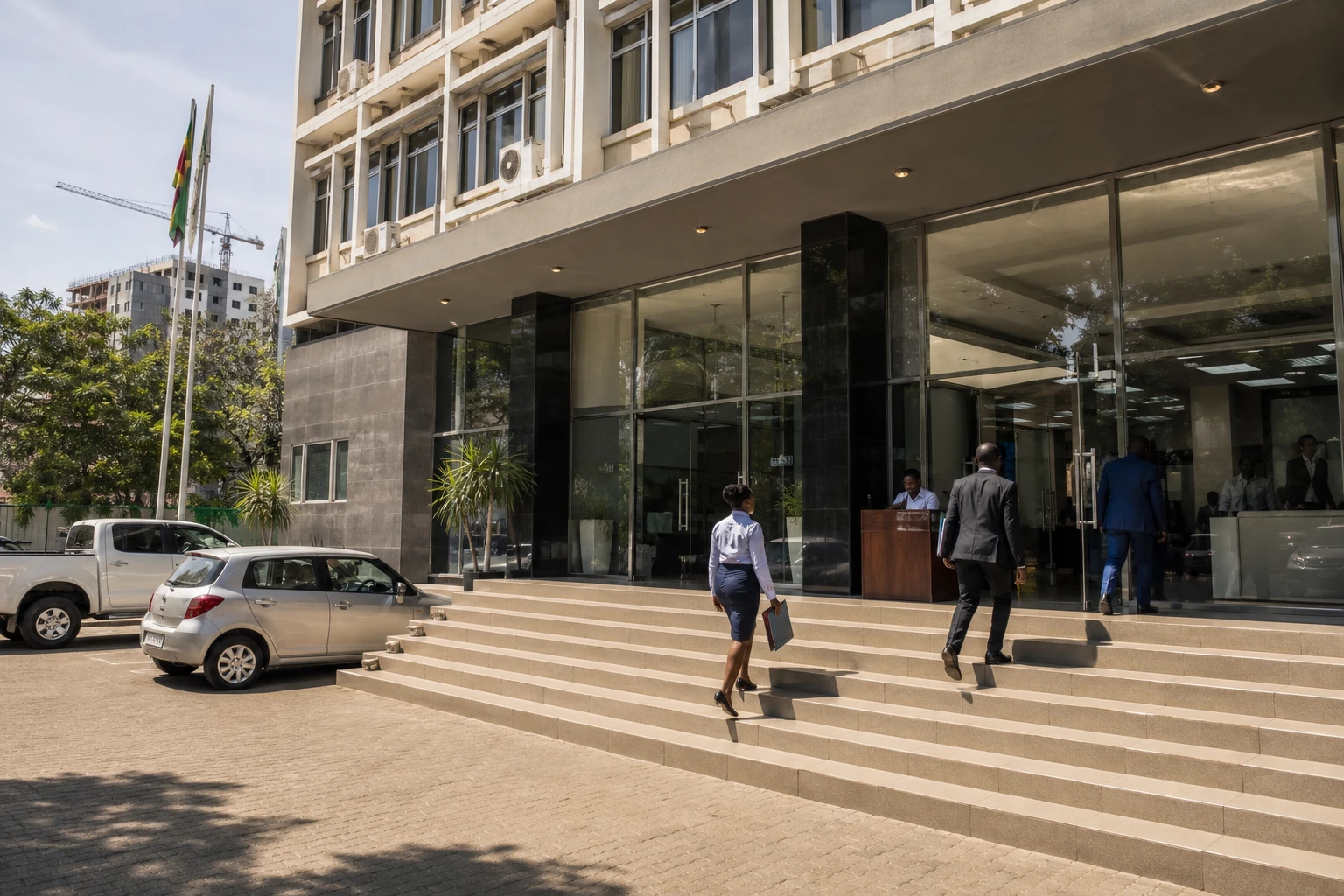
A project whose reach extends beyond Tete province
In Mozambique, electricity is not just an infrastructure issue. It is also a test of economic sovereignty. When a country wants to power its cities, factories and neighbours, any delay to a major power station has consequences far beyond the dam itself. The Mphanda Nkuwa project, planned for the Zambezi, is a case in point. It is located about 61 kilometres downstream from Cahora Bassa, in Tete province, and is intended to become a new source of power for the national grid.
The national context has nevertheless changed. Mozambique has made significant progress in access to energy, with a rate of 61% reported in 2024 by Electricidade de Moçambique, following 412,363 new connections that year. This progress is important, but it is not enough to meet the needs of a vast country with uneven access to electricity, which remains heavily reliant on grid extensions and off-grid solutions.
The regional stakes are clear. Mozambique is a member of the Southern African Development Community (SADC) and the Southern African Power Pool, the interconnected electricity market of southern Africa. Demand in the region exceeds supply. The World Bank Group has cited a 10,000-megawatt shortfall in the region, while the SAPP regularly reports strains on the balance between installed capacity and peak demand.
Timetable slips, costs rise, expectations remain high
The project’s new timetable pushes first power generation back to 2034. According to information released by the authorities, studies and preparations are expected to be completed in 2028, construction to begin in 2029, and the power station to enter service in 2034. The delay comes with a budget now put at between $6 billion and $7 billion. Earlier plans had envisaged a start-up sooner, around 2031 or 2032, with a lower budget.
The Mozambican government has not publicly detailed the reasons for the delay. However, several signs help explain the slow progress of a project of this scale. On 8 July 2025, the Council of Ministers authorised Electricidade de Moçambique and Hidroeléctrica de Cahora Bassa to each subscribe to up to 15% of the project company’s shares, showing that the capital structure was still being put together at that point. The project was therefore still in the political, financial and technical assembly phase.
Financing remains the sticking point. In February 2026, the African Development Bank said it was working with Maputo on the guarantees needed to bring the project to financial close. In late July 2026, the project implementation office was still reporting a preparation mission with the AfDB on the transmission line and partial risk guarantee. Put simply, the aim is to reassure banks and private investors before major construction work begins.
The development consortium brings together powerful players. EDF, TotalEnergies and Hidroeléctrica de Cahora Bassa were selected in May 2024, while EDM and HCB can each take a stake of up to 15%. The arrangement reflects a model increasingly common in major African projects: the state retains control, but seeks partners able to shoulder the initial risk, particularly when costs run to several billion dollars.
What Mphanda Nkuwa could change, if the project delivers
On paper, Mphanda Nkuwa is to generate 1,500 megawatts, enough to strengthen electricity supply in the south of the country and support industrialisation. The project also includes a transmission line of about 1,300 kilometres to carry electricity to major urban centres, including Maputo, and to neighbouring countries. This is central to the plan: without a robust transmission network, a power station on its own cannot transform the national economy.
The authorities are highlighting significant macroeconomic benefits. They estimate total public revenue of about $14 billion over the project’s lifetime, through taxes, royalties and dividends. They also forecast 6,000 to 7,000 direct jobs during construction, followed by 3,000 permanent positions once the power station is operational, 95% of them for Mozambicans. These figures remain projections, but they indicate the scale of the political expectations surrounding the project.
The impact will not be the same for everyone. For the state, the project is expected to boost revenue and export capacity. For urban households, it could ease pressure on the grid, provided the transmission lines keep pace. In rural areas, the effect will be more indirect, since large dams cannot replace mini-grids, local connections and investment in communities. Civil society groups have also pointed out that major projects alone are not enough to address inequalities in access to electricity.
The regional dimension is also decisive. If Mphanda Nkuwa enters service as planned, Mozambique will be able to strengthen its position as an electricity supplier in southern Africa, where demand remains under pressure. This matters to SADC, the SAPP and regional industries seeking more stable, lower-cost energy. It also matters to the African Union, because it shows how a national project can become a lever for regional integration when networks, guarantees and market rules finally move in step.