Algeria
 Egypt
 Libya
 Morocco
 Sudan
 Tunisia
 Benin
 Burkina Faso
 Cabo Verde
 Côte d'Ivoire
 Ghana
 Guinea
 Guinea-Bissau
 Liberia
 Mali
 Mauritania
 Niger
 Nigeria
 Senegal
 Sierra Leone
 The Gambia
 Togo
 Cameroon
 Central African Republic
 Chad
 Equatorial Guinea
 Gabon
 Republic of the Congo
 São Tomé and Príncipe
 Burundi
 Comoros
 Djibouti
 Eritrea
 Ethiopia
 Kenya
 Madagascar
 Malawi
 Mauritius
 Mozambique
 Rwanda
 Seychelles
 Somalia
 South Sudan
 Tanzania
 Uganda
 Angola
 Botswana
 Eswatini
 Lesotho
 Namibia
 South Africa
 Zambia
 Zimbabwe
Deals are in place; now they must be turned into orders
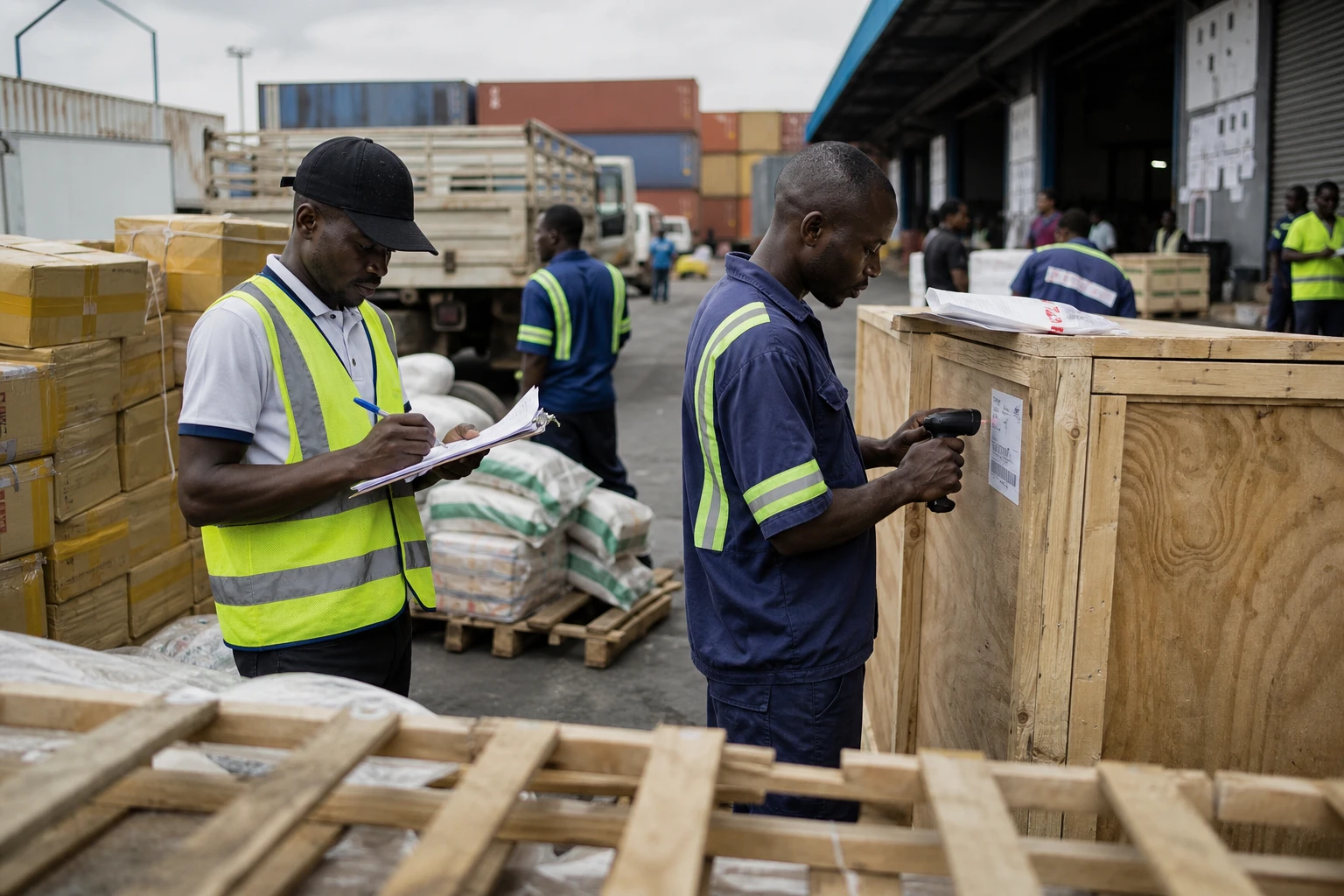
In Kinshasa, the challenge is no longer just to sign trade deals. They now need to be converted into contracts, shipped volumes and income for Congolese producers. With this in mind, the Congolese authorities have set up a monitoring body to help agricultural and processed goods from the country reach markets that are already accessible.
The Democratic Republic of the Congo has been seeking for several years to reduce its heavy reliance on unprocessed minerals. Yet the country remains a mining giant. In 2024, refined copper and cobalt still accounted for a very large share of its external sales, while China remained a major market. International data also confirm the global importance of Congolese copper and cobalt.
A task force to hold the export chain together
A technical meeting held in Kinshasa on Tuesday 4 August resulted in the creation of a task force tasked with accelerating exports of « Made in DRC » products. The idea is simple: bring together the ministries of Agriculture, Rural Development, Industry, Foreign Trade and the Environment, as well as the Congolese Control Office, to remove certification and compliance bottlenecks. This approach addresses a very practical problem: a product may be available locally but remain stuck for lack of documents, traceability or suitable standards.
This approach is not new, but it is becoming more urgent as trade opportunities multiply. The UK market offers Congolese exporters favourable tariff terms under the British DCTS, which provides for 0% duties on 99.8% of products from the DRC. As for the United Arab Emirates, Kinshasa says an agreement opens access to nearly 6,000 Congolese products. And with China, the Ministry of Foreign Trade has spoken since 2025 of a desire to make duty-free exports possible for certain supply chains.
In practice, this requires a more effective state. The OCC must inspect quality. ANAPEX must prepare supply chains. Technical administrations must harmonise their requirements. Without this coordination, opportunities remain theoretical. With it, producers of cocoa, coffee, palm oil, soya, sesame, rubber or timber can hope to access markets that demand evidence, not just promises.
The real test is traceability, not rhetoric
The most sensitive front is now in Europe. The EU regulation on deforestation, which will apply to large and medium-sized companies from 30 December 2026 and to micro and small enterprises from 30 June 2027, requires proof that a product is not linked to recent deforestation. For the Congolese supply chains concerned, this means geolocating plots, collecting reliable data and being able to prove the legal origin of goods.
The stakes go beyond compliance alone. They directly affect small producers, who are often organised in rural areas where land documentation remains fragile and access to digital technology uneven. They also affect urban exporters, who must finance audits, tracking systems and certification intermediaries. In Kinshasa, the issue is strategic. In villages, it could determine whether a harvest enters a formal export chain.
ANAPEX is therefore pushing for stronger traceability, particularly in the cocoa, coffee, palm oil, rubber, soya, sesame and timber supply chains. This direction aligns with the national export promotion and diversification strategy, already built around moving supply chains upmarket, meeting sanitary and phytosanitary requirements, and improving logistics. In other words, Congolese competitiveness is now determined not only in fields or workshops, but also in registers, certificates and control systems.
Diversification remains unfinished, but is now better defined
The economic significance of this initiative is clear. As long as exports remain dominated by copper and cobalt, the DRC remains exposed to international price shocks and decisions made beyond its borders. By contrast, better use of agricultural and forest products could create more local jobs, retain a greater share of added value and support Congolese small and medium-sized enterprises beyond the extractive sector alone.
The Congolese government is also making progress in other regional frameworks. The country has stepped up its work on the African Continental Free Trade Area, which is intended to facilitate intra-African trade if quality, origin and transit rules are properly managed. Under this framework, the DRC is no longer speaking only to the European Union, China or the Gulf. It is also seeking to improve its position in African trade, where the speed of formalities matters as much as production itself.
The policy framework therefore sends a signal, but it will need to be followed by implementation. The next steps are concrete: OCC certification capacity, geolocation of agricultural areas, coordination with exporters, and preparation of supply chains for the 2026 and 2027 European deadlines. If this mechanism works, Kinshasa could begin turning its agreements into real market share. Otherwise, the opportunities will remain mere announcements.