Algeria
 Egypt
 Libya
 Morocco
 Sudan
 Tunisia
 Benin
 Burkina Faso
 Cabo Verde
 Côte d'Ivoire
 Ghana
 Guinea
 Guinea-Bissau
 Liberia
 Mali
 Mauritania
 Niger
 Nigeria
 Senegal
 Sierra Leone
 The Gambia
 Togo
 Cameroon
 Central African Republic
 Chad
 Equatorial Guinea
 Gabon
 Republic of the Congo
 São Tomé and Príncipe
 Burundi
 Comoros
 Djibouti
 Eritrea
 Ethiopia
 Kenya
 Madagascar
 Malawi
 Mauritius
 Mozambique
 Rwanda
 Seychelles
 Somalia
 South Sudan
 Tanzania
 Uganda
 Angola
 Botswana
 Eswatini
 Lesotho
 Namibia
 South Africa
 Zambia
 Zimbabwe
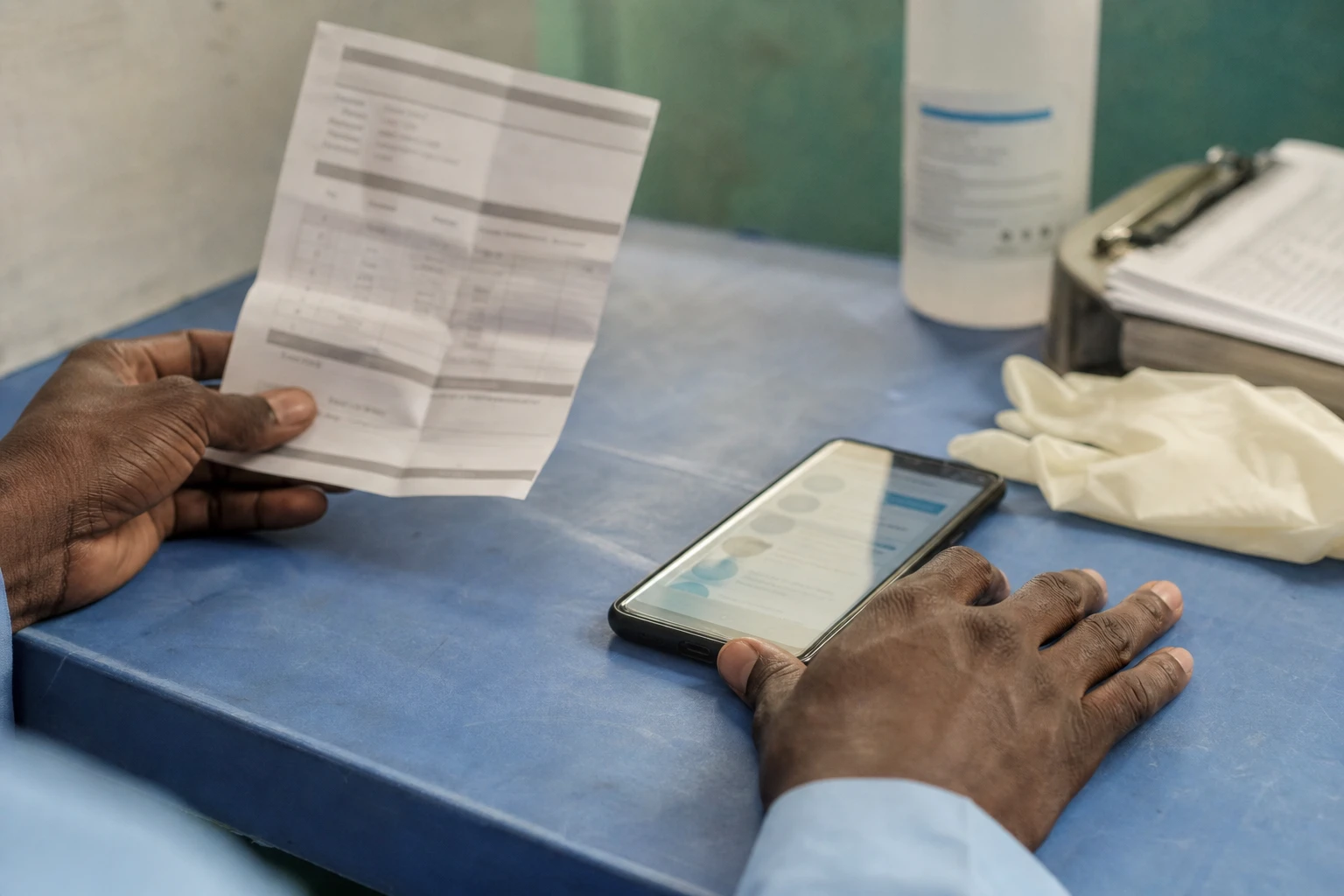
When the response depends on those holding the line
On the ground, an Ebola outbreak is not fought with vaccines, laboratories and press releases alone. It also plays out in treatment centres, contact-tracing neighbourhoods and the teams disinfecting homes, often at real cost to their health and safety. In the Democratic Republic of the Congo, this less visible front remains one of the most exposed, but also one of the least protected.
The DRC has a long history of responding to Ebola. The outbreak that began in August 2018 in North Kivu and Ituri became the deadliest in the country, with 3,470 cases and 2,287 deaths recorded by the WHO when it ended in June 2020. It unfolded amid armed violence, community mistrust and cross-border movement with East Africa, complicating the work of health teams.
Delayed salaries, disputed bonuses
In this context, several Congolese workers involved in the response have denounced payment delays and working conditions they consider too risky. Congolese media have previously reported strikes during earlier response efforts, with workers demanding bonuses and several months of back pay, notably in Butembo and other health zones in North Kivu. In 2026, Radio Okapi and other media again documented similar demands in Ituri, showing that the problem is not an isolated episode.
The heart of the grievance is simple: frontline workers say they are in direct contact with suspected or confirmed patients while receiving incomplete bonuses, sometimes paid late and sometimes disputed over the amount. The gap between official announcements and the reality experienced by teams is fuelling anger. In an Ebola response, this divide has an immediate cost: fewer volunteers, fewer field investigators and less trust in the surveillance chain.
What families and neighbourhoods see
For residents, the issue is not just a pay dispute. When teams slow down or stop work, disinfection is delayed, safe burials are postponed and transmission chains become harder to break. At neighbourhood level, that means more anxiety, more rumours and sometimes greater mistrust of health authorities. In eastern DRC, where public services are already fragile, the effects of a strike quickly ripple through the informal economy, travel and market activity.
Health workers describe a frontline where they can be exposed to blood and bodily fluids, as well as attacks by communities angered by fear or misinformation. The WHO says the Ebola response rests on several practical pillars: surveillance, diagnosis, infection prevention and control, community engagement, clinical care and safe burials. If one of these pillars weakens, the entire structure becomes more fragile.
The problem is also institutional. In the DRC, public health depends on a delicate interplay between Kinshasa, the provinces, health zones and technical partners. In a crisis as demanding as this one, the slightest interruption in payments can throw coordination off balance. This is not just a question of remuneration. It is a question of operational continuity.
A Congolese warning that crosses borders
The implications extend beyond the Democratic Republic of the Congo. Neighbouring Uganda has already been affected by cases linked to the regional dynamics of the epidemic, and the WHO treated the 2018-2020 outbreak as a cross-border event requiring stronger coordination. Public health in the Great Lakes region therefore depends as much on hospitals as on exchanges between states, laboratory capacity and public trust.
The issue of salaries also lays bare a broader reality across the continent: in several countries, responses to health emergencies rely on underpaid teams, temporary contracts and highly visible external funding that is sometimes slow to reach frontline workers. This undermines health sovereignty and leaves systems dependent on the goodwill of donors as well as national budget decisions. In the DRC, where the burden of Ebola coincides with other health emergencies, the challenge is clear: a credible response must protect the sick, but also those who care for them.
For Kinshasa, the issue is therefore a test of the state’s ability to honour its commitments in the eastern provinces, where public authority is often most contested. For field teams, it poses a simple demand: no fight against Ebola can be sustained if those carrying it out are neither paid on time nor properly protected. In the DRC, that is where the difference lies between a response announced and a response delivered.