
 Algeria
 Egypt
 Libya
 Morocco
 Sudan
 Tunisia
 Benin
 Burkina Faso
 Cabo Verde
 Côte d'Ivoire
 Ghana
 Guinea
 Guinea-Bissau
 Liberia
 Mali
 Mauritania
 Niger
 Nigeria
 Senegal
 Sierra Leone
 The Gambia
 Togo
 Cameroon
 Central African Republic
 Chad
 Equatorial Guinea
 Gabon
 Republic of the Congo
 São Tomé and Príncipe
 Burundi
 Comoros
 Djibouti
 Eritrea
 Ethiopia
 Kenya
 Madagascar
 Malawi
 Mauritius
 Mozambique
 Rwanda
 Seychelles
 Somalia
 South Sudan
 Tanzania
 Uganda
 Angola
 Botswana
 Eswatini
 Lesotho
 Namibia
 South Africa
 Zambia
 Zimbabwe
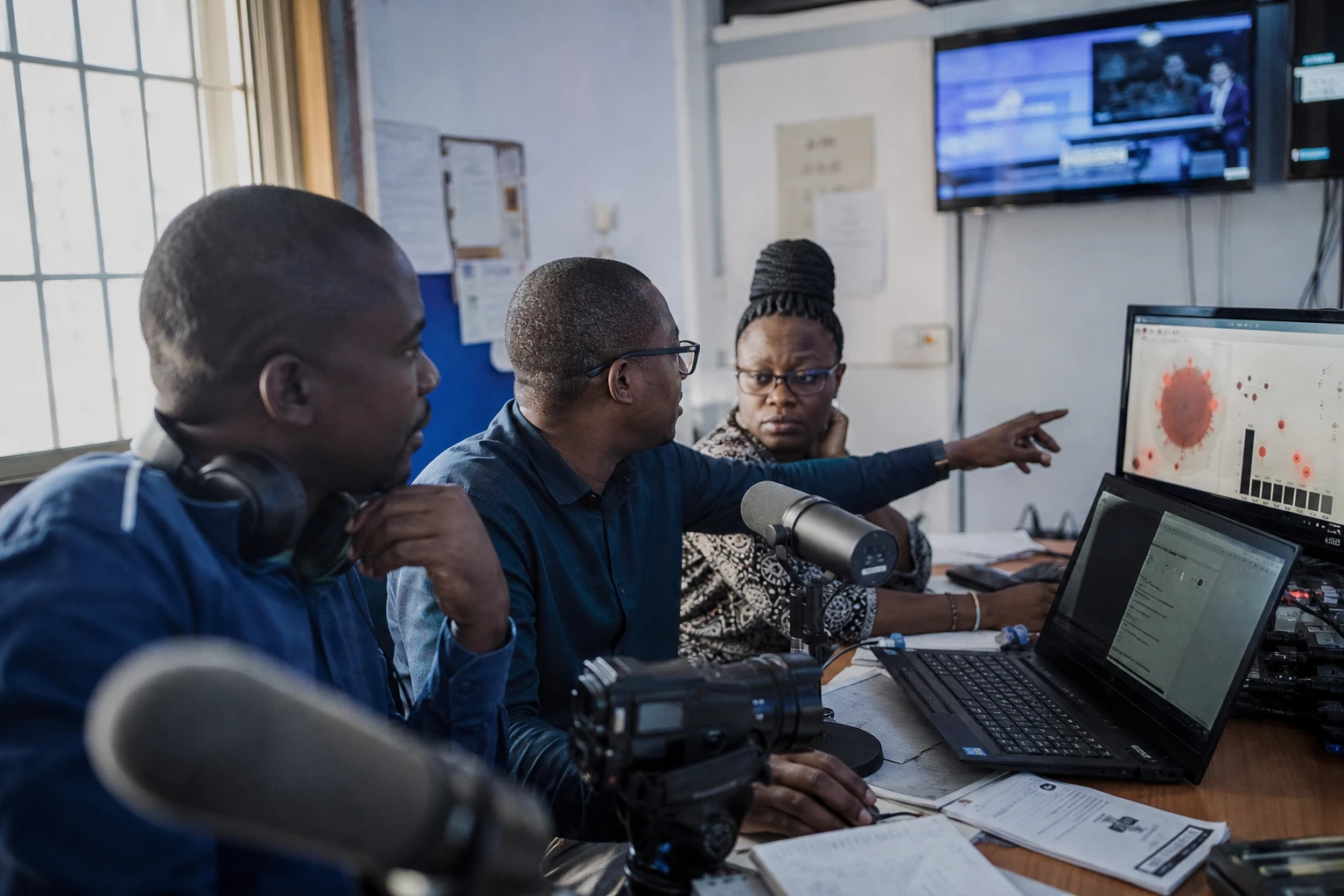
In Bunia, in the east of the Democratic Republic of the Congo, the epidemic is not visible only in laboratories. It can also be seen in queues, overstretched health centres and families who hesitate to cross the hospital threshold. Since 15 May 2026, the country has been facing its 17th Ebola outbreak, this time caused by the Bundibugyo virus, a variant for which there is no approved vaccine or licensed treatment.
The WHO director-general’s visit to the DRC is therefore no mere protocol gesture. It forms part of a response led from Kinshasa but focused first on Ituri, a province bordering Uganda and South Sudan, where commercial mobility, population movements and insecurity complicate the monitoring of cases. The WHO confirmed that the outbreak was declared a public health emergency of international concern on 17 May 2026, while Africa CDC classified it as a public health emergency of continental concern as early as 18 May.
An outbreak born along a corridor of movement, not in a health vacuum
The starting point identified by the WHO is in the Mongbwalu health zone, a mining area with heavy traffic, before the outbreak spread to Rwampara and Bunia, where patients went in search of care. This detail matters. It is a reminder that in Central Africa and the Great Lakes region, public health is shaped as much by roads, markets and borders as by hospitals. Eastern DRC is also still marked by forced displacement and armed violence, limiting the reach of alerts, weakening surveillance and slowing contact tracing.
The Congolese government officially confirmed the outbreak on 15 May 2026, after the Bundibugyo virus was detected in eight samples. President Félix-Antoine Tshisekedi Tshilombo then received Tedros Adhanom Ghebreyesus on 1 June in Kinshasa, at the Cité de l’Union africaine, to take stock of the response. Prime Minister Judith Suminwa Tuluka, for her part, chaired co-ordination meetings in Kinshasa on the same day with partners and the diplomatic corps.
The latest figures published on Monday by the Congolese health ministry and reported by the Associated Press give a sense of the crisis: 3,874 confirmed cases and 1,751 deaths. The WHO had already reported a rapid rise in cases in mid-July, with thousands of tests analysed each day and the outbreak spreading beyond Ituri into North Kivu and South Kivu. The trend shows a disease that has moved beyond the stage of a localised outbreak. It has become a test of the system.
The response is advancing, but faces fractures on the ground
Congolese authorities say they have strengthened surveillance, rapid response teams, laboratory confirmation and treatment centres. In early June, Kinshasa also announced the imminent reopening of Bunia airport, a sign that the virus must be contained while the provincial capital is prevented from being paralysed for the long term. On paper, the response is multi-sectoral. In practice, it depends on the ability to pay health workers, secure roads and persuade communities that the treatment centre is not a place of abandonment, but a place where people receive care.
This is where the crisis becomes more than a health issue. In Bunia, health workers have denounced payment delays and some have stopped work, according to the AP. This kind of tension has an immediate effect: fewer staff at patients’ bedsides, less follow-up of suspected cases, greater distrust in neighbourhoods and more preventable deaths. In an Ebola outbreak, the time between the onset of symptoms and receiving care can tip an entire chain of transmission.
The humanitarian context also weighs heavily. As eastern DRC faces mounting fighting, civilian displacement and pressure on infrastructure, the outbreak is layered on top of other emergencies: food, access to water, medical transport and maternal health. Accounts from the ground published in recent days also show that some pregnant women are avoiding hospitals for fear of infection, adding a silent crisis to the visible one. The virus is not striking an abstract system. It is hitting services that are already unequal, already exhausted and already close to breaking point.
A Congolese crisis, but a warning for the whole Great Lakes region
The regional dimension is immediate. The WHO says Ituri is a commercial and migration hub near Uganda and South Sudan, increasing the risk of cross-border transmission. Uganda did declare its own outbreak over in July, but the movement of people, health workers and goods remains a constant concern. In East Africa, health surveillance cannot stop at a border. It must be organised among health ministries, laboratories, points of entry and local authorities.
For the DRC, the stakes are also political and institutional. The country knows how to fight Ebola. Its experience, accumulated since 1976, has given it trained teams, procedures, community practices and an operational memory rare on the continent. But this expertise is not enough if funding contracts, basic infrastructure remains fragile and conflict zones prevent fieldwork. The real question, then, is not simply whether Kinshasa has learnt to manage Ebola. It is under what conditions a state can still protect its population when disease arrives at the intersection of logistical poverty, social distrust and insecurity.
At the continental level, this outbreak is also a reminder that African health emergencies require co-ordinated African responses, supported but not dispossessed. The role of Africa CDC, WHO Africa and neighbouring governments will be decisive in the coming weeks, particularly on contact tracing, border preparedness and access to experimental treatments. What must be watched now is not a victory slogan, but the case curve, the rigour of sample collection, the continuity of care and the authorities’ ability to sustain their efforts over time.



