
 Algeria
 Egypt
 Libya
 Morocco
 Sudan
 Tunisia
 Benin
 Burkina Faso
 Cabo Verde
 Côte d'Ivoire
 Ghana
 Guinea
 Guinea-Bissau
 Liberia
 Mali
 Mauritania
 Niger
 Nigeria
 Senegal
 Sierra Leone
 The Gambia
 Togo
 Cameroon
 Central African Republic
 Chad
 Equatorial Guinea
 Gabon
 Republic of the Congo
 São Tomé and Príncipe
 Burundi
 Comoros
 Djibouti
 Eritrea
 Ethiopia
 Kenya
 Madagascar
 Malawi
 Mauritius
 Mozambique
 Rwanda
 Seychelles
 Somalia
 South Sudan
 Tanzania
 Uganda
 Angola
 Botswana
 Eswatini
 Lesotho
 Namibia
 South Africa
 Zambia
 Zimbabwe
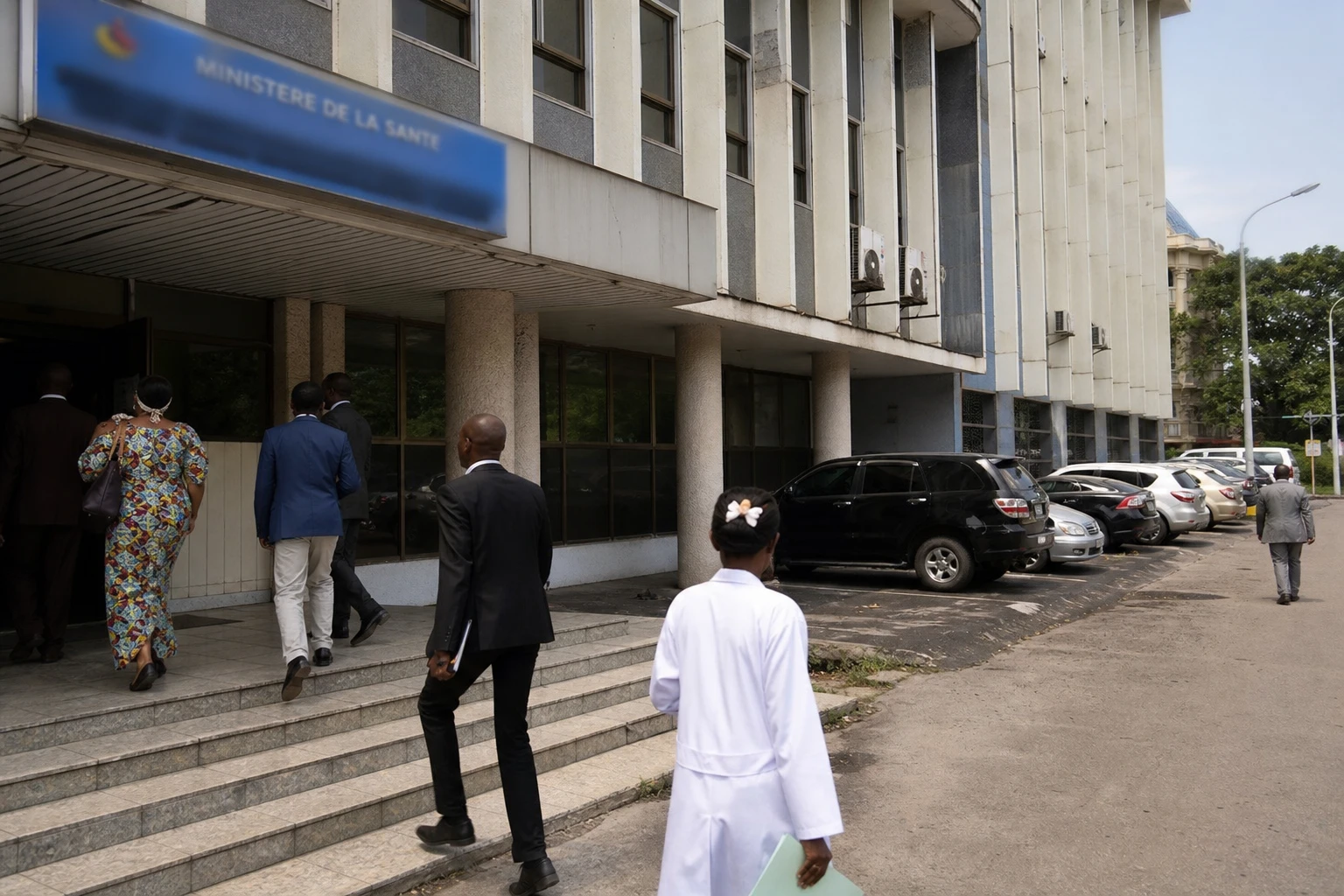
In Bunia, the response is being fought as much in care centres as on Ituri’s roads
In the east of the Democratic Republic of the Congo, an Ebola outbreak is never confined to an epidemiological curve. It encounters transit towns, mining areas, displaced families and porous borders. In Bunia, in Ituri, the public health battle therefore depends as much on medical teams as on the state’s ability to track population movements and maintain trust.
The Congolese Ministry of Health still classifies the Bundibugyo Ebola outbreak as active, with its latest update displayed on 6 August 2026. The World Health Organization, for its part, says that in its most recent situation report available as of 15 July 2026, 2,124 confirmed cases and 828 deaths had been recorded in DR Congo, across 46 health zones in five provinces.
An outbreak that began in Ituri, but is being tackled regionally
The outbreak began in Ituri province, in the north-east of the country, with Bunia as its main urban focus. But it was soon viewed in regional terms. DR Congo shares transport routes with Uganda, South Sudan and, further south, the other provinces of eastern Congo. It was this very border corridor that led Africa CDC to declare the outbreak a public health emergency of continental security on 18 May 2026.
This African response is not symbolic. It reflects a simple reality: in this part of the continent, a viral outbreak can cross a border in a matter of hours. Uganda has reported imported cases linked to DR Congo, further strengthening cross-border coordination. The challenge is therefore not only to treat patients, but to organise surveillance, laboratories, contact tracing and prevention across several countries at once.
What the health data show
On 15 May 2026, DR Congo declared an Ebola virus disease outbreak caused by the Bundibugyo strain. The WHO says it remains active and that transmission continued to drive an increase in cases and deaths until mid-July. In its 15 July update, the UN agency identified Ituri as the worst-affected province, with 1,904 of 2,124 cases, or 89.6% of the national total, and 692 of 828 deaths.
Within Ituri, the worst-affected health zones were Bunia, Rwampara, Mongbwalu, Nizi and Nyankunde. This detail matters. It shows that the outbreak is not concentrated in a single hospital, but is spread across areas of human and economic movement. The WHO also reported that more than 12,000 contacts had been identified and followed up by mid-July, a demanding task requiring large teams, fuel, communications equipment and continuous logistical support.
Congolese authorities and the WHO have stepped up field visits. On 31 May, their joint statement described a situation that was “evolving rapidly” in several health zones in Ituri, North Kivu and South Kivu. On 19 June, the Congolese Ministry of Health announced another working visit to Bunia General Hospital as part of its monitoring of the response.
Why this crisis goes beyond hospitals
In an Ebola outbreak, the medical response is decisive, but it is not enough. Teams must also win over communities that may be weary after years of security and health crises. In Ituri, mobility, insecurity and mining activity complicate case detection and contact tracing. Africa CDC has highlighted these very challenges: Bunia’s urban setting, population movements, mobility linked to the Mongbwalu mines, and weaknesses in infection prevention and control.
For the Congolese authorities, the challenge is twofold. First, they must contain the disease. Then they must prevent it from adding further pressure to a health system already stretched by other emergencies in the east of the country. For families, the priorities are even more immediate: knowing where to get tested, how to access treatment and how to protect relatives without disrupting daily life more than necessary. The Ministry of Health maintains a dedicated page on epidemiological surveillance and alerts, a sign that the response remains institutionally active.
A Congolese crisis, but also a continental one
The crisis highlights an important shift in African public health: responses are no longer confined to the national level. The response is now being built as a regional system involving the WHO, the Congolese Ministry of Health, Africa CDC and neighbouring authorities. This is particularly true in the Great Lakes region, where economic and family movements do not stop at border posts.
What happens next will depend on two indicators. First, the ability to bring transmission in Ituri down sustainably. Second, the capacity to maintain close surveillance in neighbouring provinces and border countries. The WHO says the response remains guided by regular updates, while Africa CDC continues to oversee regional preparedness. For DR Congo, the test is a public health one. For Central Africa and the Great Lakes, it also tests the speed of coordination between states, regional institutions and field teams.



