
 Algeria
 Egypt
 Libya
 Morocco
 Sudan
 Tunisia
 Benin
 Burkina Faso
 Cabo Verde
 Côte d'Ivoire
 Ghana
 Guinea
 Guinea-Bissau
 Liberia
 Mali
 Mauritania
 Niger
 Nigeria
 Senegal
 Sierra Leone
 The Gambia
 Togo
 Cameroon
 Central African Republic
 Chad
 Equatorial Guinea
 Gabon
 Republic of the Congo
 São Tomé and Príncipe
 Burundi
 Comoros
 Djibouti
 Eritrea
 Ethiopia
 Kenya
 Madagascar
 Malawi
 Mauritius
 Mozambique
 Rwanda
 Seychelles
 Somalia
 South Sudan
 Tanzania
 Uganda
 Angola
 Botswana
 Eswatini
 Lesotho
 Namibia
 South Africa
 Zambia
 Zimbabwe
A memory that travels with those who leave
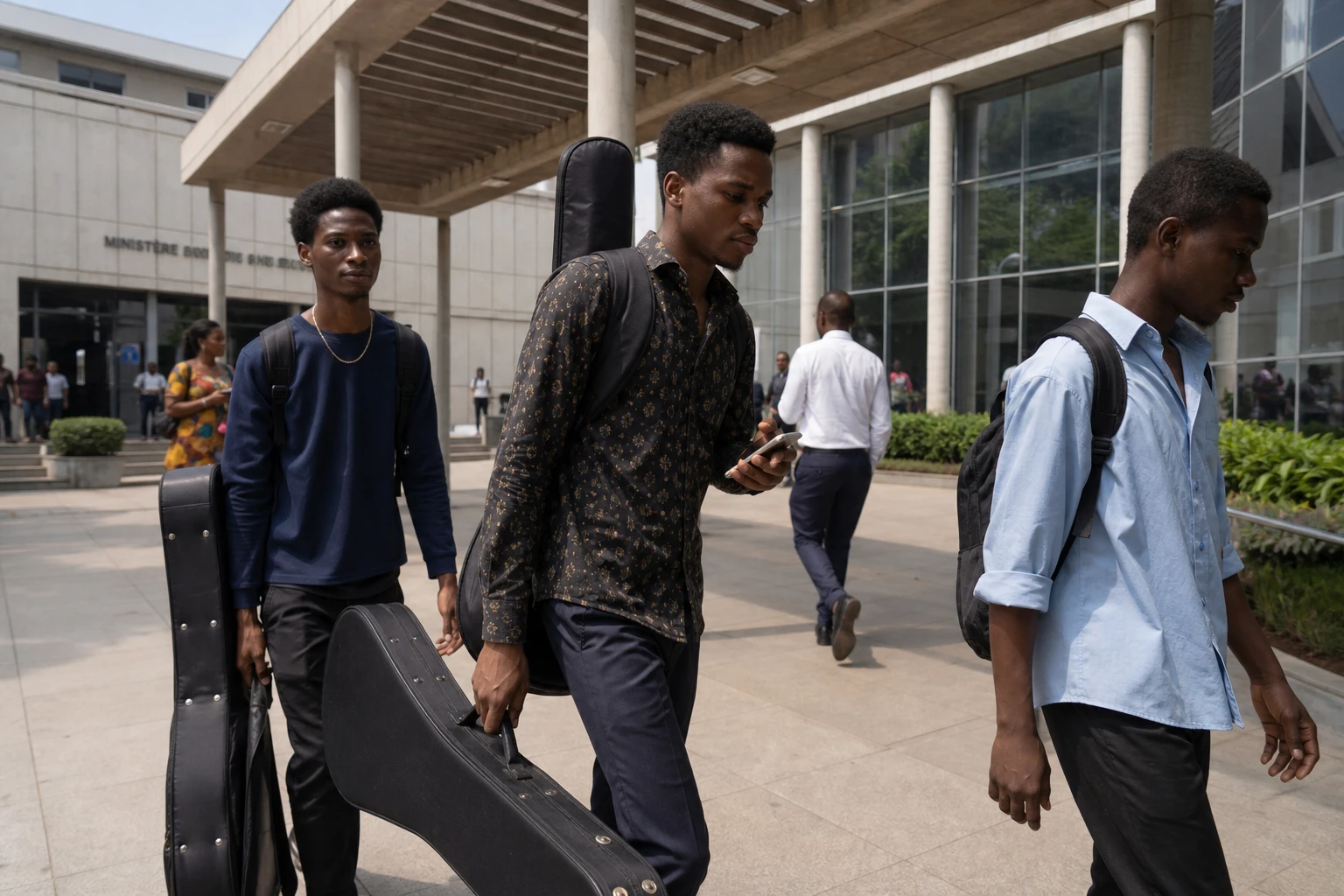
In Kinshasa as in Brussels or Paris, Congolese rumba is not merely a matter of nostalgia. It is also a shared language for a generation born far from the Democratic Republic of the Congo, but unwilling to sever its ties with its roots. For these young diaspora artists, Lingala is not just a backdrop. It is a means of expression and transmission, and sometimes of reclaiming identity.
This dynamic is part of a broader history. In 2021, Congolese rumba was inscribed on UNESCO’s Representative List of the Intangible Cultural Heritage of Humanity. The organisation describes it as a musical genre and dance found in urban areas of the DRC and neighbouring Congo, and as an essential practice for Congolese identity and its diaspora. It is also seen as a vehicle for social cohesion and intergenerational transmission.
Rumba between Kinshasa, Brazzaville and European capitals
The regional context matters as much as the artistic expression. Brazzaville and Kinshasa, on opposite banks of the Congo River, were jointly named African Capitals of Culture for 2024-2025 by United Cities and Local Governments of Africa. This recognition provides a political and symbolic framework for a heritage shared by both sides of the river. It also serves as a reminder that Congolese music took shape in cities, studios, bars, neighbourhoods and migration networks.
In this landscape, the diaspora in Europe plays a tangible role. Belgium’s Federal Public Service Foreign Affairs notes that the Congolese diaspora in Belgium has made a major contribution to rumba’s spread across Europe, and that the tradition is passed on mainly in cities to younger generations. UNESCO adds that the practice also circulates through neighbourhood clubs, training schools and community organisations.
In Kinshasa, cultural authorities have also pursued this heritage-focused approach. In 2024, the Ministry of Culture appointed a commission tasked with promoting rumba, signalling that heritage is not limited to an international label; it must also be organised, taught and made visible in Congolese public life.
Young artists balancing loyalty and reinvention
This is where the new generation of the diaspora comes in. It does not simply recreate rumba as it sounded in the era of the great orchestras. It stretches and blends it, circulates it on social media and brings it into today’s listening habits. The result is not a break with the past, but a reinterpreted continuity.
For these artists, choosing Lingala is no trivial matter. The language remains central to Congolese music and carries a powerful poetic charge. Recent initiatives in Kinshasa, particularly those focusing on songs in Lingala and “spoken rumba”, show that working with the language remains at the heart of contemporary creativity. Young Congolese people, at home and abroad, are thus making an inheritance their own—one that is neither frozen in time nor reserved for older generations.
This embrace also has a social dimension. For an artist born or raised in France, Belgium or elsewhere in Europe, singing in Lingala can mean responding to two demands: satisfying a Congolese audience that cares about the language’s accuracy, while speaking to a wider audience that may be less familiar with the original cultural frame of reference. The stakes are therefore not only musical, but also generational, familial and symbolic.
In this economy of visibility, social media have taken on a decisive role. They allow creators to bypass conventional distribution channels, provide context for their tracks, publish translations and tell the story of rumba to audiences who know it only partly. UNESCO also notes that rumba plays an economic role, with orchestras developing forms of cultural entrepreneurship. In other words, heritage is not just a memory; it is also a resource.
A cultural issue, but also an economic and diplomatic one
For the Democratic Republic of the Congo, this vitality has implications that go beyond music. It feeds a national narrative more stable than many other current affairs: that of a country exporting powerful cultural forms that can travel without losing their roots. Kinshasa, capital of a Central African giant, remains one of the continent’s major centres for creating urban styles. Rumba remains a powerful marker of historical continuity there.
The issue also has a diplomatic dimension. In 2025, UNESCO supported an international co-operation project centred on rumba, involving partners from Cuba, France, Belgium, Spain and the DRC. This kind of initiative shows that Congolese heritage is no longer treated merely as a local speciality, but as a transnational cultural asset. For Kinshasa, it offers prospects for raising its profile. For artists, it creates bridges. For institutions, it makes better-structured transmission essential.
Its continental reach is clear. Congolese rumba speaks to Central Africa, but also to diasporas in Europe and to other musical cultures across the continent. It is a reminder that African connections are carried not only by goods or people, but also by languages, rhythms and memories. At a time when Brazzaville and Kinshasa are expected to assert their shared role as cultural capitals, this diaspora generation is giving rumba what many forms of heritage seek: continuity without turning it into a museum piece.



