Algeria
 Egypt
 Libya
 Morocco
 Sudan
 Tunisia
 Benin
 Burkina Faso
 Cabo Verde
 Côte d'Ivoire
 Ghana
 Guinea
 Guinea-Bissau
 Liberia
 Mali
 Mauritania
 Niger
 Nigeria
 Sierra Leone
 The Gambia
 Togo
 Cameroon
 Central African Republic
 Chad
 DR Congo
 Equatorial Guinea
 Gabon
 Republic of the Congo
 São Tomé and Príncipe
 Burundi
 Comoros
 Djibouti
 Eritrea
 Ethiopia
 Kenya
 Madagascar
 Malawi
 Mauritius
 Mozambique
 Rwanda
 Seychelles
 Somalia
 South Sudan
 Tanzania
 Uganda
 Angola
 Botswana
 Eswatini
 Lesotho
 Namibia
 South Africa
 Zambia
 Zimbabwe
A coveted post, but a clear political signal already
In New York, the race to become United Nations secretary-general is about more than prestige. It also shows who really holds sway in multilateralism, and which regions of the world can still set the pace. For Macky Sall, Senegal’s former president, the first test revealed a less flattering reality than the campaign he has been promoting for months.
This straw poll, held on 30 July 2026 by the Security Council, follows several weeks of private consultations and public hearings with candidates. The selection process for the next secretary-general follows the UN timetable, with the new chief due to take office on 1 January 2027.
African context: Senegalese backing, continental reservations
Macky Sall’s bid has roots in Senegal, but it does not command consensus across Africa. Dakar officially announced its support on 20 July 2026, after the former head of state met his successor, Bassirou Diomaye Faye, at the presidential palace. Senegalese diplomats were then mobilised to promote the candidacy among UN member states.
However, in March 2026 the African Union did not approve the text intended to endorse the candidacy. According to the Pan African News Agency and RTS, 20 member states objected during the written “silence procedure”, breaking the consensus required. This refusal deprived Macky Sall of formal continental backing, although some African capitals continued to support him.
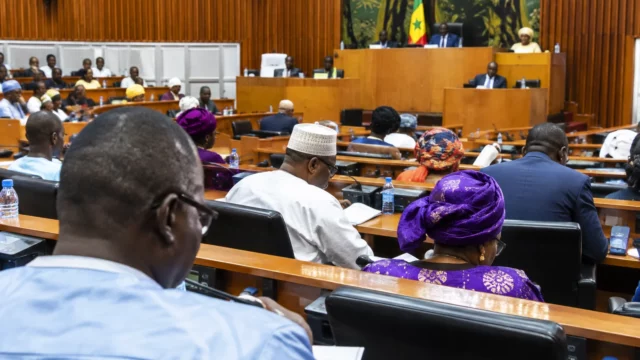
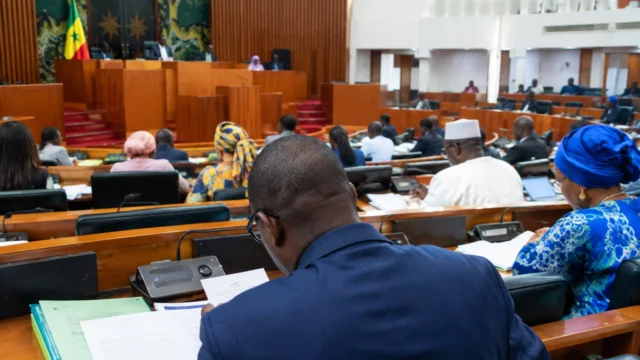
In this context, Senegal remains a key West African country and a member of ECOWAS, but it is also a state where institutional voices and domestic political perceptions matter as much as foreign diplomacy. The bid therefore has national as well as international significance.
First straw poll dampens ambitions
The Security Council’s first straw poll failed to give Senegal’s former president the hoped-for momentum. According to results reported in New York, Macky Sall received six favourable votes, seven unfavourable votes and two with no opinion. His Ugandan rival Olara Otunnu, who entered the race later, received two favourable votes, five unfavourable votes and eight with no opinion. The poll is not decisive at this stage, but it establishes a very clear political ranking.
First place went to Costa Rica’s Rebeca Grynspan, who took the lead over Guyana’s Carolyn Rodrigues-Birkett and Argentina’s Rafael Grossi, according to leaks reported from the Security Council. These three candidacies also confirm another trend: Latin America and the Caribbean currently have the advantage, with the unwritten rule of geographical rotation putting the region in the spotlight this year.
This matters for Dakar. Senegal had bet on the standing of a former president, his African experience and his international networks. But the UN’s machinery remains dominated by the balance among the Security Council’s five permanent members, the only ones able to block the final recommendation with a veto. At this stage, support from a single African state is not enough to offset a perceived mismatch with the expected regional rotation.
Why this setback matters beyond Macky Sall
The message to African candidates is clear. It does not mean Africa is absent from the race. Rather, in this particular contest, it is struggling to put forward a unifying candidate. This is all the more striking because Macky Sall is now the only African candidate still in the running after Olara Otunnu entered the race, but that has not been enough to build a strategic advantage.
For Senegal, the stakes go beyond the former president. Dakar is also seeking to demonstrate its ability to champion a national figure on the international stage while preserving the image of a stable diplomatic service. But the domestic debate remains sensitive. The government’s official backing followed a period of distance and then clarification, exposing tensions between continuity of the state and national political rivalry.
For the African Union, the episode is a reminder that a continent does not always speak with one voice, even when the issue concerns Africa’s symbolic representation in a global institution. And for the UN, it confirms that no candidacy can be built on personal prestige alone. In this kind of election, geography, alliances and the balance of power between blocs count as much as a candidate’s record.
What to watch in the coming weeks
The 30 July poll did not bring the race to a close. The Security Council must hold further consultations, and there is nothing to prevent new names from entering the race. But the momentum from the first round is rarely insignificant. It indicates who can hope to pass the final hurdle and who risks being gradually sidelined.
The next stage will therefore play out in UN corridors as much as in national capitals. The next secretary-general must be chosen before António Guterres’s term ends on 31 December 2026, and will then take office on 1 January 2027. For Senegal, the question is now simple: can this candidacy still recover, or has it just hit the Security Council’s diplomatic glass ceiling?