
 Algeria
 Egypt
 Libya
 Morocco
 Sudan
 Tunisia
 Benin
 Burkina Faso
 Cabo Verde
 Côte d'Ivoire
 Ghana
 Guinea
 Guinea-Bissau
 Liberia
 Mali
 Mauritania
 Niger
 Nigeria
 Senegal
 Sierra Leone
 The Gambia
 Togo
 Cameroon
 Central African Republic
 Chad
 Equatorial Guinea
 Gabon
 Republic of the Congo
 São Tomé and Príncipe
 Burundi
 Comoros
 Djibouti
 Eritrea
 Ethiopia
 Kenya
 Madagascar
 Malawi
 Mauritius
 Mozambique
 Rwanda
 Seychelles
 Somalia
 South Sudan
 Tanzania
 Uganda
 Angola
 Botswana
 Eswatini
 Lesotho
 Namibia
 South Africa
 Zambia
 Zimbabwe
A response gathering pace, but not yet scaling up
In the east of the Democratic Republic of the Congo, the fight against Ebola is no longer being waged only at patients’ bedsides. It is also taking place in laboratories, treatment centres and villages where trust remains crucial. In this crisis, every day gained against the virus depends as much on science as on community support.
The country is facing an outbreak of Ebola virus disease caused by the Bundibugyo strain, a variant different from the Zaire strain, which is better known to the public. This distinction matters, because the available tools differ depending on the strain. The WHO said in early July that no licensed treatment has yet been approved for Bundibugyo, although trials have begun in the Democratic Republic of the Congo. The African body Africa CDC, for its part, declared the outbreak a Public Health Emergency of Continental Security, signalling a risk that extends well beyond the borders of the DRC.
Figures should be treated with caution, but the trend is clear
Totals vary depending on whether they count only confirmed cases or all reports still under investigation. In its 2 July update, the WHO reported 1,406 confirmed cases and 438 deaths in the Democratic Republic of the Congo. In its 15 June bulletin, Africa CDC reported 837 confirmed cases and 196 confirmed deaths, with active transmission in 31 health zones in the country and circulation in three Congolese provinces at that date. The trend, however, leaves little doubt: the epidemic was still spreading, placing heavy pressure on surveillance, laboratory and treatment teams.
The initial outbreak reported by the WHO was in the Mongbwalu health zone in Ituri, an area with high mobility linked in particular to mining activity and travel to Bunia. The virus then spread to other areas in the east, confirming a pattern seen in previous health crises: where roads, markets and family ties connect territories, the virus also finds ways to spread.
First human vaccine trial opens a new chapter
On 24 July 2026, the University of Oxford announced that the first volunteer had received the ChAdOx1 BDBV vaccine candidate, described as the world’s first clinical trial against Bundibugyo ebolavirus. The study, launched a few weeks earlier, is intended to assess the product’s safety and the immune response in healthy adults. The team says it has 620,000 doses in storage, produced with the Serum Institute of India, as part of a programme supported by the Coalition for Epidemic Preparedness Innovations, with $8.6 million in funding announced.
The launch does not mean a vaccine is already ready for use in the field response. Rather, it marks an important shift: the epidemic is now driving research towards a virus for which no validated, specific vaccine had previously existed. It is also a political signal. Clinical research is no longer taking place at a distance from the crisis. It is entering the epidemic in real time.
In parallel, the WHO announced on 2 July that enrolment had opened for patients in the PARTNERS trial. The protocol is to test two antiviral treatments, remdesivir and the monoclonal antibody MBP134. Here, too, the stakes are practical: to improve treatment for confirmed cases, reduce mortality and generate African data during the crisis, rather than afterwards.
The human factor remains decisive on the ground
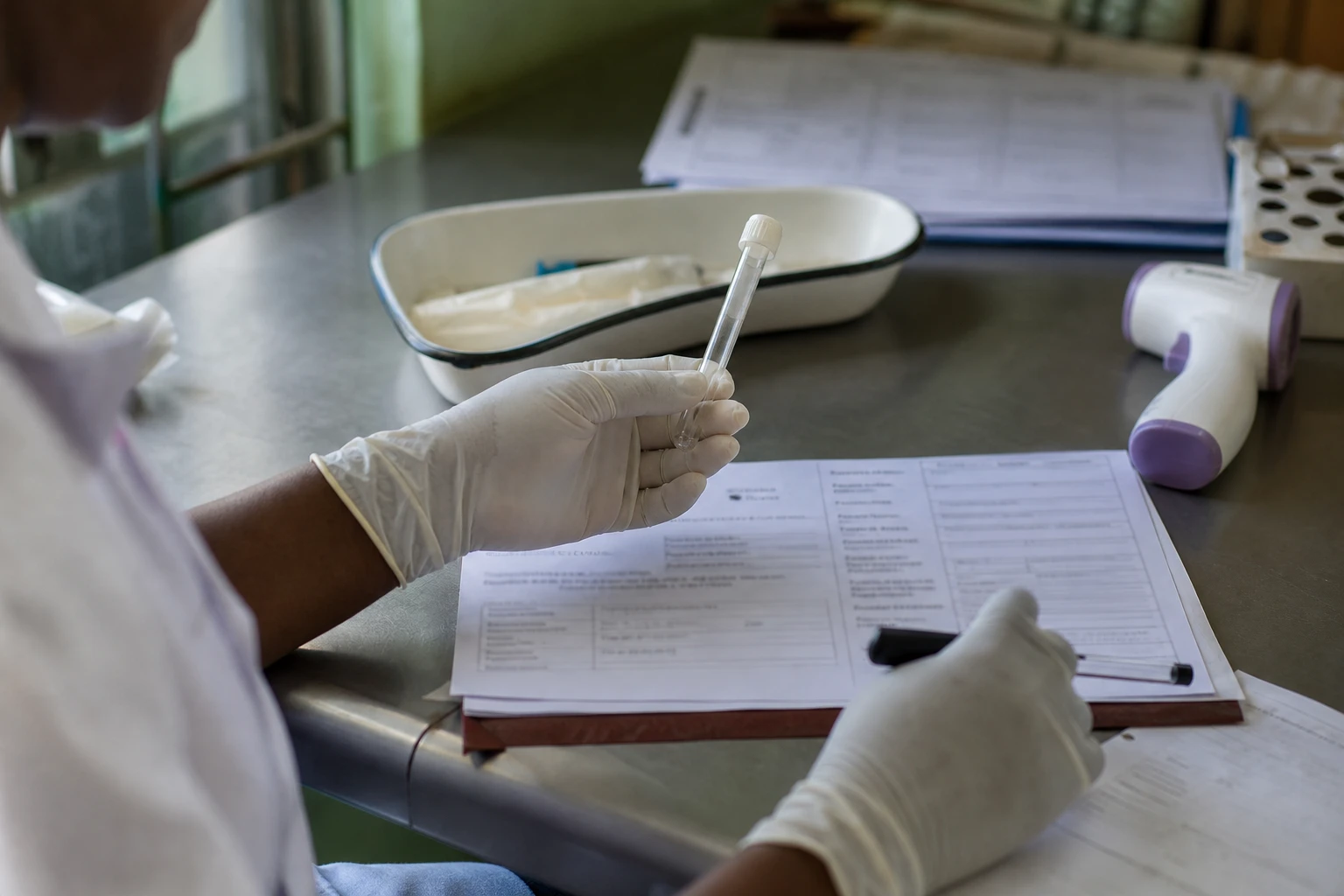
The central question is not only scientific. It is also social. In eastern DRC, response teams must contend with distances, fear, rumours, delayed funerals and informal care practices. Public health organisations know that without rapid diagnosis, early isolation and safe burials, the virus retains its advantage. The WHO has also noted that laboratory capacity had to be strengthened, expanding from a limited network to ten laboratories in the affected provinces.
Humanitarian actors are calling for an approach that gives local communities a meaningful role. This is not a token gesture. It is operational. In an Ebola crisis, a village that understands preventive measures, accepts early reporting and takes part in surveillance can curb transmission faster than a response imposed from outside. Conversely, a response seen as distant, top-down or military wastes time, and therefore costs lives.
The Democratic Republic of the Congo embodies a reality familiar across the continent: major health emergencies are rarely won in Kinshasa alone, even though the capital remains the decision-making centre. They are also won in Bunia, in Ituri’s health zones, along routes to North and South Kivu, and through the state’s ability to work with local health workers, national researchers and community networks. The role of the INRB, the National Institute of Biomedical Research, and Congolese partners in the PARTNERS trial shows precisely why a credible response cannot simply be imported ready-made.
A test for African public health
This phase extends beyond the DRC. It raises questions about Central Africa’s preparedness for emerging diseases, the movement of samples and data between neighbouring countries, and the role of African institutions in the continental response. Africa CDC, the WHO and the Congolese authorities have acted together with unusual speed. That is worth noting. In a region often exposed to cross-border crises, coordination matters as much as technology.
What happens next will depend on several milestones in quick succession: the initial results of Oxford’s vaccine trial, the assessment of the treatments tested in the PARTNERS trial, and the evolution of transmission chains in the east of the Democratic Republic of the Congo. If the curve slows, it will be thanks to a combination of surveillance, research and community engagement. If it rises again, the question will not be purely medical. It will be one of speed, trust and the Congolese health system’s ability to keep going over the long term.



