
 Algeria
 Egypt
 Libya
 Morocco
 Sudan
 Tunisia
 Benin
 Burkina Faso
 Cabo Verde
 Côte d'Ivoire
 Ghana
 Guinea
 Guinea-Bissau
 Liberia
 Mali
 Mauritania
 Niger
 Nigeria
 Senegal
 Sierra Leone
 The Gambia
 Togo
 Cameroon
 Central African Republic
 Chad
 Equatorial Guinea
 Gabon
 Republic of the Congo
 São Tomé and Príncipe
 Burundi
 Comoros
 Djibouti
 Eritrea
 Ethiopia
 Kenya
 Madagascar
 Malawi
 Mauritius
 Mozambique
 Rwanda
 Seychelles
 Somalia
 South Sudan
 Tanzania
 Uganda
 Angola
 Botswana
 Eswatini
 Lesotho
 Namibia
 South Africa
 Zambia
 Zimbabwe
In Ituri, health teams are not just fighting a virus. They must also contend with difficult roads, population displacement, insecurity and mistrust that slows every preventive measure. In the north-east of the Democratic Republic of the Congo, the Ebola response is therefore taking place as much in treatment centres as in villages, markets and border crossing points.
The current outbreak, caused by the Bundibugyo virus, was declared by the Congolese authorities on 15 May 2026. According to the National Institute of Public Health, cited by the World Health Organization, the country had recorded 1,926 confirmed cases and 702 deaths by 11 July 2026. Ituri province then accounted for most of the burden, with transmission still active in several health zones.
A Congolese outbreak that quickly spills across borders
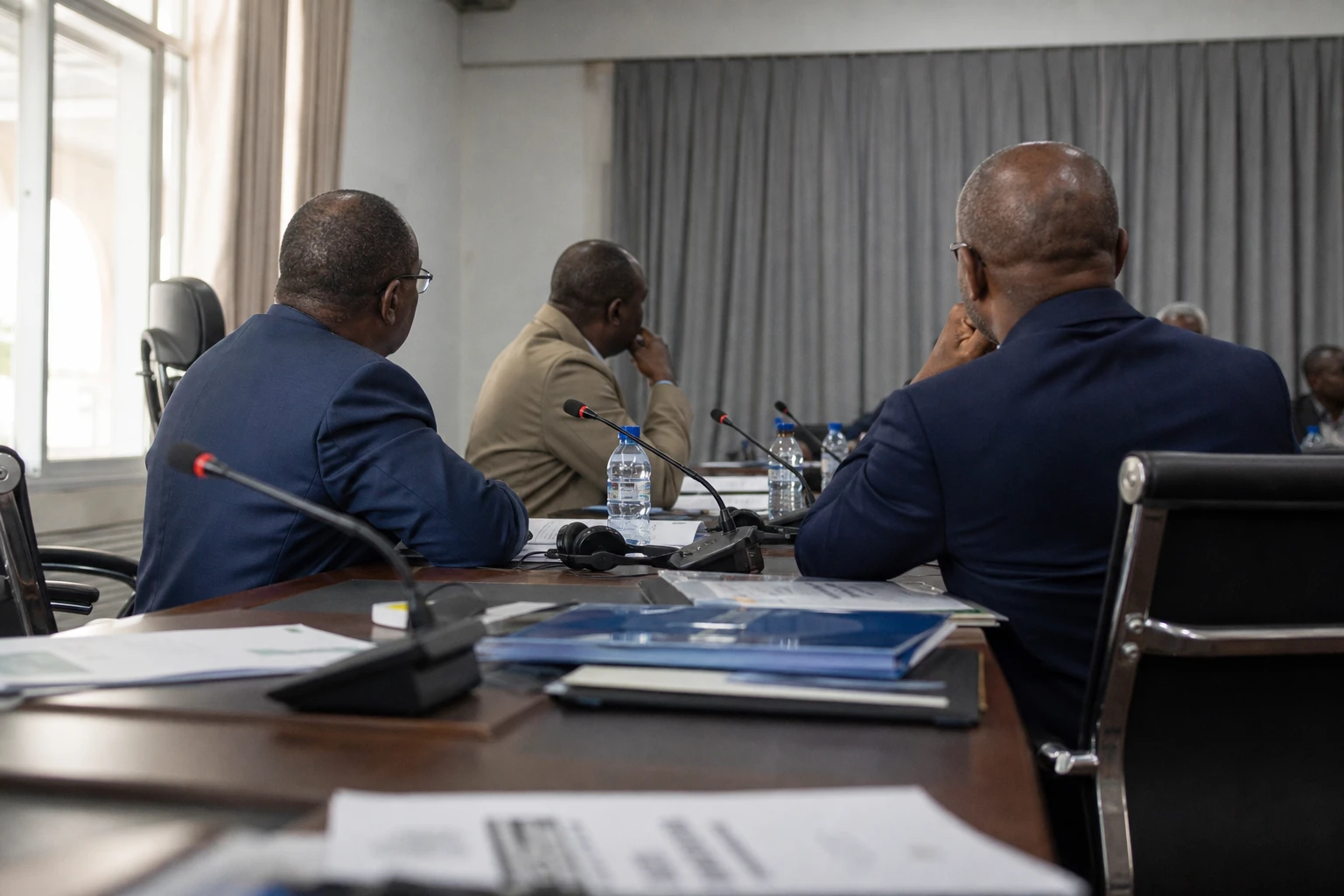
This outbreak is not unfolding in a public health vacuum. Ituri shares borders with Uganda and lies close to South Sudan, two countries linked to the DRC by constant trade, family and humanitarian movements. This is precisely why Kinshasa, Kampala and regional partners moved early to coordinate their response. In Kampala, the health ministers of the DRC, Uganda and South Sudan, along with Africa CDC and the WHO, called for «regional solidarity» and a coordinated response.
On 17 May 2026, the WHO assessed the outbreak as a public health emergency of international concern, without classifying it as a pandemic. Africa CDC, for its part, mobilised at continental level from mid-May. This regional perspective matters for Central Africa and countries bordering the Great Lakes: a case that goes undetected in a remote area can quickly become a cross-border issue.
The facts: rapid spread, but figures need to be read carefully
By 11 July 2026, the WHO said the outbreak had reached 1,926 confirmed cases and 702 cumulative deaths in the DRC. The situation report of 30 June had already recorded 1,283 confirmed cases in Ituri, 366 deaths and a case fatality rate of 28.5% in the province alone. Cases were not confined to Ituri: North Kivu and South Kivu were also affected, showing that the chain of transmission had spread beyond the initial outbreak area.
The epidemiological picture described by the INSP shows spread across several health zones, with particular pressure on Bunia, Rwampara and Mongbwalu. The situation in Mongbwalu deserves special attention: the area has been identified as a starting point of the outbreak and has one of the province’s highest case fatality rates. In an Ebola outbreak, every delay in detection matters. An unisolated case can trigger a chain of infections within days.
Beyond confirmed cases, the response depends on contact tracing, isolating patients, actively identifying suspected cases and protecting healthcare workers. The INSP report of 30 June put the contact-tracing rate at 43%. This is a key indicator: when it remains low, the response has less visibility into how the virus is spreading. The challenge is therefore not just to open beds, but to break chains of transmission faster.
What this outbreak reveals about the DRC and the region
For Congolese people, the outbreak points to a long-familiar reality: the strength of a response depends on local trust, the presence of public services and rapid access to healthcare. The WHO says community dialogue has already improved acceptance of public health measures in Ituri. This is central. Without local acceptance, surveillance remains incomplete and care comes too late.
The security situation is also a major factor. The INSP notes that Mongbwalu is in an area affected by armed groups, population movements towards Uganda and artisanal mining activity. In these areas, public health cannot be considered separately from human mobility, the protection of healthcare workers and continuity of services. Provincial towns such as Bunia have denser networks of services than rural areas, where access to diagnosis or an ambulance remains more precarious.
The continental dimension is just as clear. The WHO and Africa CDC have launched a joint preparedness and response plan worth $518 million to strengthen surveillance, diagnosis, infection prevention and community engagement across Africa. The amount makes one thing clear: the Ebola response is no longer just a Congolese effort. It concerns the health security of all Central Africa and the countries neighbouring the Great Lakes.
In this context, the DRC retains a decisive role. Kinshasa is home to the National Institute of Biomedical Research, which confirmed the first positive samples, and leads national coordination with support from partners. The next steps will depend on three fronts: the ability to expand contact tracing, maintain healthcare in affected areas and prevent cross-border spread. This is where the resilience of the Congolese health system and regional cooperation will be tested in practice.



