
 Algeria
 Egypt
 Libya
 Morocco
 Sudan
 Tunisia
 Benin
 Burkina Faso
 Cabo Verde
 Côte d'Ivoire
 Ghana
 Guinea
 Guinea-Bissau
 Liberia
 Mali
 Mauritania
 Niger
 Nigeria
 Senegal
 Sierra Leone
 The Gambia
 Togo
 Cameroon
 Central African Republic
 Chad
 Equatorial Guinea
 Gabon
 Republic of the Congo
 São Tomé and Príncipe
 Burundi
 Comoros
 Djibouti
 Eritrea
 Ethiopia
 Kenya
 Madagascar
 Malawi
 Mauritius
 Mozambique
 Rwanda
 Seychelles
 Somalia
 South Sudan
 Tanzania
 Uganda
 Angola
 Botswana
 Eswatini
 Lesotho
 Namibia
 South Africa
 Zambia
 Zimbabwe
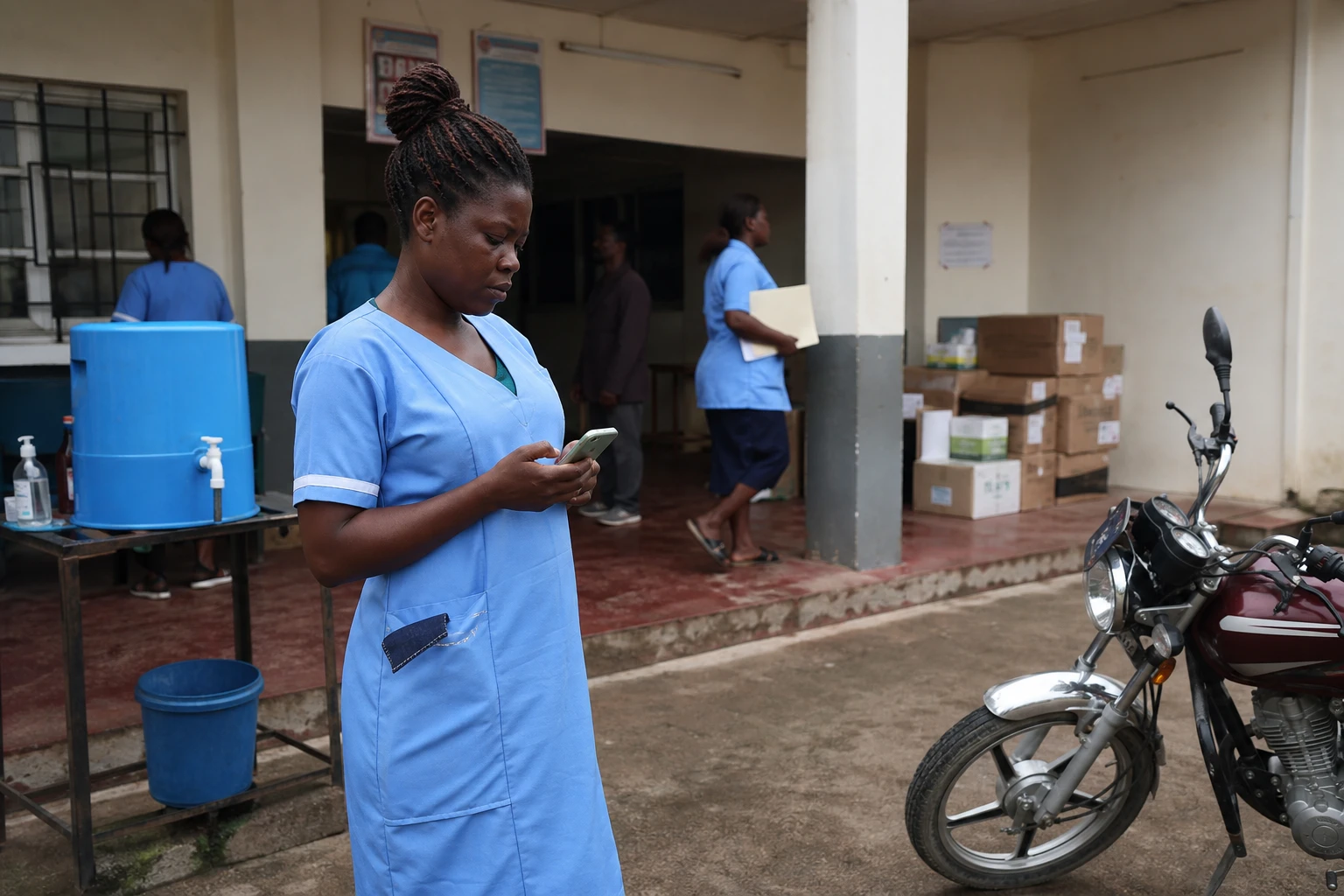
In Bunia, public health depends as much on pay as on medicines
In the east of the Democratic Republic of the Congo, the fight against Ebola is not being waged only in treatment centres. It also depends on something very simple: health workers must be paid on time to keep working in conditions that are already gruelling. In Bunia, the capital of Ituri, anger over salary arrears has shown that a health response can falter for administrative as well as medical reasons.
The issue extends beyond the province. Since 15 May 2026, DR Congo has been facing an Ebola virus disease outbreak caused by the Bundibugyo virus, a variant for which there is no approved vaccine, unlike the Zaire strain better known to the general public. The response involves the health ministry, the National Public Health Institute, the presidency, the WHO and several partners, in a context where Ituri accounts for most cases.
Health response weakened by delays in pay
On Saturday 26 July 2026, staff at the Elikya treatment centre in Bunia stopped work to demand payment of outstanding bonuses and salaries. Doctors, nurses and security staff joined the action, according to testimony gathered on the ground, after an initial strike at Bunia’s main general hospital the previous week. The protest disrupted patient care at the heart of the epidemic’s epicentre.
The dispute concerns two months of unpaid performance bonuses, while some workers say they have not been paid since the outbreak began. A response official acknowledged that payments were being addressed, with a switch to mobile money to speed up disbursements. This matters: during an epidemic, a delay of just a few days can be enough to demobilise teams already under pressure.
Official data published around the same time show the scale of the outbreak. On 13 July 2026, the Congolese presidency said that 1,900 cases and 700 deaths had been recorded. A few days later, figures released by the authorities and reported by several media outlets had risen to 2,973 confirmed cases and 1,309 deaths. These figures point to rapid spread, but should be read as snapshots that are liable to change as field investigations continue.
Ituri province remains the main hotspot. The presidency said that Bunia, Rwampara, Mungwalu, Nyankunde and Nizi account for most cases in the province. Congolese health services had already reported in early June that the outbreak had also reached North Kivu and South Kivu, pointing to the difficulty of surveillance in an area marked by population displacement and insecurity.
What the crisis reveals: governance, trust and continuity of care
The dispute over salaries is not a minor social issue. It says something about the response chain itself. When health workers stop work, case triage slows, isolation measures are weakened and families lose trust. In Ebola outbreaks, community trust matters as much as protocols. In late May, the WHO and the Congolese authorities stressed that the response was « evolving rapidly » and required close co-operation with the provinces and humanitarian partners.
The problem is also institutional. The central government has held a series of crisis meetings in Kinshasa, the capital, while the response on the ground is managed by provincial teams and treatment centres in Ituri. This distance between decision-making and implementation often creates friction over payments, bonuses and supplies. In a province where health zones are already under pressure, even a minor administrative delay becomes a health risk.
The Congolese response has nevertheless shown signs of organisation. In June, the health minister visited Bunia General Hospital and then the Elikya treatment centre to assess patient care, while the WHO highlighted the survival of health workers who had recovered in Bunia, proof that early and structured care can save lives. But these gains remain fragile if the teams delivering them have neither stability nor certainty about their pay.
The situation is further complicated by the security environment in eastern DR Congo. Forced displacement, unstable roads, mistrust among some communities and local tensions make contact tracing more difficult. Several sources have also reported attacks on health facilities and resistance to safe burials. In this context, public health is as much a local service as a matter for the state.
A warning for Central Africa and beyond
The situation in Bunia resonates across Central Africa. It is a reminder that a response to a haemorrhagic fever depends not only on laboratories and international partners, but also on the regularity of public spending, human resources management and trust between the state and frontline workers. When these links break down, the human cost rises quickly.
The regional picture also matters. Ituri shares borders and cross-border movements with Uganda and South Sudan. Health authorities must therefore look beyond national territory and adopt a cross-border surveillance approach. This is a familiar feature of Ebola alerts in the Great Lakes region: a local outbreak can quickly become a regional issue if co-ordination weakens.
In the coming days, the challenge will not only be to bring infections down. The authorities in DR Congo will also need to ensure payments are made, keep teams fully staffed and preserve access to care at centres in Bunia. At this point, the crisis makes one thing clear: in DR Congo, the fight against Ebola is won as much in treatment rooms as when wages are actually paid.



