Algeria
 Egypt
 Libya
 Morocco
 Sudan
 Tunisia
 Benin
 Burkina Faso
 Cabo Verde
 Côte d'Ivoire
 Ghana
 Guinea-Bissau
 Liberia
 Mali
 Mauritania
 Niger
 Nigeria
 Senegal
 Sierra Leone
 The Gambia
 Togo
 Cameroon
 Central African Republic
 Chad
 DR Congo
 Equatorial Guinea
 Gabon
 Republic of the Congo
 São Tomé and Príncipe
 Burundi
 Comoros
 Djibouti
 Eritrea
 Ethiopia
 Kenya
 Madagascar
 Malawi
 Mauritius
 Mozambique
 Rwanda
 Seychelles
 Somalia
 South Sudan
 Tanzania
 Uganda
 Angola
 Botswana
 Eswatini
 Lesotho
 Namibia
 South Africa
 Zambia
 Zimbabwe
A new entrant keeping a close eye on Conakry
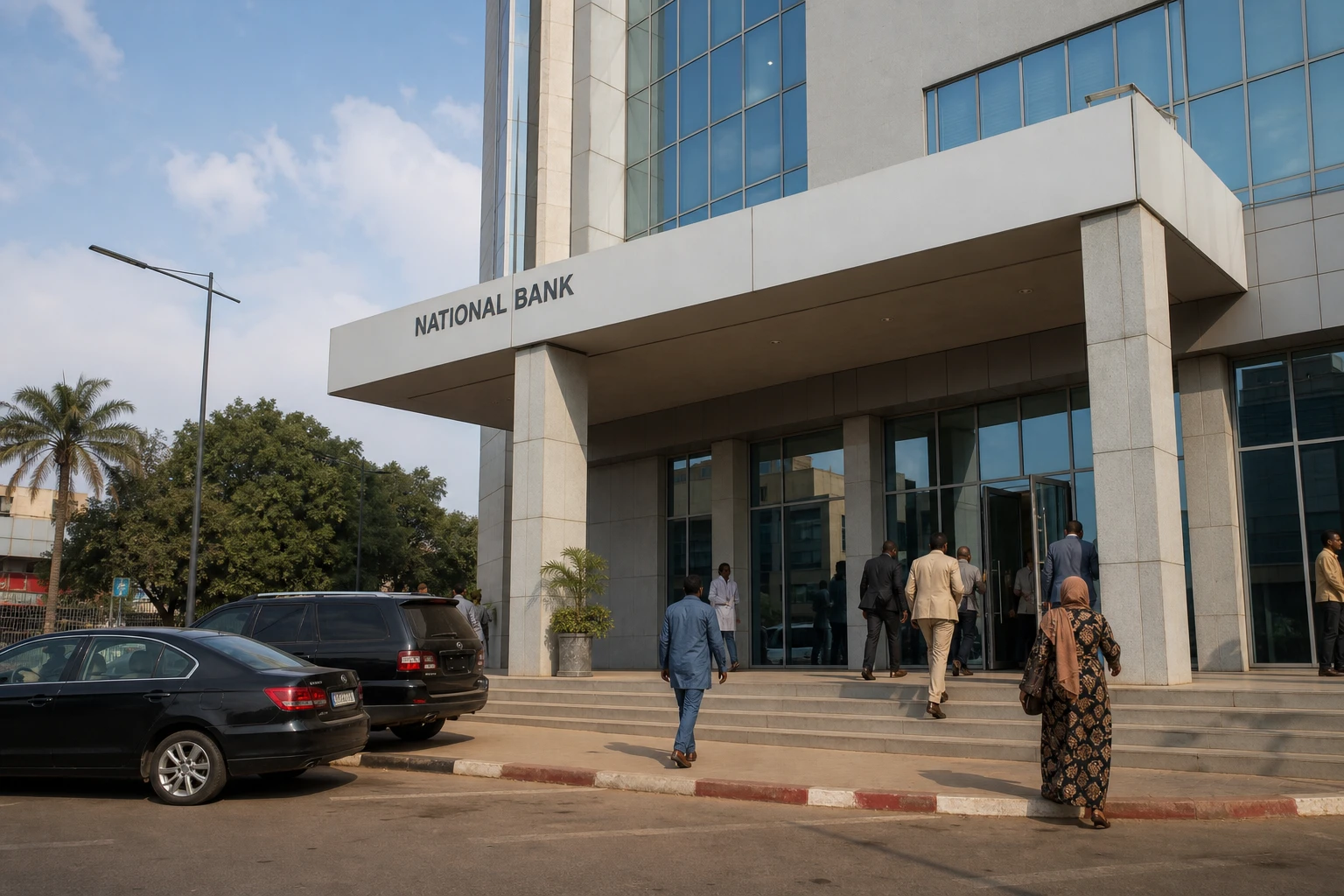
In West Africa, financial groups are no longer looking only for footholds in capitals that are already well served. They are also targeting markets where banking access is expanding, demand for credit remains strong and there is still room to build a lasting presence. Guinea is firmly in the spotlight. The country is a member of ECOWAS, its capital is Conakry, and its banking system is now attracting regional players seeking growth.
Against this backdrop, Champy Holding Finances is pursuing an expansion strategy from Ouagadougou, Burkina Faso. The Champy International group describes itself as a pan-African conglomerate active in trading, finance and industry, while its financial arm already has a presence in Burkina Faso through Champy Méso Finance. Its official website also confirms the existence of Champy Holding Finances as the group’s financial division.
Guinea’s banking sector is clearer, but remains highly concentrated
The timing is significant. The Central Bank of the Republic of Guinea has recently highlighted a banking sector it considers resilient, with no institutions reported to have made a loss in the 2025 financial year. A publication cited by the BCRG and an independent report also indicate that the country now has 24 credit institutions, including 20 banks. However, this figure should be treated with caution, as it depends on the consolidation date used by the authorities.
The same information points to an improvement in activity. The sector’s provisional cumulative net profit is said to have reached 2,396 billion Guinean francs, or about $273 million, according to data presented by the BCRG. Total assets, deposits and loans are reported to have risen by 35%, while the average rate of non-performing loans is around 9%. These figures, too, are provisional, but they give an indication of a market that is more active than it was a few years ago.
The contrast with the sector’s earlier structure is stark. An IMF report recalled that Guinea’s banking system remained dominated by a handful of players and that market depth was limited. The same study then recorded 19 commercial banks, showing that the range of providers has continued to expand since. This matters because it opens the door to niche strategies, equity partnerships and more frequent acquisitions of stakes.
Why regional financiers are looking at Guinea
Champy Holding Finances’ interest in Guinea is first and foremost a reflection of regional strategy. The group has already made moves in West Africa, particularly in Senegal, where microfinance institution MicroSen was acquired by SF Capital in February 2025 before coming under the Champy International network, according to several financial reports. In this kind of deal, taking control of an institution makes it possible to test the market, learn the local regulatory framework and prepare for broader growth.
Guinea offers another advantage: its banking potential remains largely untapped. Credit is growing, but access remains uneven across regions and business categories. World Bank research on financial inclusion in Guinea points to considerable scope for growth in formal savings, digital payments and financing for small businesses. In other words, the market already exists, but it is not yet fully served.
This context explains why regional groups are interested in securing a foothold. A bank does not buy only a branch network. It also acquires a deposit base, a licence, business relationships and access to a diversifying customer base. In a country such as Guinea, where financing for SMEs, traders and projects linked to mining and logistics value chains remains crucial, this approach can quickly become strategic.
What this means for Conakry and the real economy
For banking executives, the arrival of a new player broadens the scope for partnerships, acquisitions and targeted competition. For customers, the stakes are more tangible: more branches, more payment solutions, more credit options and potentially greater pressure on prices and service quality. In cities, where banking networks are already established, the contest will be decided by speed, technology and the quality of the customer experience. In more remote areas, it will depend above all on the ability to serve populations with limited access to banking.
The BCRG, for its part, has for several months been promoting a more structural view of the sector. It is highlighting the digitisation of payments and financial inclusion as ways to ease liquidity pressures. It is also backing a proposed instant, interoperable payment system, unveiled in late 2025, which is intended to facilitate transactions between banks and electronic money providers. This initiative matters because it could reduce reliance on cash, a recurring concern in a country where the circulation of physical currency remains a prominent issue.
The message is clear: Guinea is no longer simply a market to watch for its mineral resources or political dynamics. It is also becoming a site of financial realignment. If a Burkinabè group enters the country, it is not just a portfolio move. It signals that a West African market outside WAEMU is now attracting players able to think in terms of networks that cross monetary borders.
A development to watch across West Africa
The significance extends beyond Conakry. Across the sub-region, African financial groups are increasingly seeking to build chains of presence spanning microfinance, mesofinance, investment banking and digital services. This move up the value chain reflects a change in approach. Players no longer want merely to lend. They want to manage the financial relationship from end to end.
For Guinea, the immediate challenge is therefore twofold. It must attract private capital without weakening prudential supervision. It must also ensure that the gains made by the banking sector extend beyond balance sheets to reach the real economy. At the regional level, this case is also a reminder that West African financial integration does not run solely through WAEMU and the BCEAO. It is also being built, step by step, in ECOWAS economies that are moving forward under their own rules and at their own pace.