Algeria
 Egypt
 Libya
 Morocco
 Sudan
 Tunisia
 Benin
 Burkina Faso
 Cabo Verde
 Ghana
 Guinea
 Guinea-Bissau
 Liberia
 Mali
 Mauritania
 Niger
 Nigeria
 Senegal
 Sierra Leone
 The Gambia
 Togo
 Cameroon
 Central African Republic
 Chad
 DR Congo
 Equatorial Guinea
 Gabon
 Republic of the Congo
 São Tomé and Príncipe
 Burundi
 Comoros
 Djibouti
 Eritrea
 Ethiopia
 Kenya
 Madagascar
 Malawi
 Mauritius
 Mozambique
 Rwanda
 Seychelles
 Somalia
 South Sudan
 Tanzania
 Uganda
 Angola
 Botswana
 Eswatini
 Lesotho
 Namibia
 South Africa
 Zambia
 Zimbabwe
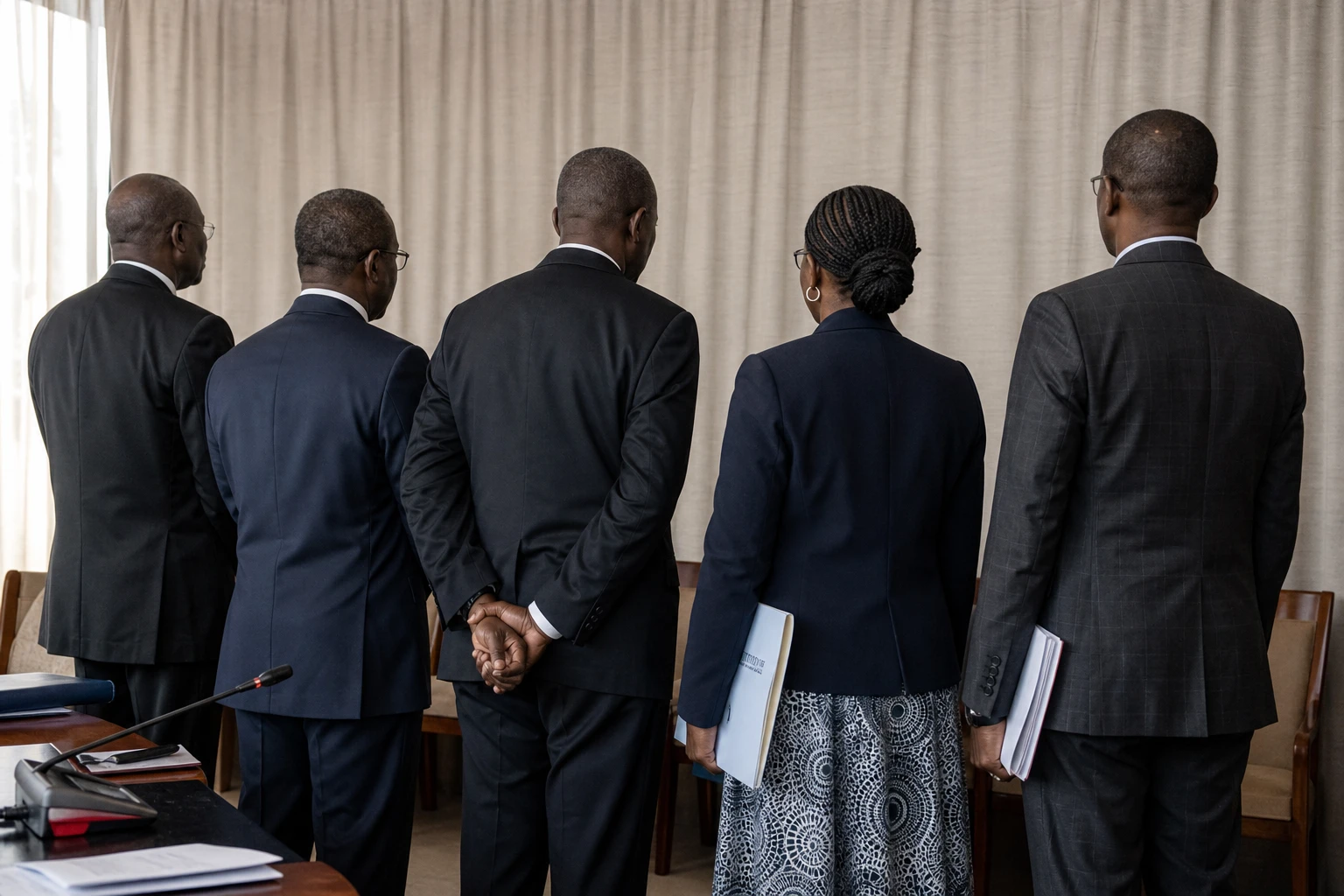
When decentralisation is measured to the last centime
In Côte d’Ivoire, the question is not simply whether public money has “disappeared”. It is broader: who really controls the flows meant to fund municipalities, regions and local services? From there, an accounting discrepancy quickly becomes a political issue, because it affects schools, health centres, local roads and the credibility of the state in the regions.
The debate comes at a particular moment for Côte d’Ivoire’s public administration. The government has set the 2026 budget at 17,350.2 billion CFA francs, up 13.1% on 2025. At the same time, local authorities have for several years been calling for decentralisation to be genuinely strengthened, beyond announcements and allocations shown in budget documents.
The heart of the case: disputed transfers, not an acknowledged budget shortfall
On 27 March 2026, the Ministry of Economy, Finance and Budget rejected the idea that 50 billion CFA francs intended for local authorities had “disappeared”. According to its account, the discrepancy observed in the 2024 and 2025 financial years amounted to 23.45 billion CFA francs and was explained by the difference between budget forecasts and actual revenue collected. The ministry also says that 93.71% of the resources projected were collected and fully transferred in 2024, and that 95.51% of the resources projected for 2025 had already been transferred.
This technical interpretation rests on a simple principle: the shares paid to local authorities depend on the actual level of revenue collected by the state. The ministry also says it introduced quarterly allocation orders to better align the amounts transferred with forecasts. In other words, Abidjan maintains that there was no appropriation, but a gap between expected revenue and revenue actually collected.
The counter-narrative took hold first in the media and then in politics. The case was initially brought to public attention by a press investigation, before being taken up by the mayor of Tiassalé, Assalé Tiémoko Antoine, who publicly maintained that local authorities were short of 50 billion CFA francs. The local official, who is also a political figure, brought the discussion down to a concrete level: fewer resources for municipal budgets, and therefore less visible investment for residents.
That is the sensitive point. In a municipality or region, a delay in transfers is not a minor accounting detail. It often means a missing line in an operating budget, a postponed construction project or a delayed health facility. The dispute is therefore about more than a figure. It concerns how public money reaches the final beneficiary.
A local case intersects with the national anti-corruption drive
The case comes as Ivorian authorities are sending increasingly strong signals on public governance. The High Authority for Good Governance, whose president, Zoro Épiphane Ballo, presented the country’s record on asset declaration compliance in Abuja in July 2026, says that asset declarations are specifically intended to prevent embezzlement, money laundering and illicit enrichment. The institution cites a compliance rate of 90.66% as at 31 December 2025, with 9,844 declarations received from 10,858 identified officials required to file.
The same institutional sequence also reflects the intensity of official rhetoric on economic crime. The HABG announced 451 referrals in 2025, including 303 relating to corruption by public officials, as well as 40 completed investigation reports and 37 arrests. In June 2026, its prosecutor also referred to more than 1,000 money-laundering cases opened. These figures do not directly concern the case involving local authorities, but they show that public integrity is now at the centre of the state’s discourse.
The challenge for the executive is a familiar one: proclaiming an anti-corruption policy is not enough if grey areas remain in the budget chain. In its report on the execution of the 2024 budget, the Court of Accounts stressed the need for consistency in the data submitted and for the proper instruments to be used to make budget corrections when forecasts change. It also recalls that a substantial change to the budget must be made through a supplementary finance act, not merely administrative adjustments.
In this context, the lack of any judicial update on the 50 billion CFA franc case fuels suspicion rather than dispelling it. At this stage, no corroborated public information allows it to be said that a specific criminal investigation has been opened into the matter. The lack of visible follow-up sustains a familiar paradox: the administration has responded, but independent verification is still waiting for a clear institutional forum.
A test for Abidjan, but also for ECOWAS and the FATF
The case is not confined to Côte d’Ivoire. It comes as the country seeks to leave the FATF grey list, which comprises jurisdictions subject to increased monitoring for money laundering and terrorist financing. According to the government’s official portal, removal could come as early as October 2026, following a verification mission announced after the June plenary.
This deadline matters beyond Abidjan. In West Africa, the credibility of public financial flows has become a regional concern because it affects partners’ confidence, financing costs and perceptions of governance in ECOWAS states. For Côte d’Ivoire, a driving force in the subregional economy, transparency in local budgets is therefore no secondary issue. It affects the overall image of the country’s financial administration.
The real challenge now is less about winning the battle of press releases than about ensuring traceability. Municipality by municipality, line by line, the state must make clear what was approved, what was collected, what was transferred and when. It is in this very concrete process that the strength of an anti-corruption promise is measured. And it is also there that the real value of decentralisation for Ivorians is at stake.