Algeria
 Egypt
 Libya
 Morocco
 Sudan
 Tunisia
 Benin
 Burkina Faso
 Cabo Verde
 Côte d'Ivoire
 Ghana
 Guinea
 Guinea-Bissau
 Liberia
 Mali
 Mauritania
 Niger
 Nigeria
 Sierra Leone
 The Gambia
 Togo
 Cameroon
 Central African Republic
 Chad
 DR Congo
 Equatorial Guinea
 Gabon
 Republic of the Congo
 São Tomé and Príncipe
 Burundi
 Comoros
 Djibouti
 Eritrea
 Ethiopia
 Kenya
 Madagascar
 Malawi
 Mauritius
 Mozambique
 Rwanda
 Seychelles
 Somalia
 South Sudan
 Tanzania
 Uganda
 Angola
 Botswana
 Eswatini
 Lesotho
 Namibia
 South Africa
 Zambia
 Zimbabwe
A coveted post as the UN questions its own role
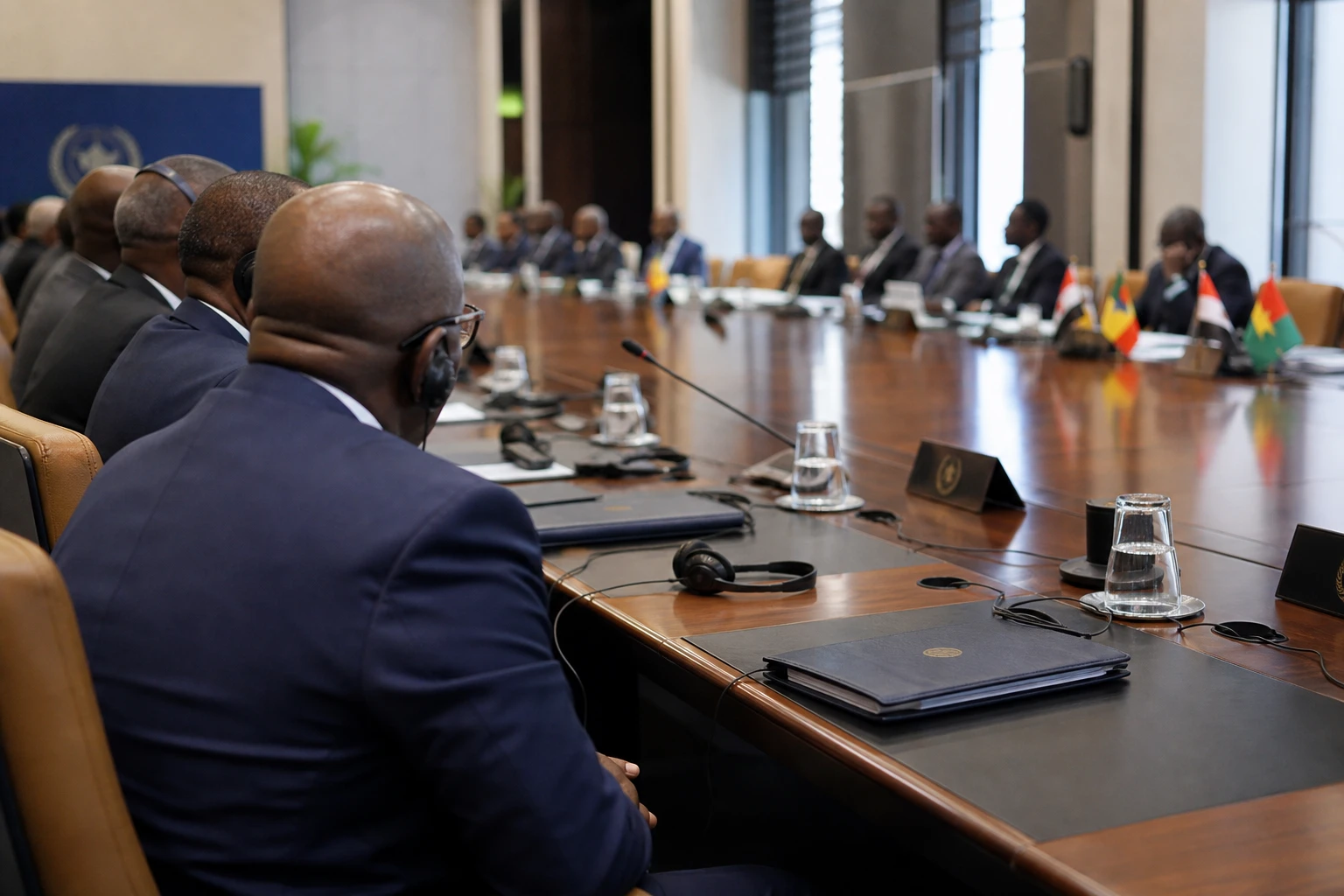
In Dakar and New York, Macky Sall’s candidacy goes beyond the trajectory of a former head of state. It raises a broader question: what face does West Africa want to give the next leadership of the United Nations, as the organisation seeks to regain credibility? The public debate on 23 July 2026 brought together candidates for the post of secretary-general in the General Assembly Hall, at a pivotal moment for an institution due to welcome its successor on 1 January 2027.
The context is also Senegalese. On 20 July, the authorities in Dakar officially backed the candidacy, mobilising the government and the country’s diplomatic network. In a country where foreign policy remains a marker of sovereignty and international standing, this choice gives the bid national as well as continental significance.
An African candidacy in a highly formalised process
Macky Sall’s name has been part of the official selection process for the next secretary-general since 2 March 2026, following a nomination submitted to the UN by Burundi. The UN document states that the nomination forms part of the process launched by the General Assembly and the Security Council, under the rules governing the succession to António Guterres, whose term ends on 31 December 2026.
The 23 July event was not a vote, but a public hearing. The UN described it as a “town hall”, a public meeting intended to present the visions of the six candidates and put them to questions from member states and civil society. They included four women and two men, among them Macky Sall, the only candidate from Africa in this selection cycle.
This matters for Africa. The continent often calls for reform of multilateralism, but is rarely in a position to hold one of the system’s most symbolic posts. The candidacy of a former Senegalese president therefore gives renewed visibility to a longstanding demand: for Africa to have a say not only in debates, but also in leadership roles.
What Macky Sall put forward to the other candidates
In front of the other contenders for the post, Macky Sall defended an approach centred on dialogue, crisis prevention and reform of the organisation. According to available accounts, he stressed trust between states, the need for a more effective UN and the secretary-general’s ability to bring positions closer together when the Security Council is deadlocked. It is a highly political reading of the role, more focused on arbitration and mediation than technocracy.
This position is not insignificant. The secretary-general does not decide conflicts or sanctions alone, but has real scope to exert influence: setting the agenda, mediation, early warning and diplomatic impetus. In a world fragmented by wars, rivalries between powers and budget crises, the contest is as much about method as symbolism.
The debate also served to test his ability to address several audiences at once: the major powers, countries of the Global South, African diplomatic services and an international civil society increasingly attentive to the transparency of the process. On this point, the UN sought to make the hearings a more open exercise than the usual negotiations in the Security Council.
In Senegal, a state decision that goes beyond the former president
Dakar’s official backing changes how the bid is viewed. It is no longer simply a personal ambition pursued by a former president, but a position adopted by the Senegalese state. The foreign ministry said the entire diplomatic apparatus would be mobilised to promote the candidacy among member states.
For Senegal, this move could reinforce an established image: that of a country accustomed to mediation, orderly political transitions and a presence in multilateral forums. For Dakar, the stakes are also economic and diplomatic. An executive-backed candidacy can serve as leverage to strengthen networks, advance commercial interests and underline the country’s standing in West African diplomacy.
But the debate is not just about image. In Senegal, the issue also touches on recent political memory, the management of life after office and the ability of institutions to speak with one voice on the international stage. In a country where changes of government are closely scrutinised, this official backing shows that a state interest can survive changes in the governing majority.
The issue also has regional significance. In West Africa, ECOWAS is going through a period of realignment and tensions, while several capitals are seeking to redefine their place in the international balance of power. A Senegalese candidacy backed by the state is therefore part of a broader neighbourhood diplomacy, in which access to multilateral posts is also a test of regional influence.
What to watch after this first round
What happens next will depend first on consultations among members of the Security Council and General Assembly. The next exchanges will show whether Macky Sall can turn a credible candidacy into a coalition-building drive, against candidates already well established in UN circles. The timetable is tight, as the succession must be settled before the next incumbent takes office in early 2027.
For Africa, the stakes are broader than the Senegalese case alone. The continent wants a greater role in reforming multilateralism, managing conflicts and defending fairer rules. Macky Sall’s candidacy is a reminder that an African voice can aspire to lead the UN, but also that, as ever, this ambition will be played out in the hard arena of diplomatic power politics.