Algeria
 Egypt
 Libya
 Morocco
 Sudan
 Tunisia
 Benin
 Burkina Faso
 Cabo Verde
 Côte d'Ivoire
 Ghana
 Guinea-Bissau
 Liberia
 Mali
 Mauritania
 Niger
 Nigeria
 Senegal
 Sierra Leone
 The Gambia
 Togo
 Cameroon
 Central African Republic
 Chad
 DR Congo
 Equatorial Guinea
 Gabon
 Republic of the Congo
 São Tomé and Príncipe
 Burundi
 Comoros
 Djibouti
 Eritrea
 Ethiopia
 Kenya
 Madagascar
 Malawi
 Mauritius
 Mozambique
 Rwanda
 Seychelles
 Somalia
 South Sudan
 Tanzania
 Uganda
 Angola
 Botswana
 Eswatini
 Lesotho
 Namibia
 South Africa
 Zambia
 Zimbabwe
An state digitising its service counters is now seeking partners to move faster
In Conakry, modernising the administration is no longer happening only in ministry offices. It also depends on the state’s ability to move data, automate procedures and make public services simpler for citizens, businesses and economic stakeholders. In Guinea, this shift is already visible in public procurement, public finances and several digitisation projects. The new cooperation with Kigali builds on this trajectory, while extending it to broader uses such as artificial intelligence, e-health and e-commerce.
This movement is taking place in a regional context in which digital transformation is no longer a luxury, but a lever for economic integration. ECOWAS has for several years promoted programmes for a common digital market, while the African Union reaffirmed AI’s strategic potential for the continent in 2025 and called for its continental strategy on the subject to be accelerated. At the same time, Guinea is involved in West African connectivity and digital identity projects intended to facilitate access to services and the movement of people and data within the ECOWAS area.
What Conakry and Kigali put on the table
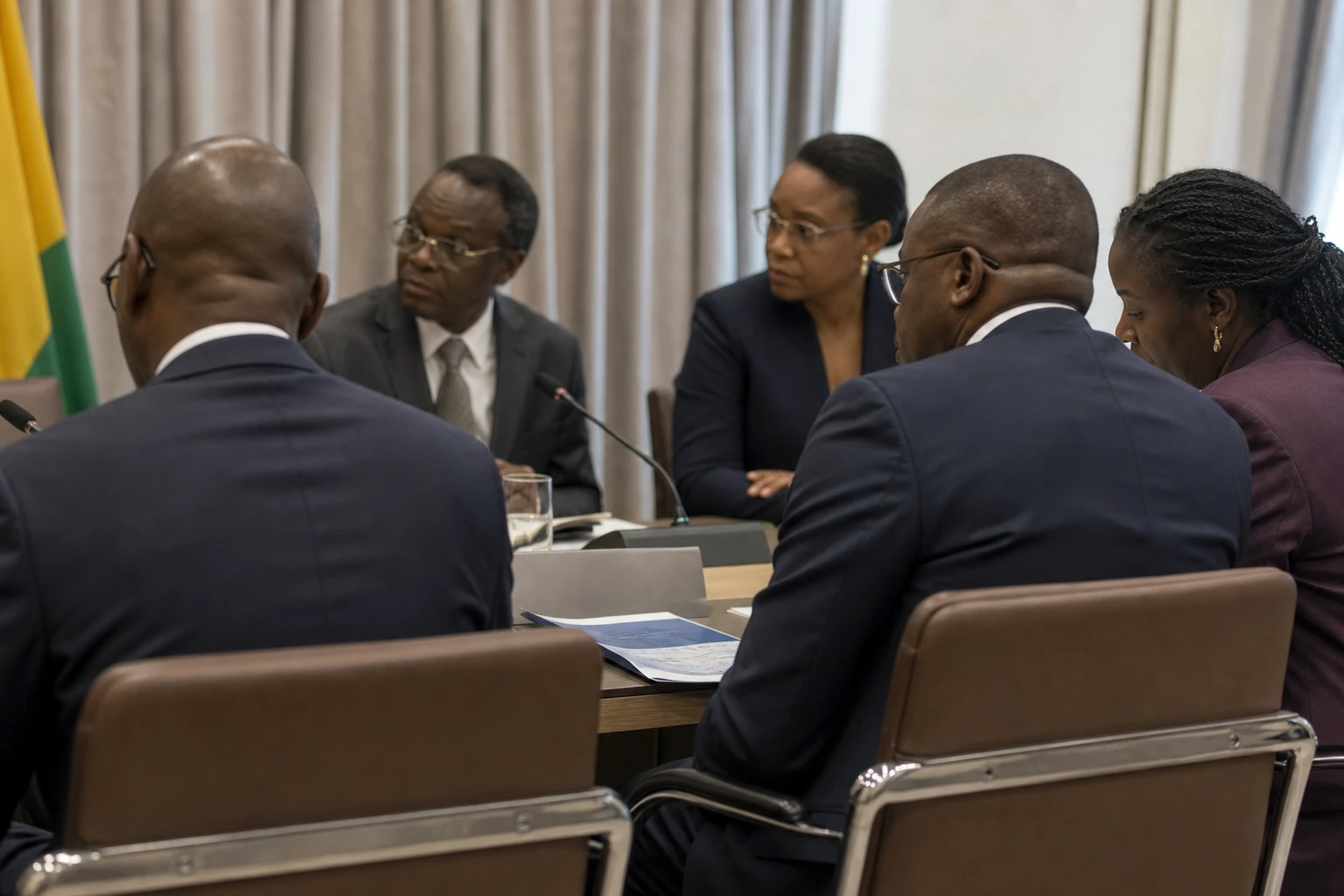
On 20 July in Conakry, Guinea’s Minister of Communication, Digital Economy and Innovation, Mourana Soumah, held talks with a Rwandan delegation led by Ambassador Michel Minega Sebera. The two sides identified several areas for cooperation: e-health, e-commerce, artificial intelligence and the digitisation of public services. The stated aim is to develop and then deploy digital solutions tailored to the needs of Guinea’s economic and administrative sectors.
The initiative did not come out of nowhere. In March 2026, the two countries had already signed a memorandum of understanding to modernise the tools used to digitise public finances in Guinea. Guinea’s Ministry of Economy and Finance had said at the time that a Rwandan technical team would be sent to Conakry to support implementation and skills transfer. Cooperation with Kigali is therefore not limited to a courtesy visit. It is taking the form of structured technical support, already under way on specific systems.
In public procurement, Guinea has for several months been relying on TELEMO, its electronic tendering platform. Guinean authorities said in September 2025 that more than 90% of the modules were operational, with functions ranging from viewing tender notices to tracking the signing of contracts. Rwanda’s experience is presented as a useful reference, particularly through e-procurement solutions and the digital organisation of procedures.
Why this partnership matters to Guineans
For the administration, the stakes are clear: reduce delays, limit duplication, secure data and improve traceability. For businesses, especially small and medium-sized enterprises, digitisation can cut paperwork costs, shorten approval processes and make access to public procurement clearer. For households, the impact lies elsewhere: fewer trips to service counters, less paperwork and, in time, procedures that are more accessible remotely, including for healthcare and commercial services.
But success will depend on the quality of implementation. In Guinea, the digital divide remains a tangible issue between Conakry and the rest of the country, between connected areas and less well-served localities, and between users with suitable devices and those without either an appropriate phone or a stable connection. This is also why the government has launched or revived several related initiatives, including a national telecommunications policy for 2026-2030 and data governance projects, presented as foundations for AI and the data economy.
Rwanda, for its part, brings experience often cited in e-government and digital public services. Kigali has made digital technology a central pillar of its modernisation strategy, and its institutions have recently highlighted AI, digital training and digitised services as tools for development. Guinea is therefore seeking less a model to copy than expertise to adapt. That is an important distinction. A digital public system cannot simply be transplanted unchanged. It must be aligned with local procedures, administrative capacity, users’ circumstances and the actual state of infrastructure.
A political signal beyond the Conakry-Kigali partnership
This episode says something broader about Africa’s digital diplomacy. States are increasingly seeking South-South partnerships that can accelerate reforms which conventional cooperation often funds but takes time to deliver. In West Africa, ECOWAS is pushing for regional digital integration, with projects on connectivity, e-commerce and digital government services. At continental level, the African Union is calling for inclusive and sovereign AI ecosystems. By drawing on Rwanda’s experience, Guinea is therefore joining a dynamic that goes beyond its national agenda alone.
The decisive step remains turning cooperation pledges into visible services. The coming months will show whether the discussions in Conakry lead to measurable tools in healthcare, commerce and administration, or remain at the announcement stage. In Guinea, as elsewhere in West Africa, the credibility of a digital policy is measured less by the language of innovation than by the actual simplicity of procedures, the reliability of platforms and their uptake by users. That is where the real impact of closer ties between Conakry and Kigali will be determined.