Algeria
 Egypt
 Libya
 Morocco
 Sudan
 Tunisia
 Benin
 Burkina Faso
 Cabo Verde
 Côte d'Ivoire
 Ghana
 Guinea
 Guinea-Bissau
 Liberia
 Mali
 Mauritania
 Niger
 Nigeria
 Senegal
 Sierra Leone
 The Gambia
 Togo
 Cameroon
 Central African Republic
 Chad
 Equatorial Guinea
 Gabon
 Republic of the Congo
 São Tomé and Príncipe
 Burundi
 Comoros
 Djibouti
 Eritrea
 Ethiopia
 Kenya
 Madagascar
 Malawi
 Mauritius
 Mozambique
 Rwanda
 Seychelles
 Somalia
 South Sudan
 Tanzania
 Uganda
 Angola
 Botswana
 Eswatini
 Lesotho
 Namibia
 South Africa
 Zambia
 Zimbabwe
A mining area under constant pressure
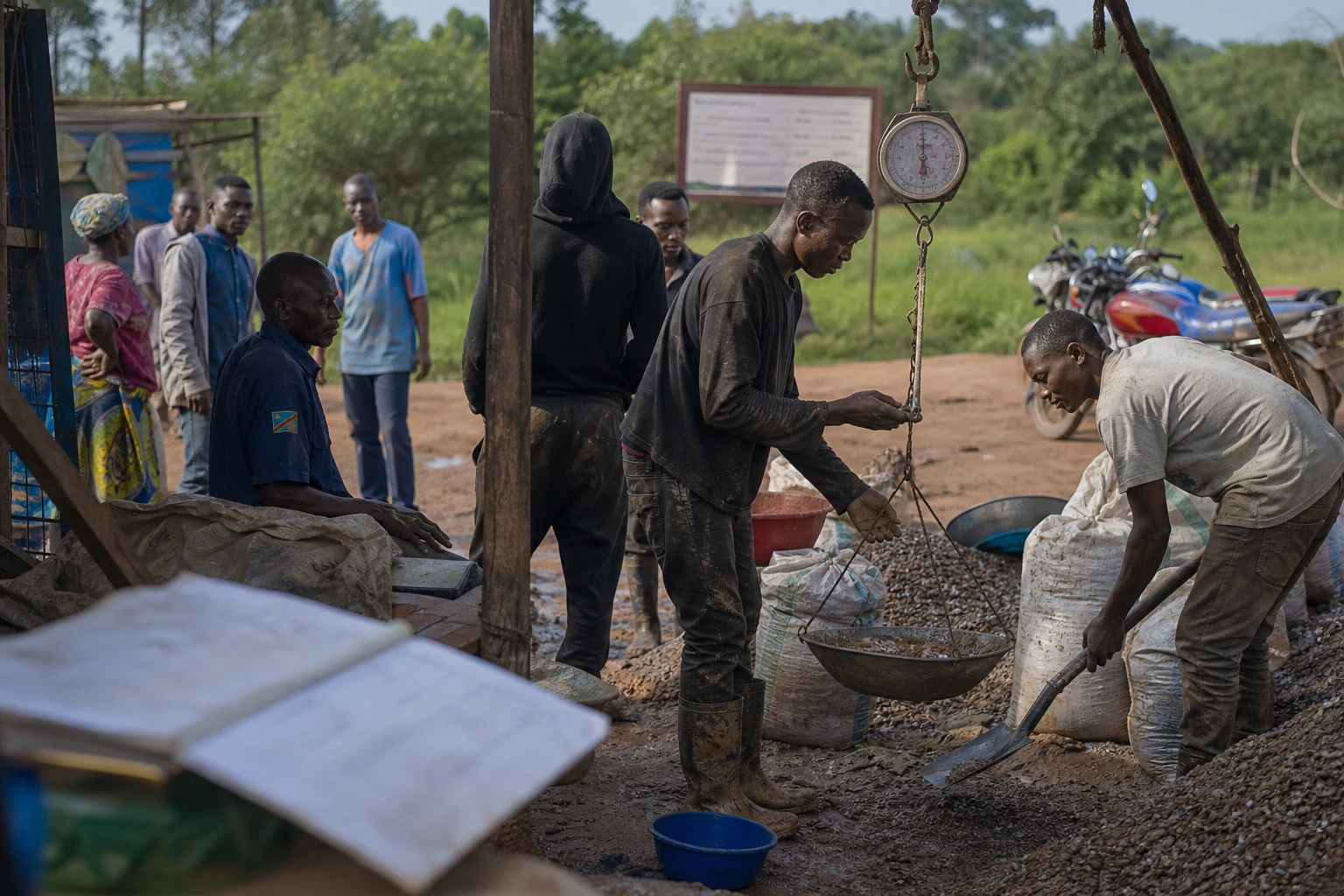
In the east of the Democratic Republic of the Congo, insecurity is measured not only in kilometres lost, but in working days interrupted, families scattered and tracks turned deadly. In Mambasa, Ituri, mining sites remain exposed to repeated attacks, even as people seek to earn an income from artisanal gold mining.
Mambasa territory lies at the junction of Ituri and North Kivu, two provinces under a state of siege since May 2021. This exceptional measure transfers civil authority to military governors and is intended, in theory, to speed up the security response. In practice, ADF attacks continue to hit civilians, especially in rural and forested areas where the state remains largely absent.
What is known about the 22 July attack
On Wednesday 22 July 2026, several villages in the Mambembe-Bella grouping, in Mambasa territory, were targeted in an incursion attributed to the Allied Democratic Forces, an armed group active in eastern Congo that has pledged allegiance to Islamic State. Initial death tolls varied across local and media sources, from 16 to 18, confirming that the count remains provisional.
The victims were reportedly mostly gold miners in the area. Residents and community leaders have also reported missing people, while the attackers were said to remain active nearby when the first accounts were compiled. Witness accounts gathered at the scene describe killings with machetes and abductions, but these should be treated as field reports, not a definitive toll.
On the same day, another toll of about 10 deaths was reported near the administrative boundary between Mambasa and Beni in a neighbouring attack, illustrating the continuing threat along the forest route linking Ituri to North Kivu. A few days earlier, civil society groups and humanitarian workers had already reported the release of hostages and fresh population displacement in the same area.
Why the ADF are still attacking despite operations
The problem is not only the armed group’s capacity to cause harm. Geography also plays a part. The ADF operate in a dense corridor of forests, mining sites and secondary tracks, where Congolese forces, UN patrols and regional military co-operation struggle to maintain a constant presence. MONUSCO has said that Mambasa remains a priority area, following a series of attacks that it said killed more than 100 people in the territory in one month.
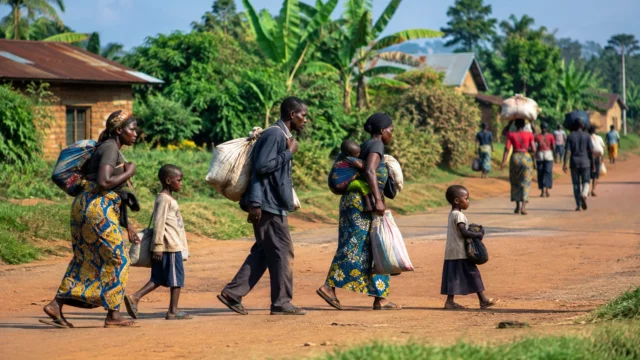
On the ground, the effects are immediate. Gold miners stop working. Markets empty. Schools close or operate at reduced capacity as families flee to places they consider safer. In a province dominated by the informal economy, every attack wipes out more of the day’s income. The cost is therefore not only human; it is economic too, with roads cut, supply chains weakened and villages gripped by fear.
Military pressure has not disappeared. The FARDC are conducting operations in the area, with support from the Ugandan army under Operation Shujaa, launched against the ADF in eastern Congo. But results remain uneven, particularly where armed groups move from one territory to another, between Ituri, North Kivu and, further north, parts of Haut-Uele.
A test for Kinshasa and the region
In Kinshasa, these attacks are a reminder of a political reality: protecting civilians remains the central test of the state’s presence in the east of the country. The Congolese authorities must deal with several crises at once, including fighting against the AFC/M23 in North and South Kivu, while the ADF continue to strike in areas that are more dispersed but just as deadly. The overlapping fronts complicate the deployment of forces and sometimes dilute public attention.
The issue also has regional implications. Ituri and North Kivu are cross-border corridors, where security dynamics in Congo affect Uganda, the corridor towards Lake Albert and inland mining areas. When the ADF displace people or retreat to more isolated areas, they also shift the risk to other provinces. This is one reason local authorities, MONUSCO and regional partners are now discussing community alert systems and local protection measures alongside military operations.
The events of 22 and 23 July also show a persistent reality: in the east of the Democratic Republic of the Congo, death tolls often emerge in fragments, as searches and cross-checks proceed. For Mambasa’s residents, the immediate concern is not the long-term strategic picture. It is the very practical possibility of travelling, working and burying the dead without waiting for the next attack.