Algeria
 Egypt
 Libya
 Morocco
 Sudan
 Tunisia
 Benin
 Burkina Faso
 Cabo Verde
 Côte d'Ivoire
 Ghana
 Guinea
 Guinea-Bissau
 Liberia
 Mali
 Mauritania
 Niger
 Nigeria
 Sierra Leone
 The Gambia
 Togo
 Cameroon
 Central African Republic
 Chad
 DR Congo
 Equatorial Guinea
 Gabon
 Republic of the Congo
 São Tomé and Príncipe
 Burundi
 Comoros
 Djibouti
 Eritrea
 Ethiopia
 Kenya
 Madagascar
 Malawi
 Mauritius
 Mozambique
 Rwanda
 Seychelles
 Somalia
 South Sudan
 Tanzania
 Uganda
 Angola
 Botswana
 Eswatini
 Lesotho
 Namibia
 South Africa
 Zambia
 Zimbabwe
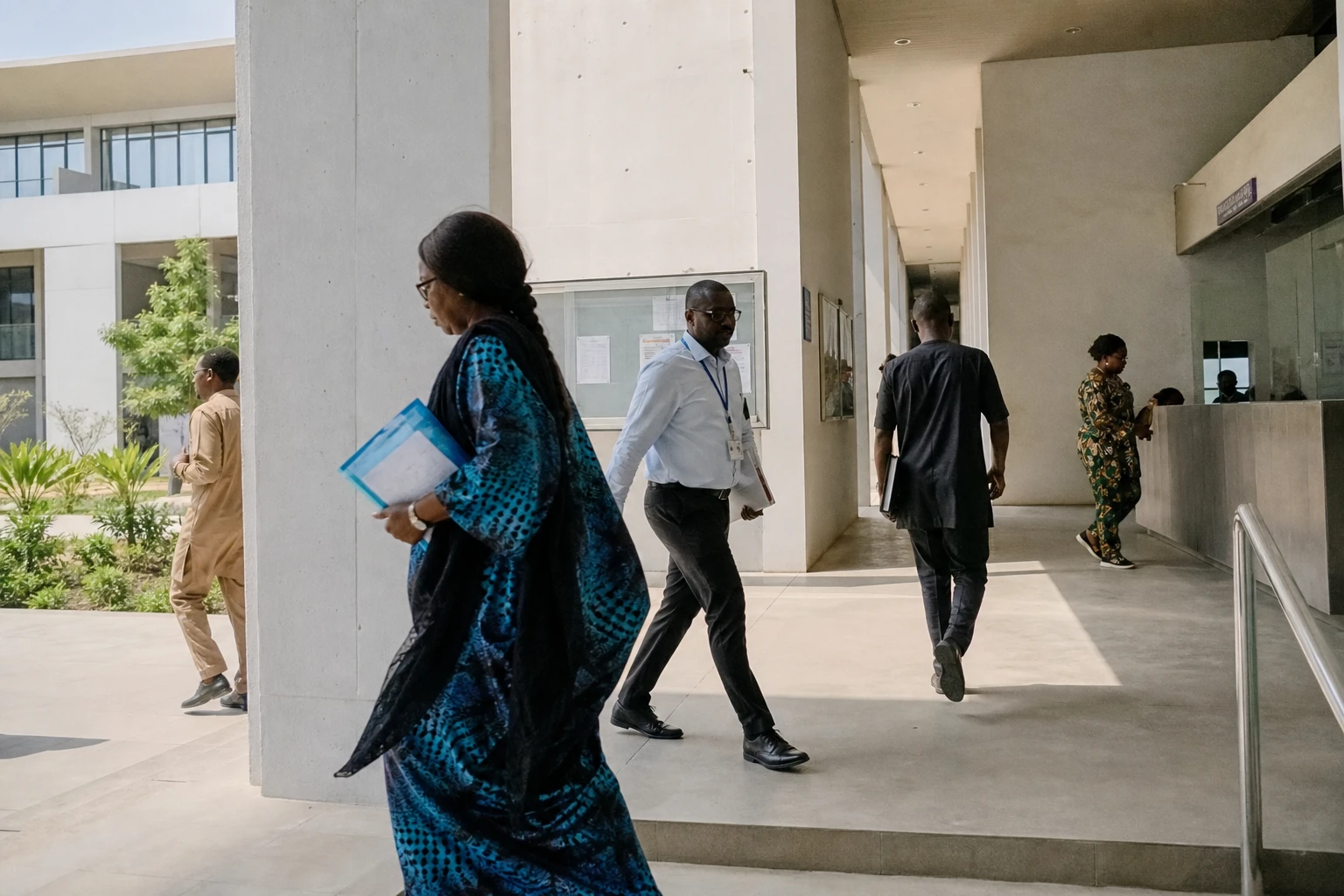
Senegal’s majority enters a phase of sorting and clarification
In Senegal, political loyalties shift quickly when power is being reorganised. In recent days, the presidential camp has looked less like a united family than an open construction site, with alliances, departures and positioning calculations unfolding around Dakar, the country’s capital. In such a period, the real issue is not simply the name of a party. It is the ruling camp’s ability to maintain common discipline as it changes shape.
This reshaping is taking place in a specific institutional context. President Bassirou Diomaye Faye has already dismantled the previous government structure, replacing Ousmane Sonko as prime minister and then appointing a new prime minister on 25 May 2026. At the same time, the National Assembly elected Ousmane Sonko as its speaker on 26 May 2026, keeping the party leader at the centre of parliamentary politics despite his departure from the executive.
Visible departures, but a broader political signal
On 22 July 2026, several Pastef figures and officials formally announced their departure to move closer to the head of state. They include Dr El Hadji Mansour Diop, director-general of Aristide Le Dantec Hospital, who denounced the «clannish management» of Ousmane Sonko’s inner circle in an open letter. Other officials from the Senegalese Patriotic Youth movement have also left, including Bakary Bass Sakho and Ousmane Sonko Jr, until then its national deputy coordinator.
Another name drew attention: Lansana Gagny Sakho, chairman of the board of Apix, Senegal’s investment promotion agency. Although he did not leave Pastef at the same time, he voiced his support for President Bassirou Diomaye Faye, showing that the shift is not happening only through formal resignations. It is also visible in public statements, which are often quicker than internal procedures.
Pastef’s leadership, for its part, is playing down the departures and continues to emphasise its ambition to build a large presence across the regions, with a membership drive targeting one million members. This figure, put forward by the party, should be understood as a political target rather than a verified tally. But it reflects a reality: the battle is not being fought only in Dakar. It is also playing out in departments, municipalities and grassroots networks across the country.
25 July: an event that goes beyond the creation of a party
The focal point of this sequence is Saturday 25 July 2026, at Dakar’s King Fahd Palace. On that day, the «Diomaye Président» coalition is due to hold a founding general assembly to launch its new party and unveil its official name. Several Senegalese media outlets have confirmed that the meeting will take place, following a gathering of coalition leaders on 19 July.
The timing is significant. It shows that Bassirou Diomaye Faye is no longer content to be the head of state backed by an electoral coalition. He is now seeking an autonomous political vehicle that is more stable and clearly defined and, above all, less dependent on a party organisation already beset by tensions. Put simply, the president wants to move from an alliance of convenience to a lasting structure capable of underpinning government action.
This transformation had already begun in the spring. On 7 March 2026, the Diomaye Président coalition adopted its founding texts in Dakar, with the aim of consolidating the head of state’s support base while keeping the coalition open, according to its proponents, in the service of government action. The next step in July therefore extends a process that began well before the recent departures.
What the crisis says about the Diomaye-Sonko political partnership
The split is first and foremost symbolic. Bassirou Diomaye Faye and Ousmane Sonko long represented a political tandem. Together, they led the 2024 presidential victory. Today, their relationship looks more like a tense coexistence. Sonko lost the premiership on 22 May 2026, then regained a central role in Parliament when he was elected speaker of the National Assembly on 26 May. Faye, meanwhile, has reasserted control over the executive and accelerated the building of his own camp.
For party activists, the question is practical. Should they remain loyal to the original political movement, Pastef, or follow the head of state into a new formation intended to support the government’s day-to-day work? For senior figures, the stakes are even more material. They concern nominations, positions of responsibility, administrative visibility and access to decision-making networks. In a majority still taking shape, these calculations often carry more weight than slogans.
For Senegalese people, this reshaping will have a direct effect if it diverts attention from urgent practical concerns. The government is talking about food sovereignty, decentralisation and administrative reforms, while the president is holding consultations on national dialogue and local authorities. If the majority fragments too quickly, the risk is straightforward: reforms will move more slowly, and the country’s political outlook will become less stable.
Regional implications in a West Africa also undergoing change
Senegal is not going through this period in isolation. The country remains an important member of ECOWAS, the Economic Community of West African States, at a time when the organisation is seeking to maintain its cohesion amid significant regional turbulence. On 18 July 2026, Bassirou Diomaye Faye travelled to Freetown for ECOWAS’s 69th ordinary session of heads of state and government. The timing is therefore sensitive: Dakar is addressing both its domestic base and a sub-region watching the strength of its democracies.
This episode also says something broader about parties born out of protest that then come to power quickly. They often win through a groundswell of calls for change, but must then become governing machines. That is when rival claims to legitimacy emerge: between the head of state, the party leader, long-standing activists and new allies. Senegal offers a West African case study, while remaining part of a wider continental trend.
25 July will show whether President Bassirou Diomaye Faye can unite a majority behind him that is more cohesive than Pastef is today. It will also show whether Ousmane Sonko, despite his recent setbacks, retains enough influence to shape the structure of power. In Dakar, the issue is no longer merely the birth of a party. It is the shape of Senegal’s political centre of gravity in the months ahead.