Algeria
 Egypt
 Libya
 Sudan
 Tunisia
 Benin
 Burkina Faso
 Cabo Verde
 Côte d'Ivoire
 Ghana
 Guinea
 Guinea-Bissau
 Liberia
 Mali
 Mauritania
 Niger
 Nigeria
 Senegal
 Sierra Leone
 The Gambia
 Togo
 Cameroon
 Central African Republic
 Chad
 DR Congo
 Equatorial Guinea
 Gabon
 Republic of the Congo
 São Tomé and Príncipe
 Burundi
 Comoros
 Djibouti
 Eritrea
 Ethiopia
 Kenya
 Madagascar
 Malawi
 Mauritius
 Mozambique
 Rwanda
 Seychelles
 Somalia
 South Sudan
 Tanzania
 Uganda
 Angola
 Botswana
 Eswatini
 Lesotho
 Namibia
 South Africa
 Zambia
 Zimbabwe
In Morocco, a cultural scene that also speaks to the future
In Rabat, storytelling is not consigned to childhood memories. It remains a space where society revisits its history, shares its landmarks and passes on values without relying on textbooks. In a country where orality retains a strong place, this kind of gathering says much about how Morocco views its living heritage.
The Morocco International Storytelling Festival is part of this approach. Its 23rd edition was held in Rabat from 13 to 20 July, under the theme “If the Homeland Were a Story Told to Me: Words of Aïcha Kandicha”. The event brought together storytellers from 40 countries in a capital that has for years sought to strengthen its standing as a national and regional cultural crossroads.
Rabat, political capital and showcase for intangible heritage
Morocco has made intangible cultural heritage a prominent strand of its cultural policy, in dialogue with UNESCO frameworks. In the organisation’s terminology, this heritage includes oral traditions, performing arts, social practices and skills passed down from generation to generation. The choice of Rabat is therefore no coincidence: the city is at once a decision-making centre, a symbolic stage and a place where stories circulate.
This edition also coincided with the festival’s 30th anniversary; it was launched in 1996. This is significant because it shows that the event is not a one-off attraction, but an established fixture. For three decades, this kind of festival has championed a simple idea: storytelling is not a secondary form of entertainment, but a way of preserving collective memory.
A celebration of storytelling, but also a reading of the country
At the heart of this edition, the figure of Aïcha Kandicha served as a guiding thread. In the Moroccan popular imagination, she is often portrayed as a frightening character. But several contemporary interpretations recast her as a free woman, even a figure of resistance. This plurality shows that oral narratives do not freeze the past: they contest it, shift it and sometimes repair it.
This reinterpretation was brought to the festival by Moroccan storytellers, including Fatima Bassour, who offered a different version of the legend. The heart of the matter is not folklore. It touches on the place of women in popular memory, how local resistance is transformed into myth, and how Morocco continues to bring history and imagination into dialogue.
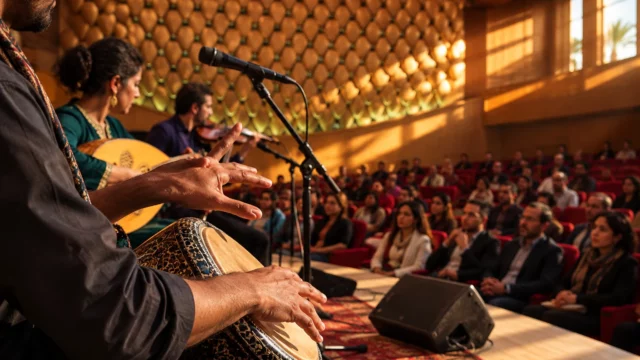
The organisers also combined performances, folk music concerts, parades in traditional dress and cultural gatherings. This mix is not merely decorative. It is a reminder that in many African societies, storytelling never exists in isolation: it engages with music, gesture, language, the stage and family memory. It is precisely this intersection that allows it to endure.
What storytelling changes in practice
In a country such as Morocco, the stakes go beyond safeguarding heritage alone. Storytelling acts as a tool for informal education. It passes on moral touchstones, historical references, forms of language and a vision of the collective. For young audiences, it offers a living way into memory. For practitioners, it remains a profession, a discipline and a space for creativity. For cultural institutions, it becomes a means of transmission and a source of influence.
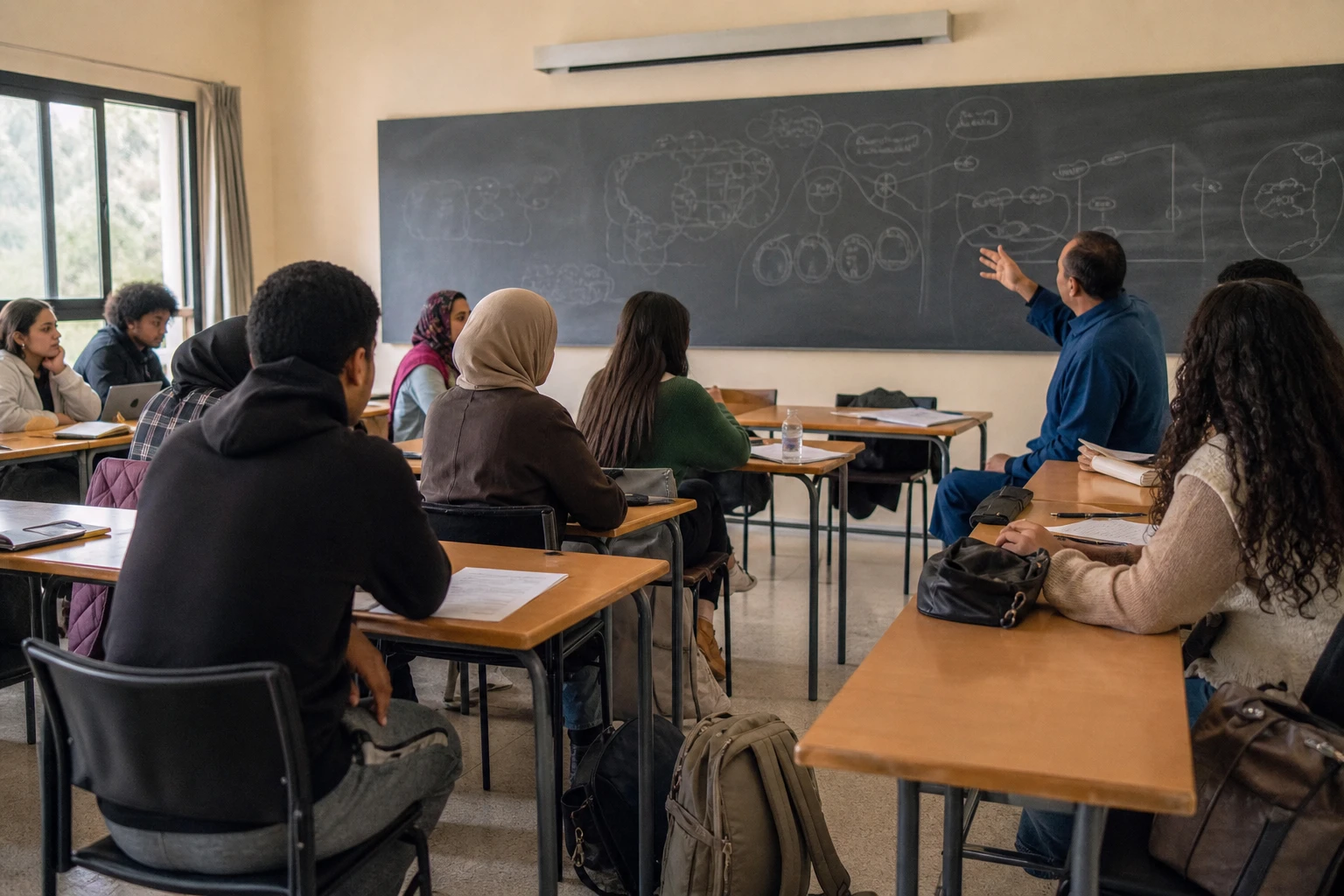
The workshops at this edition, devoted to collecting, documenting and passing on oral narratives, follow the same logic. They address a very practical question: how can heritage be preserved when it exists first and foremost in the voice, the breath, and the memory of families and communities? The answer lies in recording, publishing, training and circulating stories between generations.
The social impact of this kind of festival should also be considered. In Rabat, it speaks to an urban audience, educated and connected to cultural circuits. But it also points to stories from rural backgrounds, different regions and local traditions that have long remained outside official showcases. In other words, it links the capital with the country’s cultural peripheries, and the scholarly stage with popular memories.
A Moroccan event with an African reach
The Rabat festival has a clear continental resonance. In several African countries, orality remains a pillar of social life, the teaching of elders, the transmission of languages and the circulation of founding narratives. Morocco thus joins a broader movement to promote Africa’s intangible heritage, in which culture is not limited to museums but rooted in living practices.
This edition is also a reminder of one essential point: defending oral heritage is not about looking to the past. It also prepares the continent’s cultural future. In Rabat, storytelling provided a way to speak about homeland, memory and transmission. It is a quiet but powerful way of saying that African societies continue to invent their own forms of continuity.