Algeria
 Egypt
 Libya
 Morocco
 Sudan
 Tunisia
 Benin
 Burkina Faso
 Cabo Verde
 Côte d'Ivoire
 Ghana
 Guinea
 Guinea-Bissau
 Liberia
 Mali
 Mauritania
 Niger
 Nigeria
 Sierra Leone
 The Gambia
 Togo
 Cameroon
 Central African Republic
 Chad
 DR Congo
 Equatorial Guinea
 Gabon
 Republic of the Congo
 São Tomé and Príncipe
 Burundi
 Comoros
 Djibouti
 Eritrea
 Ethiopia
 Kenya
 Madagascar
 Malawi
 Mauritius
 Mozambique
 Rwanda
 Seychelles
 Somalia
 South Sudan
 Tanzania
 Uganda
 Angola
 Botswana
 Eswatini
 Lesotho
 Namibia
 South Africa
 Zambia
 Zimbabwe
An education reform designed to avoid institutional amnesia
In Dakar, the debate about schools is no longer limited to changing programmes. It now centres on a deeper question: how can reforms be made without erasing what has already been learned, tested, corrected and sometimes abandoned too quickly? In a country where political changes of government can often disrupt public-sector reforms, Senegal is opting for a different approach: bringing former decision-makers together with the team tasked with writing the new curricula.
This choice is not insignificant. Senegal is a member of ECOWAS, the West African community that still comprises twelve member states, including Senegal, and sees regional integration as a lever for stability and development. In this context, the quality of education matters as much for citizenship as for employment, mobility and the competitiveness of West African economies.
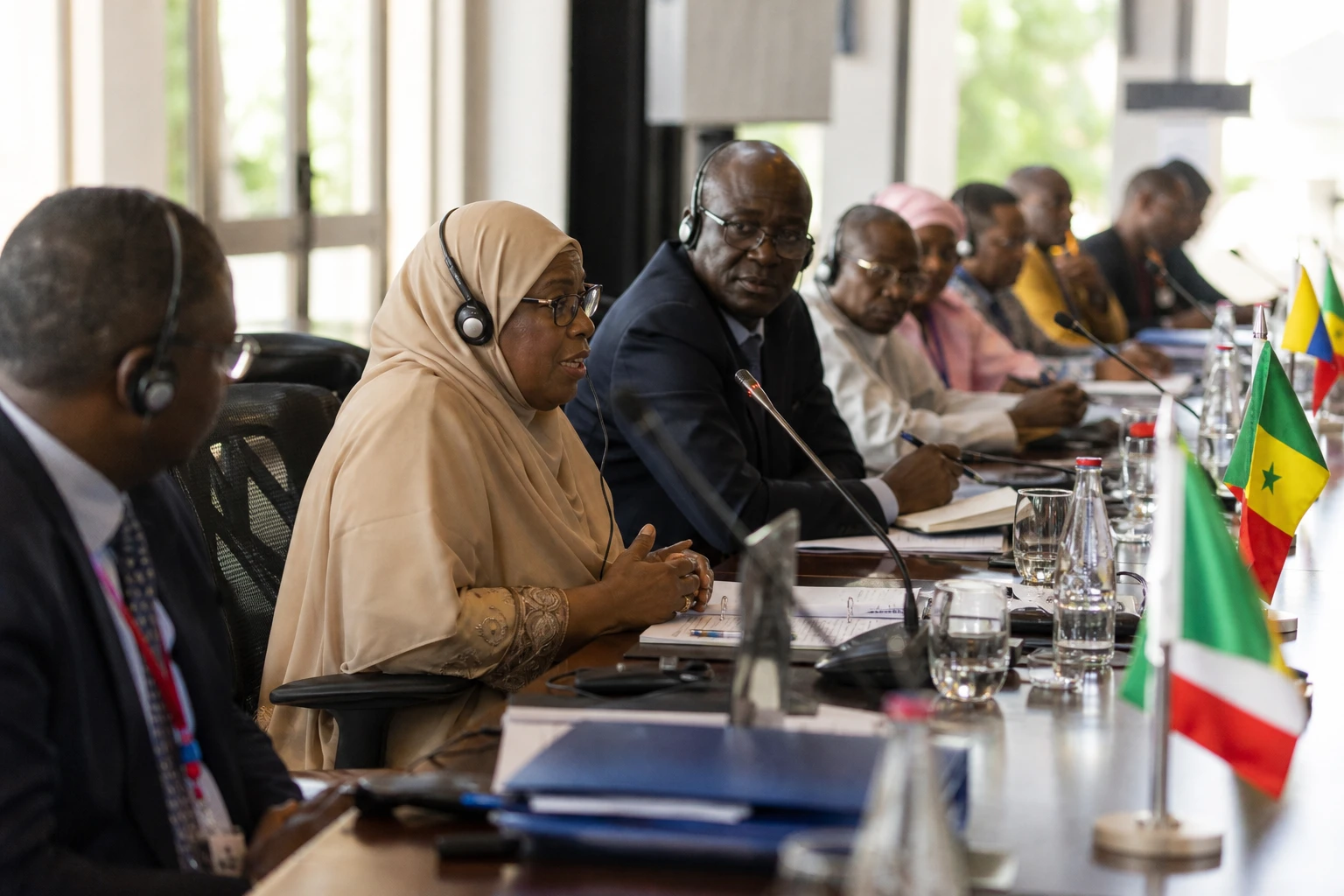
In Dakar, the Ministry of National Education therefore established an Education Advisory Council on Wednesday 22 July 2026, then brought the new body together with the Scientific Committee for Curriculum Reform. The meeting included several former ministers of the sector, among them Serigne Mbaye Thiam, Mamadou Talla, Cheikh Oumar Hann, Moussa Baldé, Mamadou Ndoye, Kalidou Diallo and Ibrahima Sall. The ministry wants to draw on this “institutional memory” to build on what has been achieved, identify recurring obstacles and avoid reforms designed as if nothing had come before.
Curricula to be rewritten, but against an already stark backdrop
This approach comes amid mounting pressure on Senegal’s education system. The first Report on the State of the National Education System, presented on 4 June 2025 with support from IIPE-UNESCO, found that around 38% of children aged 6 to 16 are out of school, with significant disparities in rural areas and some regions in the country’s interior. The same document notes that more than 70% of children failed to achieve the expected basic skills in reading, numeracy and comprehension in the 2019 Jàngandoo national assessment.
In other words, the problem is not only access to school. It also concerns the quality of learning, continuity of education and how well content reflects the country’s social realities. This is precisely where curriculum reform becomes political in the fullest sense: it concerns what Senegalese schools decide to teach, to whom, using which tools, and in preparation for what future. Minister Moustapha Guirassy has said he is working on a “comprehensive” reform of the system, going beyond individual subjects or infrastructure alone.
The ministry is therefore pursuing two goals at once. On the one hand, it wants to modernise content to better reflect scientific, technological and social change. On the other, it is seeking to safeguard the reform by putting it under collective oversight, drawing on the views of several generations of public officials. This is more than a consultative process. It is also a way to reduce the familiar risk of African education reforms: changing labels without bringing lasting change to teaching practices, assessments, teacher training and pupils’ results.
A bet on continuity as the cost of delay mounts
The stakes are also economic and social. Senegal has already made a substantial investment in education. The IIPE-UNESCO report notes that, over the past decade, nearly 20% of government spending was allocated to the sector. But results remain inadequate in light of needs, and the report on “the cost of inaction” estimates that, without corrective measures, the fiscal and social costs associated with weak basic skills could reach as much as 17% of Senegal’s GDP by 2030.
That figure alone says a great deal. For households, it means fragile educational pathways and fewer chances of finding work. For the state, it points to a heavier burden in terms of social cohesion, youth employment and productivity. In rural areas, where many children remain out of school, it also raises the very concrete question of regional equity: a national reform is worthwhile only if it reaches Kaffrine, Diourbel, Matam and other areas often far from decision-making centres.
The institutional continuity championed in Dakar is therefore a response to an urgent practical need. Former ministers know the administrative resistance, educational compromises and unfinished reforms. The Scientific Committee’s specialists, meanwhile, bring curriculum expertise and pedagogical coherence. The idea is simple: if the country wants to reform its schools, it must avoid restarting the debate from scratch with every political change. This approach may seem cautious. Above all, it is rational.
What Dakar is testing for itself is also being watched across West Africa
Finally, Senegal’s initiative has significance beyond its borders. In a West Africa marked by political tensions, military transitions and high social expectations, education remains one of the few areas where institutional stability can produce visible effects in the medium term. ECOWAS itself places integration and shared prosperity at the heart of its mission, giving education an obvious regional dimension: more relevant curricula, better-recognised skills and a better-prepared young population also facilitate the movement of workers, knowledge and initiatives.
Senegal is therefore attempting more than a reform for show. It is trying to demonstrate that public policy can outlast political cycles if it draws on accumulated knowledge, documented assessments and a more stable decision-making structure. The real test starts now: turning this consultation into clear content, appropriate training, regional monitoring and measurable results. That is when curriculum reform will cease to be an intention and become a genuine transformation of Senegalese schools.