Algeria
 Egypt
 Libya
 Sudan
 Tunisia
 Benin
 Burkina Faso
 Cabo Verde
 Côte d'Ivoire
 Ghana
 Guinea
 Guinea-Bissau
 Liberia
 Mali
 Mauritania
 Niger
 Nigeria
 Senegal
 Sierra Leone
 The Gambia
 Togo
 Cameroon
 Central African Republic
 Chad
 DR Congo
 Equatorial Guinea
 Gabon
 Republic of the Congo
 São Tomé and Príncipe
 Burundi
 Comoros
 Djibouti
 Eritrea
 Ethiopia
 Kenya
 Madagascar
 Malawi
 Mauritius
 Mozambique
 Rwanda
 Seychelles
 Somalia
 South Sudan
 Tanzania
 Uganda
 Angola
 Botswana
 Eswatini
 Lesotho
 Namibia
 South Africa
 Zambia
 Zimbabwe
A death affecting a community rooted on both sides of the Mediterranean
In Bologna, the death of Abderrahim Fakir has opened up two parallel developments. On one side, a family and a diaspora are seeking answers about the final moments of an arrest. On the other, Italian authorities are under pressure to clarify the use of force, as the case immediately takes on political and symbolic significance. For Morocco, this is more than a local news story. It concerns the protection of Moroccan nationals abroad, an issue closely followed by Rabat, and the position of a well-established community in Italy.
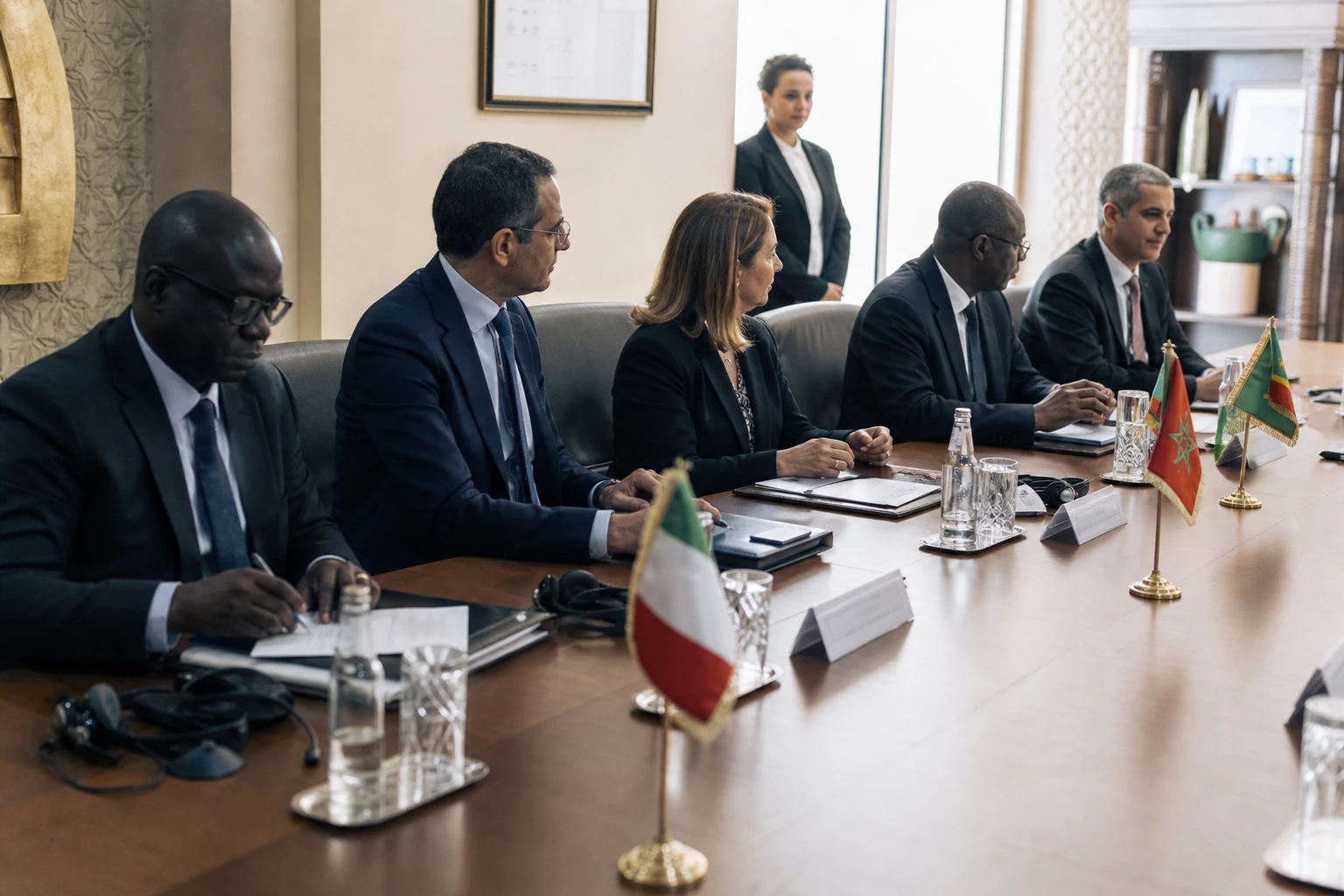
Morocco and Italy have a close relationship, built on economic, consular and migration cooperation. In January 2024, Rabat was still representing the kingdom at the Italy-Africa summit in Rome, where Italy highlighted its “Mattei Plan” and its “Rome Process” on development and migration. Against this backdrop, the death of a Moroccan national in Emilia-Romagna is not a peripheral matter: it is part of a bilateral relationship already laden with human, legal and diplomatic concerns.
What is known so far
The known facts outline a brief but grave incident. Abderrahim Fakir, a 42-year-old Moroccan, died on Sunday 19 July in Bologna, Italy, while being held on the ground by police officers who had intervened in the Pilastro district. The first details reported by Italian investigators indicate that they had been called following reports of a disturbance by neighbours. The officers are said to have used pepper spray before attempting to handcuff him, while paramedics were present at the scene. The Italian judiciary has opened an investigation to establish how the situation escalated into a death.
The Bologna prosecutor’s office is now examining the conduct of both the two police officers involved and the four paramedics present. An autopsy is to establish the precise cause of death. Prosecutors also want to reconstruct the full sequence of events, going beyond the first images circulated. Meanwhile, Bologna police have announced that footage from the officers’ body cameras will be handed over to investigators.
The case quickly moved beyond the confines of the judicial system. Demonstrations took place in Bologna the following day, followed by clashes between protesters and police outside the prefecture and police headquarters. Italian Prime Minister Giorgia Meloni called the incident “unacceptable” and said that “the whole truth” must be established rigorously. The city found itself at the centre of a wider debate on public order, the handling of police interventions and the place of working-class districts in a metropolis shaped by immigration and social movements.
Rabat’s response and the weight of the diaspora
Morocco has responded by asking the Italian authorities for explanations and a thorough investigation to clarify the circumstances of the death. Rabat said it was following the case with concern and wanted the “necessary” clarifications. The wording is cautious, but it marks a clear position: the kingdom will not let the death of a national abroad pass without a diplomatic response, especially when an arrest involves agents of the host state.
This vigilance also reflects the scale of the Moroccan presence in Italy. According to an official report by the Moroccan ministry responsible for Moroccans residing abroad, 399,146 Moroccans were legally resident in Italy on 1 January 2023. The community is particularly concentrated in the north of the country, with 14% in Emilia-Romagna, where Bologna is located, and 22.1% in Lombardy. In other words, the Fakir case affects an area where the Moroccan presence is long-established, visible and integrated into the local economy.
This matters politically. A death in custody, or during an arrest, is never seen in the same way by families, associations, local authorities and the country of origin. For Rabat, the issue is not solely consular. It is also about ensuring that procedures are followed and that Moroccans in Italy do not feel exposed to opaque justice. For the community, particularly in the large cities of the north, the case revives a simple question: how can people be protected when a public authority’s intervention ends in tragedy?
A test for Moroccan-Italian relations and the credibility of procedures
Beyond the individual case, the incident puts a bilateral partnership that Rabat and Rome describe as strategic to the test. Italy needs cooperation with countries on the southern Mediterranean on migration, mobility and security. Morocco, for its part, wants its nationals to be recognised as a lasting part of European societies where they work, raise their children and invest. In this context, a case such as the one in Bologna can quickly become a barometer of trust or mistrust.
The case also comes at a time when African diasporas in Europe are particularly alert to police practices and the pace of judicial proceedings. In Italy, scrutiny of law enforcement remains a sensitive issue, especially when images spread quickly on social media and shape a narrative before forensic examinations have been completed. The work of the prosecutor’s office, the autopsy and the body-camera footage will therefore be decisive in moving beyond a stand-off between outrage and denial.
For North Africa more broadly, cases of this kind are a reminder of a lasting reality: a significant part of the continent’s ties with Europe runs through its diasporas, their rights, their protection and their treatment by institutions. Morocco, which is also preparing the Marhaba 2026 programme to welcome Moroccans residing abroad, knows that movement is not only a question of mobility. It is also a matter of legal security, dignity and trust between states. The next developments to watch will be the autopsy findings and the conclusions of the Bologna prosecutor’s office, which will establish whether the death resulted from a mishandled sequence of events, criminal negligence or another classification yet to be determined.