Algeria
 Egypt
 Libya
 Morocco
 Sudan
 Tunisia
 Benin
 Burkina Faso
 Cabo Verde
 Côte d'Ivoire
 Ghana
 Guinea
 Guinea-Bissau
 Liberia
 Mali
 Mauritania
 Niger
 Nigeria
 Senegal
 Sierra Leone
 The Gambia
 Togo
 Cameroon
 Central African Republic
 Chad
 Equatorial Guinea
 Gabon
 Republic of the Congo
 São Tomé and Príncipe
 Burundi
 Comoros
 Djibouti
 Eritrea
 Ethiopia
 Kenya
 Madagascar
 Malawi
 Mauritius
 Mozambique
 Rwanda
 Seychelles
 Somalia
 South Sudan
 Tanzania
 Uganda
 Angola
 Botswana
 Eswatini
 Lesotho
 Namibia
 South Africa
 Zambia
 Zimbabwe
Between official orders and reality on the ground
In Lualaba, the question is not simply who is in command. It is more concrete: who really controls the mining sites, and who benefits from the flow of copper and cobalt? In this part of the south of the Democratic Republic of the Congo, the presence of men in uniform around concessions has for years fuelled community mistrust, suspicions of trafficking and tensions between companies, artisanal miners and the authorities.
The issue goes beyond the historic Katanga region. It touches on the country’s mining governance, the credibility of the state and, more broadly, the image of a sector that is strategic for Kinshasa within the Southern African Development Community, SADC, where the DRC is seeking to attract more investment while showing that it can secure its resources.
An order from Kinshasa
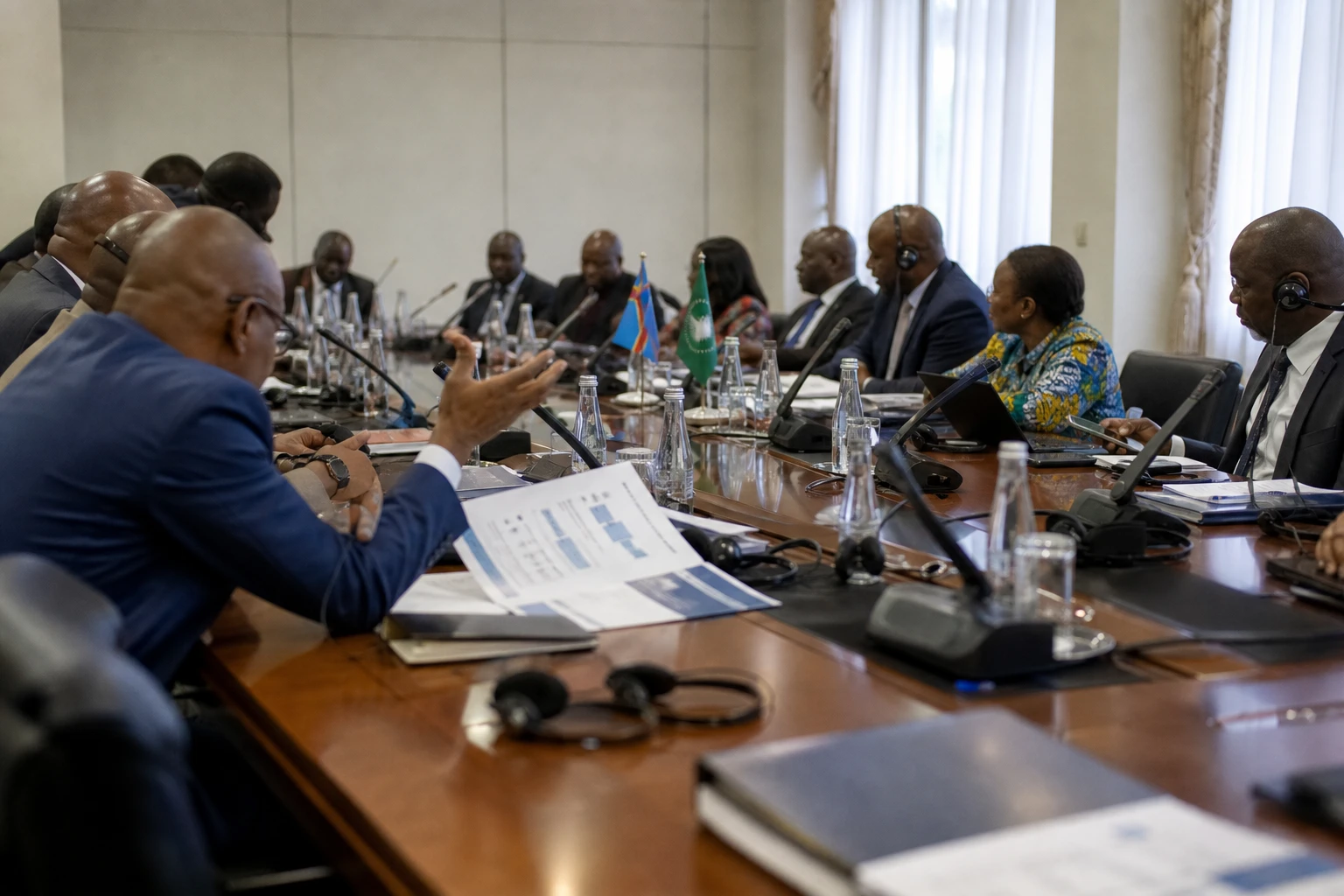
On Friday 10 July 2026, in Kinshasa, President Félix-Antoine Tshisekedi Tshilombo ordered the immediate withdrawal of military personnel and police officers illegally deployed at mining sites. The instruction was given at the 94th ordinary meeting of the Council of Ministers, as the government reviewed the country’s security situation.
The government said that the presence of defence and security forces within mining perimeters undermines oversight, fuels illicit networks and damages the business climate. At the same time, this presence is accused of depriving legitimate titleholders of their mining rights and exposing local communities to intimidation and harassment.
On paper, the line is clear. In practice, it runs up against a long-standing pattern: since 2019, several measures have been announced to demilitarise mining sites in the DRC, without bringing about lasting change on the ground. A decision taken in Lubumbashi in 2019 had already aimed to remove certain detachments from mines, and NGOs have continued to denounce the presence of soldiers around concessions in Greater Katanga.
Kisankala, the real-world test
It was in Kisankala, not far from Kolwezi, that the withdrawal pledge was put to the test. General Eddy Kapend, commander of the 22nd military region, announced the evacuation of soldiers from a mining site operated by COMIDE, a subsidiary of Eurasian Resources Group. He said the trucks had left and the military were being redeployed elsewhere.
But local sources and the NGO Justicia did not confirm the departure. According to them, the military positions observed at the COMIDE and Swanmines sites remained intact several days after the announcement. Justicia said the military command’s statement amounted more to an announcement for show than an effective withdrawal, in the absence of a credible monitoring mechanism.
This gap between words and reality on the ground is significant. It shows that demilitarising a mining site depends on more than an order from Kinshasa. It requires a complete chain of implementation, from the provincial military command to the civilian authorities, as well as the mining services, police, courts and the companies themselves. Without co-ordination, the same positions can remain occupied even after a public announcement.
Competing interests around copper and cobalt
In the south of the DRC, copper and cobalt are not just raw materials. They represent tax revenues, jobs, subcontracting contracts and very tangible power dynamics. When soldiers take up positions at a site, the issue is no longer solely one of security. It becomes economic, judicial and social. Companies want to protect their concessions. Communities demand access to land and an end to abuses. The state, for its part, wants to retain control of a strategic source of revenue.
Justicia also highlights another problem: the sector has become lucrative enough to attract, according to the NGO, some military and political officials. It is therefore calling not only for the withdrawal of men in uniform, but also for those involved in these networks to be prosecuted. The organisation believes that a change of orders alone will not be enough without visible sanctions.
This assessment echoes several previous findings. Human rights organisations and mining observers have long denounced the militarisation of concessions, extortion and violations of the rights of artisanal miners and local residents in the DRC. In Katanga, mining sites are regularly at the centre of disputes involving private security, public forces, artisanal miners and industrial operators.
What this case says about the DRC and the region
For Kinshasa, the stakes are twofold. On the one hand, the government wants to reassure investors and show that it can clean up the extractive sector. On the other, it must prove that its decisions are genuinely implemented in the provinces, including when powerful economic interests are at stake. The Kisankala case is therefore a test of governance, not just a local episode.
At regional level, the issue also resonates within SADC and, more broadly, in African debates on responsible supply chains. Minerals from the south of the Congo feed industries far beyond the DRC. If site security remains informal or militarised, it undermines traceability, makes it harder for operators to comply with regulations and sustains a grey economy whose costs fall first on local communities.
The next thing to watch is straightforward: whether the withdrawal order will be followed by effective monitoring, an inventory of the sites concerned and, above all, sanctions against public or private agents who continue these practices. In the DRC, the history of mining shows that a political announcement is not enough. The difference lies in on-site verification, justice and the continuity of the state.