Algeria
 Egypt
 Libya
 Sudan
 Tunisia
 Benin
 Burkina Faso
 Cabo Verde
 Côte d'Ivoire
 Ghana
 Guinea
 Guinea-Bissau
 Liberia
 Mali
 Mauritania
 Niger
 Nigeria
 Senegal
 Sierra Leone
 The Gambia
 Togo
 Cameroon
 Central African Republic
 Chad
 DR Congo
 Equatorial Guinea
 Gabon
 Republic of the Congo
 São Tomé and Príncipe
 Burundi
 Comoros
 Djibouti
 Eritrea
 Ethiopia
 Kenya
 Madagascar
 Malawi
 Mauritius
 Mozambique
 Rwanda
 Seychelles
 Somalia
 South Sudan
 Tanzania
 Uganda
 Angola
 Botswana
 Eswatini
 Lesotho
 Namibia
 South Africa
 Zambia
 Zimbabwe
An energy corridor that is more than just a construction project
At a time when West Africa is seeking to secure its electricity supply, industrialise its economies and monetise its resources without relying on a single outlet, a major gas pipeline quickly becomes more than infrastructure. It also serves as a political test: states’ ability to co-operate, the credibility of their commitments and their capacity to attract long-term financing.
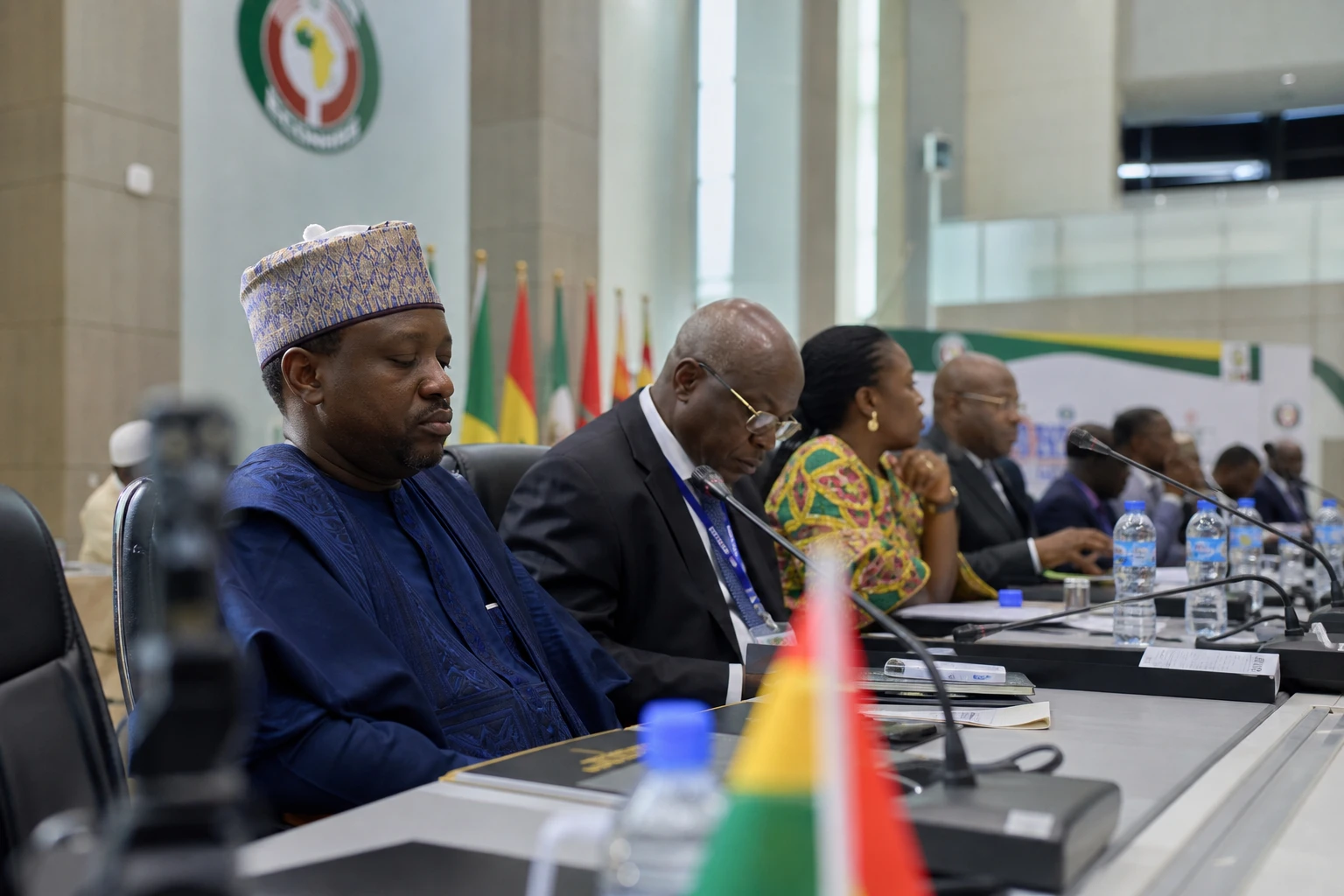
It was in this context that, in Freetown, Sierra Leone, the heads of state of the Economic Community of West African States, ECOWAS, approved the intergovernmental agreement for the African Atlantic Gas Pipeline project, also known as the Nigeria–Morocco gas pipeline. The decision came during the organisation’s 69th summit on 19 July 2026, when ECOWAS had 12 member states and remained one of the continent’s main frameworks for regional integration.
From Freetown to Casablanca, a project conceived as a regional backbone
The project is not new. Its political foundations lie in co-operation between Abuja and Rabat, later consolidated at West African level. A joint statement from Morocco’s National Office of Hydrocarbons and Mines, ONHYM, and Nigerian National Petroleum Company Limited, NNPC Ltd, says the latest agreement signed by ECOWAS states gives effect to the approval already granted at the organisation’s 66th ordinary summit in Abuja in December 2024. It also says the next phase must complete the intergovernmental framework with signatures from Morocco and Mauritania.
According to the same statement, the route is planned to run nearly 6,900 kilometres from Nigeria to Morocco along the West African Atlantic coast, crossing 13 coastal countries, with interconnections to landlocked Sahelian states. The target capacity is 30 billion cubic metres a year, of which up to 15 billion cubic metres could supply Morocco and European markets via a connection to the Maghreb-Europe gas pipeline.
The project is based on a governance structure already outlined: a project company is to be established in Casablanca, while a Pipeline Higher Authority is to be based in Abuja. This division reflects an effort to balance the producer country, the transit country and the country serving as the industrial anchor.
The political signal is there, but the money is still missing
The Freetown signing has clear significance. It turns a project long presented as a strategic vision into a more mature institutional undertaking. But it does not resolve the crucial question: financing. So far, no firm funding commitment has been publicly announced for a project whose cost is often estimated at $25 billion.
NNPC Ltd says several technical milestones have already been reached, including front-end engineering design studies, route surveys, environmental and social studies, and legal, regulatory and commercial frameworks. This marks a shift from rhetoric to concrete preparation. But preparation is not the same as a final investment decision.
Nigeria nevertheless has a substantial gas resource base. The Nigerian Upstream Petroleum Regulatory Commission, NUPRC, reported total gas reserves of 215.19 trillion cubic feet as at 1 January 2026, putting the country among the continent’s leading holders of gas. This abundance explains Abuja’s export ambitions, but does not erase a familiar paradox: the country also faces domestic demand for gas to power electricity generation and industry.
The project is therefore caught between two realities. On one hand, it could become a driver of economic integration for West Africa and the continent’s north-west. On the other, it requires a long financing chain, regulatory stability and a secure route, particularly in areas where states face institutional or security vulnerabilities. The central Sahel, which includes Mali, Burkina Faso and Niger, offers less predictability than a coastal corridor.
What the project could change, and for whom
For governments, the gas pipeline is first and foremost an instrument of economic sovereignty. It could support electricity generation, supply industry, create jobs and boost export revenues. For the areas along the route, the stakes are more tangible: temporary jobs, maintenance, potential access to gas for some local industries, as well as land-related risks, social expectations and pressure on states’ capacity to monitor the route.
For Morocco, the project is part of a strategy to establish an Atlantic foothold and consolidate an energy and logistics hub between West Africa and southern Europe. For Nigeria, it means opening an additional outlet at a time when Abuja is seeking to extract greater value from its gas. For Mauritania, which is expected to sign separately, the stakes lie in its role as a bridge between the Maghreb and West Africa.
For European markets, finally, the project only makes sense if it meets climate and financial standards. The European Commission says the methane regulation adopted in 2024 imposes requirements for the measurement, reporting and verification of emissions from gas imports. A questions-and-answers document published in March 2026 says operators will have to draw on industry best practices and available technologies to quantify these emissions, pending more detailed standards.
At the same time, the European policy landscape remains fluid. Discussions are under way on the application of and timetable for sanctions linked to the regulation, creating a period of uncertainty for all potential exporters. In other words, the Atlantic gas corridor will not be decided only in Abuja, Rabat or Freetown. It also depends on rules being drawn up in Brussels.
A regional process to watch in the coming months
The project’s continental significance lies as much in its method as in its route. If it comes to fruition, it will show that a very large African cross-border project can advance with regional governance backed by ECOWAS, national institutions such as NNPC and ONHYM, and external partners, without losing political coherence. If financing remains stalled, the project will join the long list of major energy announcements held back by the absence of financial close.
The next visible milestone will be the expected signatures from Morocco and Mauritania, followed by the effective establishment of the two governing bodies in Casablanca and Abuja. Then will come the real test: convincing investors that the Atlantic corridor can withstand security risks, climate requirements and shifts in participating states’ priorities. Only then can the Freetown agreement become a construction project, and then infrastructure.