Algeria
 Egypt
 Libya
 Morocco
 Sudan
 Tunisia
 Benin
 Burkina Faso
 Cabo Verde
 Côte d'Ivoire
 Ghana
 Guinea
 Guinea-Bissau
 Liberia
 Mali
 Mauritania
 Niger
 Nigeria
 Sierra Leone
 The Gambia
 Togo
 Cameroon
 Central African Republic
 Chad
 DR Congo
 Equatorial Guinea
 Gabon
 Republic of the Congo
 São Tomé and Príncipe
 Burundi
 Comoros
 Djibouti
 Eritrea
 Ethiopia
 Kenya
 Madagascar
 Malawi
 Mauritius
 Mozambique
 Rwanda
 Seychelles
 Somalia
 South Sudan
 Tanzania
 Uganda
 Angola
 Botswana
 Eswatini
 Lesotho
 Namibia
 South Africa
 Zambia
 Zimbabwe
Dakar, a quiet testing ground for influence operations
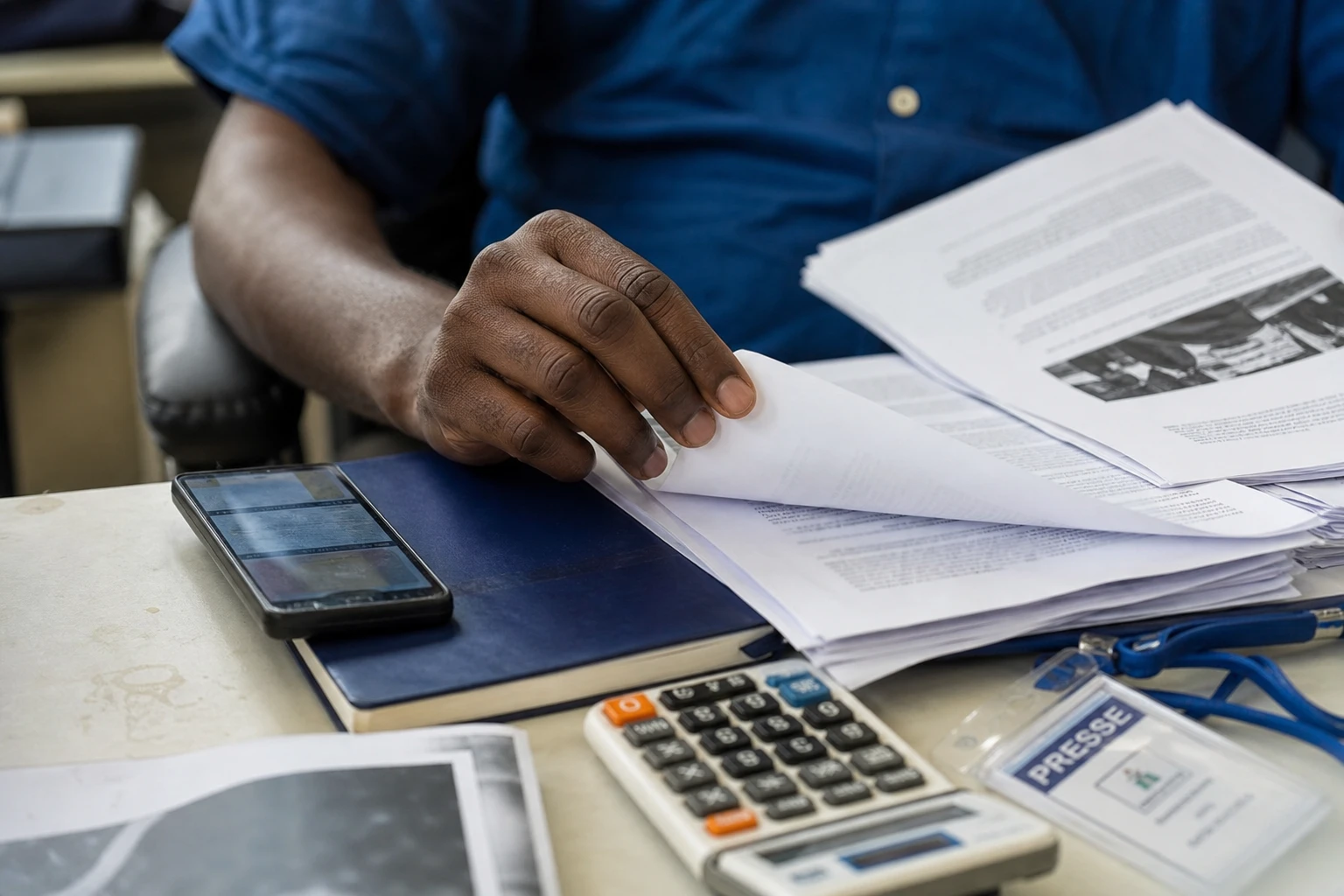
In Dakar, the information battle is fought not only through major broadcasters or social media. It also plays out on fragile news websites, where economic pressure can open the door to content from elsewhere. This is what makes Senegal a case study: a country with a dense but strained media landscape, and a capital where the rapid circulation of articles leaves little time for scrutiny.
The issue goes beyond Senegal alone. In West and Central Africa, disinformation operations exploit political divisions, debates about France, the war in Ukraine and the weakness of online journalism’s business models. Several recent analyses point out that the region has become a strategic arena for these campaigns, with anti-Western and pro-Russian narratives spread through local intermediaries.
What the documents reveal
Documents reviewed by investigative journalists describe a coordinated operation centred on an organisation called Africa Politology, nicknamed internally “the Company”. According to the investigation, it arranged for 644 articles to be published in at least 35 French-language media outlets in West and Central Africa between June and November 2024, at a cost of more than $300,000. The content ranged from attacks on France to opinion pieces favourable to Moscow, as well as articles hostile to Ukraine.
Senegal was among the countries targeted. In Dakar, PressAfrik’s editor-in-chief, Ibrahima Lissa Faye, said he discovered that 13 articles echoing Russian propaganda had been published on his website after investigators alerted him. According to the report, the texts were offered as ready-to-publish content and supplied by local intermediaries.
The investigation also assigns a role to several alleged intermediaries, including a Cameroonian journalist named in the documents. He rejected the accusations and said the material implicating him was false. Caution is warranted on this point: the documents provide a body of circumstantial evidence, but some individuals’ responsibilities remain disputed by those named.
Why this mechanism takes hold in Senegal
The Senegalese case is also explained by the structure of the media market. The country has nearly 260 authorised media outlets, with a strong presence of internet, radio and web TV, but most players remain economically fragile. Print sales do not adequately cover costs, advertising revenue is unevenly distributed, and dependence on advertisers weighs on editorial policy.
This fragility is not abstract. In 2024 and 2025, the country experienced significant tensions over regulation of the sector, including media suspensions, legal challenges and debates over compliance with the press code. For newsrooms seeking revenue, the offer of “ready-to-publish” articles becomes an economic temptation as well as an editorial risk.
The problem, then, is not simply one of foreign interference. It also reveals a local vulnerability: sometimes under-resourced newsrooms, fast approval processes, and an environment in which the urgency to publish can take precedence over verification. In this context, the line between news content, opinion pieces and influence material becomes easier to blur.
What this means for the West African public sphere
In West Africa, these campaigns are not merely aimed at defending a foreign power. Above all, they seek to establish a narrative: that Russia is an alternative to former European partners, in a region where relations with Paris have deteriorated and anti-France rhetoric is widespread. Recent investigations into disinformation in Africa show that this kind of operation accompanies geopolitical realignments already under way.
For leaders, the stakes are diplomatic. For newsrooms, they are professional. For the public, they are democratic. When a manipulated article slips onto a credible news website, it can shape a local debate, reinforce an existing opinion or undermine trust in the press as a whole. In Senegal, where the press remains highly present in public debate, that trust is a valuable asset.
The continental significance is clear. Influence networks are no longer confined to conflict zones. They are investing in French-language media markets, relying on regional intermediaries and exploiting the same weaknesses: a lack of funding, dependence on advertising, rapid content circulation and incomplete verification. Senegal, with Dakar as a starting point, thus appears not as an exception but as a warning for all of Francophone Africa.
The next steps will involve two fronts. On one hand, newsrooms’ ability to strengthen their approval procedures. On the other, institutions’ ability to support a viable media ecosystem without stifling editorial independence. This is where the resilience of a country such as Senegal against foreign influence operations is measured in practice.