Algeria
 Egypt
 Libya
 Morocco
 Sudan
 Tunisia
 Benin
 Burkina Faso
 Cabo Verde
 Côte d'Ivoire
 Ghana
 Guinea
 Guinea-Bissau
 Liberia
 Mali
 Mauritania
 Nigeria
 Senegal
 Sierra Leone
 The Gambia
 Togo
 Cameroon
 Central African Republic
 Chad
 DR Congo
 Equatorial Guinea
 Gabon
 Republic of the Congo
 São Tomé and Príncipe
 Burundi
 Comoros
 Djibouti
 Eritrea
 Ethiopia
 Kenya
 Madagascar
 Malawi
 Mauritius
 Mozambique
 Rwanda
 Seychelles
 Somalia
 South Sudan
 Tanzania
 Uganda
 Angola
 Botswana
 Eswatini
 Lesotho
 Namibia
 South Africa
 Zambia
 Zimbabwe
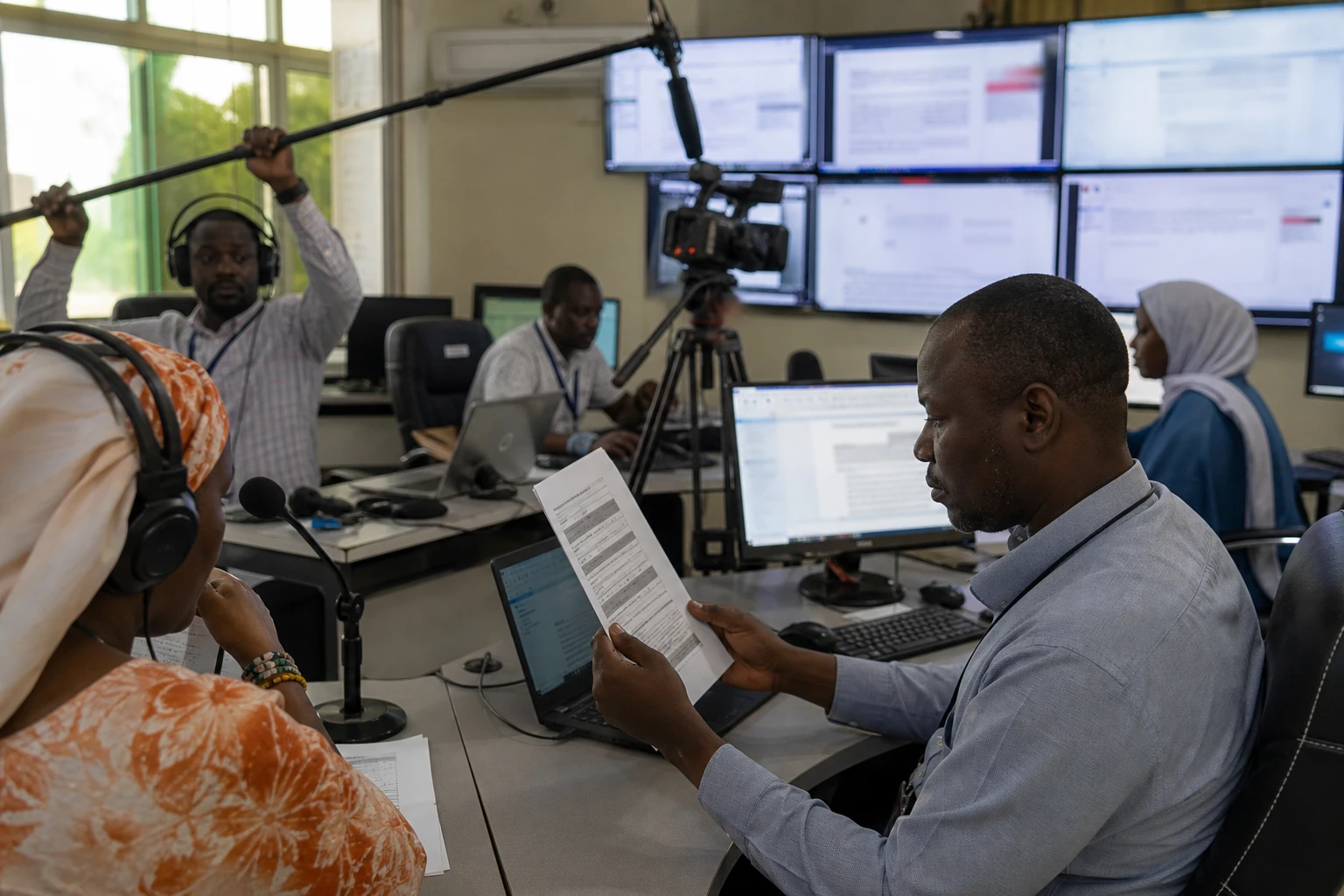
In Niamey, the justice system is also handling security as a mass caseload
When a prosecutor’s office has to absorb hundreds of police reports in a single month, a significant share of them linked to terrorism, the issue is no longer solely criminal. It becomes institutional. In Niamey, Niger’s capital, the judicial system is also a vantage point from which to observe the insecurity affecting the country and its region.
This comes against an already strained backdrop. In May 2026, Justice Minister Alio Daouda recalled that Niger had only 534 magistrates for an estimated population of between 28 million and 30 million, or 1.98 magistrates per 100,000 inhabitants, with judicial coverage estimated at 70.5%. The same official also highlighted the shortage of court clerks and the pressure on the courts.
June figures: a prosecutor’s office swamped by ordinary criminal cases and terrorism cases
At Niamey’s High Court of Appeal, 414 police reports were handled during June 2026. Of these, 80 concerned criminal conspiracy in connection with a terrorist enterprise. They were followed by 74 theft cases, 27 cases of support for terrorism, five terrorism-financing cases and three cases of harbouring terrorists. The figures were made public at the prosecutor’s office’s monthly meeting, held on 10 July 2026.
The volume speaks for itself. It shows that Niamey’s criminal justice system is dealing with more than conventional offences. It must also handle complex, often technical cases that require investigations, precise legal characterisation of the facts, and co-ordination between the judicial police, magistrates and specialised courts. Niger does have specialised courts for combating terrorism and transnational organised crime, but they operate in an environment of limited resources.
Another figure stands out: of nearly 600 people brought before the prosecutor’s office the previous month, more than half had their cases dismissed, according to the figures reported. This proportion may reflect several realities at once: insufficient evidence from investigations, judicial screening, or arrests that were not adequately substantiated at an earlier stage. In any case, it points to the quality of the process, not just the number of cases opened.
Niamey remains exposed, and the airport illustrates the security pressure
Niger’s capital is not insulated from the violence in the Sahel. On 18 June 2026, Diori Hamani International Airport and the adjacent military base were targeted in an armed attack. The government reported that 11 members of the security forces and two civilians were killed, while other tolls were given in the aftermath. International media also recalled that this was the second attack on the airport complex that year.
This episode sheds light on the significance of June’s judicial figures. In Niamey, justice is not operating at a distance from an abstract problem. It works in an environment where armed threats can strike sensitive infrastructure, where allegations of logistical support for armed groups circulate, and where every terrorism case weighs on a system that is already under-resourced.
The central point is this: the more diffuse the threat, the more precise the judicial response must be. A poorly conducted procedure can allow a dangerous actor to go free. Conversely, an arrest based on an incorrect legal classification can undermine public trust. For Niamey’s residents, the stakes are immediate: neighbourhood security, traffic around strategic sites and the normal functioning of public services. For the state, the challenge is twofold: to secure robust convictions and to ensure that proceedings do not become a mere tally of arrests.
A test for Niger and a West Africa in transition
The issue extends beyond Niamey. Since 29 January 2025, Niger has no longer been a member of ECOWAS, along with Mali and Burkina Faso. This withdrawal has redrawn West Africa’s regional architecture at a time when security and judicial co-operation remains essential in confronting armed groups and cross-border trafficking.
In this context, Niger’s courts bear a particular burden. They must handle cases involving state security, as well as theft, harbouring, logistical support and the networks that sustain armed groups. In other words, justice has become a central instrument of stabilisation. It does not replace the defence and security forces, but it gives arrests, investigations and accusations a judicial framework.
What happens next will depend on the judicial system’s ability to keep pace. The coming months will show whether specialised units can better absorb sensitive cases, whether the quality of investigations improves and whether dismissals decline. Across the Sahel, this kind of data matters as much as a security statement: it measures, in concrete terms, the condition of the state.