Algeria
 Egypt
 Libya
 Sudan
 Tunisia
 Benin
 Burkina Faso
 Cabo Verde
 Côte d'Ivoire
 Ghana
 Guinea
 Guinea-Bissau
 Liberia
 Mali
 Mauritania
 Niger
 Nigeria
 Senegal
 Sierra Leone
 The Gambia
 Togo
 Cameroon
 Central African Republic
 Chad
 DR Congo
 Equatorial Guinea
 Gabon
 Republic of the Congo
 São Tomé and Príncipe
 Burundi
 Comoros
 Djibouti
 Eritrea
 Ethiopia
 Kenya
 Madagascar
 Malawi
 Mauritius
 Mozambique
 Rwanda
 Seychelles
 Somalia
 South Sudan
 Tanzania
 Uganda
 Angola
 Botswana
 Eswatini
 Lesotho
 Namibia
 South Africa
 Zambia
 Zimbabwe
A partnership that goes beyond diplomacy
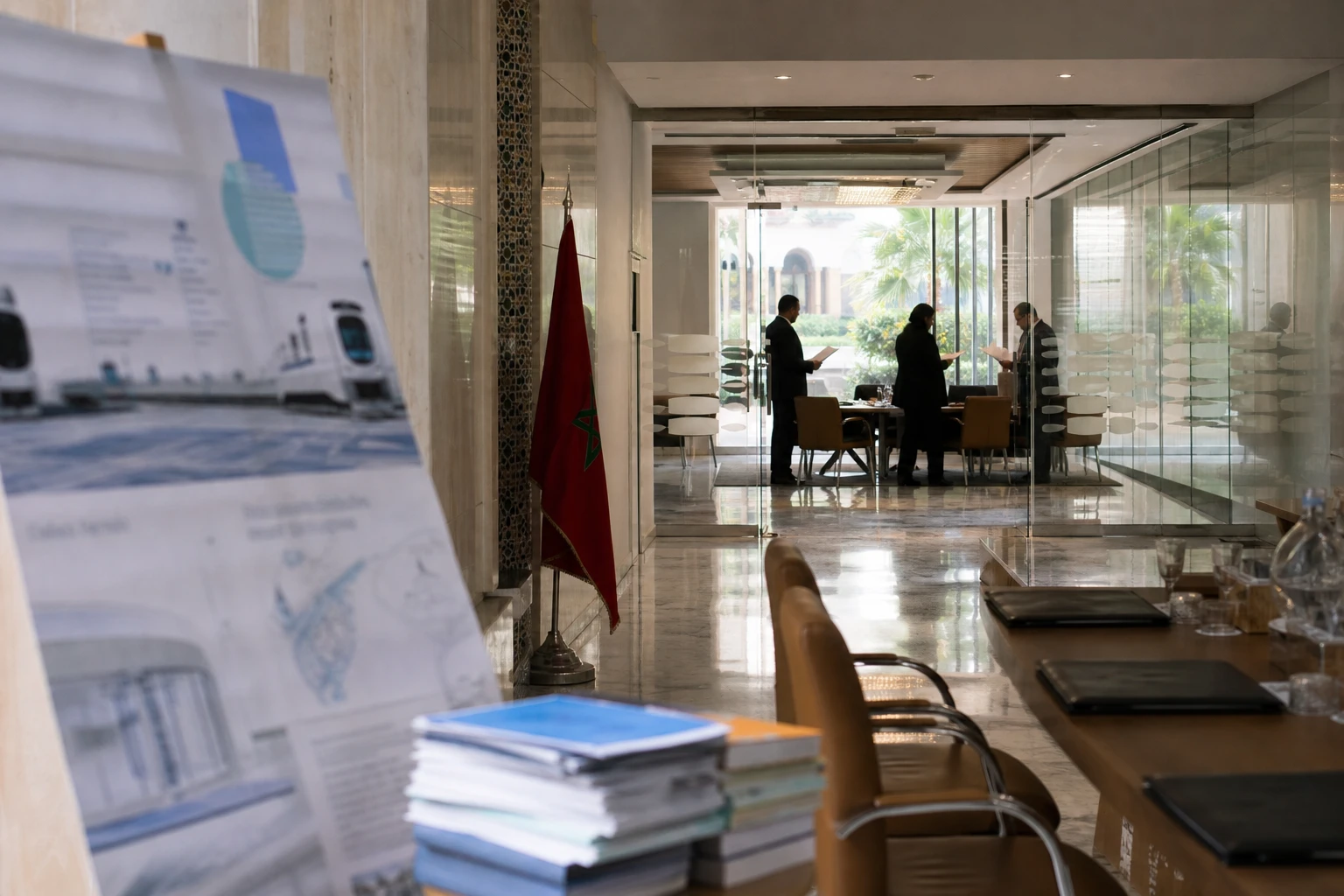
The agreements signed in Rabat on 16 July 2026 signal more than a simple return to normality between Morocco and France. They reflect a desire to put bilateral relations back at the heart of concrete projects in mobility, water, security, research, transport and institutional cooperation. As both capitals seek to accelerate progress, the message is clear: the relationship is no longer played out only in communiqués, but on the ground.
The meeting follows Emmanuel Macron’s state visit to Morocco in October 2024, which had already opened a new political phase between Rabat and Paris. Since then, the two countries have stepped up ministerial exchanges, with the stated aim of consolidating an “enhanced exceptional partnership” and preparing for a state visit to France by King Mohammed VI.
What the two governments signed in Rabat
The 15th Morocco-France High-Level Meeting, co-chaired by Aziz Akhannouch and Sébastien Lecornu in Rabat, saw the signing of 14 cooperation agreements. The texts cover several sectors: infrastructure, water, culture, research, education, defence, civil aviation and institutional cooperation.
Among the most prominent issues are commitments relating to Rabat’s regional express train and a loan linked to water policy. Both are sensitive matters in Morocco, where pressure on urban infrastructure and water resources remains high, particularly in major urban areas and agricultural zones dependent on public-sector decisions.
Scientific cooperation also took shape with a framework agreement between the Hassan II Institute of Agronomy and Veterinary Medicine and CIRAD, a French centre focused on agricultural research for development. The agreement covers agriculture, veterinary medicine, fisheries and aquaculture sciences. In the same vein, the two countries also made progress on a broader framework for scientific cooperation, building on a longstanding academic relationship.
Another sensitive area is mobility. France is promoting a visa policy designed to facilitate travel for entrepreneurs and students, described as the driving forces behind relations between the two countries. This issue remains central for Moroccan families, universities, incubators and businesses operating across the two shores.
Why water, transport and visas matter so much
The choice of sectors is no accident. Water, first of all, reflects a structural constraint in Morocco. The funding and loans associated with this policy show that bilateral cooperation is also part of managing a practical sovereignty issue: securing uses, networks and investment. In a country where water scarcity affects cities, agriculture and industry alike, the agreement has very tangible implications.
Rabat’s regional express train, meanwhile, illustrates another priority: easing urban congestion and bringing growth centres closer together. This kind of project directly affects employees, students and commuters, as well as businesses that rely on regular, predictable travel. For a Moroccan living in Rabat or its metropolitan area, international cooperation here translates into everyday transport.
On security and defence, caution remains necessary, but the framework is clear: Paris and Rabat want to maintain close dialogue on counter-terrorism, migration and regional security. This strand extends a longstanding cooperation, strengthened after the period of diplomatic tensions that marked bilateral relations. The authorities in both countries see it as a lever for stability, although the precise arrangements have been only sparsely detailed publicly.
The visa question warrants a broader reading. It concerns not only students and entrepreneurs, but also the movement of skills, joint research, internships, university partnerships and innovation projects. At this level, the French-Moroccan relationship serves as a corridor between economic and academic ecosystems that remain closely connected.
A French-Moroccan meeting with implications for the continent
Morocco does not treat this meeting as a merely bilateral affair. Rabat places it within a broader trajectory, with an African orientation asserted through its diplomacy, university partnerships and economic ties across the continent. The presence of ministers and technical organisations in sectors such as research, agriculture and water shows that the agreements are not aimed solely at France: they also strengthen links that are useful for North Africa and, beyond it, for Euro-African exchanges.
The high-level meeting also forms part of a wider regional dynamic involving the African Union, the Western Mediterranean and cooperation between the two shores. Morocco is seeking to build on its position as a crossroads, while France aims to regain a clearer role in the Maghreb. The meeting’s continental significance therefore lies less in headline-grabbing announcements than in a simple question: who will capture the flows of talent, investment, research and infrastructure between Europe and North Africa in the years ahead?
The next milestone will be political as much as technical. The two sides have raised the prospect of preparing a bilateral treaty and a future state visit to France by King Mohammed VI. If this timetable is confirmed, French-Moroccan relations could enter an even more structured phase, with expected effects in the sectors already covered in Rabat: transport, water, security, higher education and innovation.