Algeria
 Egypt
 Libya
 Morocco
 Sudan
 Tunisia
 Benin
 Burkina Faso
 Cabo Verde
 Côte d'Ivoire
 Ghana
 Guinea
 Guinea-Bissau
 Liberia
 Mali
 Mauritania
 Niger
 Nigeria
 Senegal
 Sierra Leone
 The Gambia
 Togo
 Cameroon
 Central African Republic
 Chad
 DR Congo
 Equatorial Guinea
 Gabon
 Republic of the Congo
 São Tomé and Príncipe
 Burundi
 Comoros
 Djibouti
 Eritrea
 Ethiopia
 Kenya
 Madagascar
 Malawi
 Mauritius
 Mozambique
 Rwanda
 Seychelles
 Somalia
 South Sudan
 Tanzania
 Uganda
 Angola
 Botswana
 Eswatini
 Lesotho
 Namibia
 Zambia
 Zimbabwe

When a neighbour shuts its doors, family economies falter
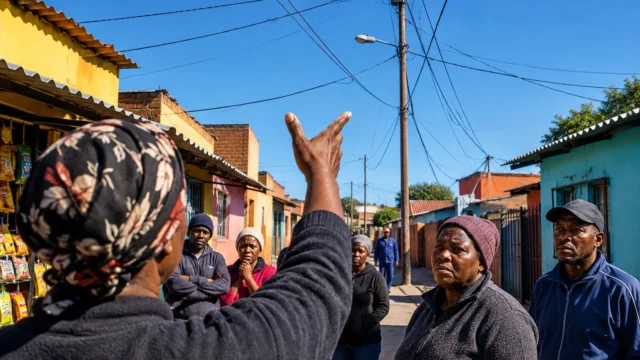
For many Zimbabwean families, the border with South Africa is not an abstract line. It is a corridor for work, remittances and survival. When insecurity rises on the other side, the shock quickly spreads to Harare, Bulawayo and Beitbridge, where the state must answer a very concrete question: how can it receive, care for and reintegrate thousands of people without further destabilising households that are already fragile?
The issue goes beyond Zimbabwe. It affects the Southern African Development Community, or SADC, where the movement of workers, the protection of nationals and xenophobic tensions regularly weigh on relations between member states. At the regional level, mobility remains a major economic reality, not an accident. Data from the International Organization for Migration also show that South Africa remains a major destination for migration from Zimbabwe.
High figures, but different approaches across institutions
The Zimbabwean government is preparing for a mass return. According to the minister responsible for local government, up to 1.4 million Zimbabweans could return from South Africa, or about 70% of an estimated community of 2 million people. This projection was presented as the authorities said they had already facilitated the return of 99,418 citizens between 28 May and 10 July 2026.
The figures remain fluid and should be treated with caution. Other official statements have cited different totals, depending on the date and on whether they refer to organised or spontaneous returns. Zimbabwe’s public broadcaster said that about 21,291 people had been repatriated through a government programme since 28 May 2026, while another 56,832 were said to have returned on their own over the same period. The discrepancy between the totals is therefore also a matter of how the numbers are counted.
This matters. In migration crises, the same movement can be counted in three ways: assisted returns, independent returns and people simply in transit to other destinations. For a country such as Zimbabwe, where diaspora remittances support many households, the distinction is not technical. It is fiscal, social and political.
Reception arrangements take shape in Beitbridge and the provinces
Zimbabwean authorities say they have activated a reintegration mechanism involving several ministries, local authorities, churches, the private sector and United Nations agencies. In Beitbridge, the main entry point from South Africa, an expedited processing channel has been set up to ease arrivals. The government has also extended customs concessions for returnees to reduce the cost of returning.
Announced measures range from temporary accommodation and medical care to food aid, transport to home provinces and school support for children. Women and children account for more than 70% of those who have already returned, according to the government figures reported in early July. This profile points to immediate pressure on health services, child protection and local reception infrastructure.
Zimbabwe’s skills ministry said it had registered 15,000 skilled returnees in a database intended to guide their integration into the workforce. They include artisans, welders, bricklayers and technicians. The initiative is revealing: the return is not just a humanitarian matter. It is also being viewed as a way to reshape the labour market, in a country seeking to retain its skilled workers and reduce underemployment.
What this means for the state, families and the informal economy
For the government in Harare, there are two challenges. First, it must avert a social crisis in arrival areas and home districts. It must then turn a forced return into an orderly resettlement. That requires documents, buses, health clinics, schools able to accommodate children who may have been out of education, and public services already under strain.
For households, the shock is immediate. Many returnees are leaving precarious jobs, small border businesses or family arrangements that supported several generations. Rural areas may be able to absorb some of this workforce, but cities will have to contend with greater pressure on housing, informal employment and basic services. The difference between provincial capitals and rural areas will therefore be a major factor in the pace of reintegration.
For Zimbabwe, this episode is also a reminder of a longstanding reality: migration to South Africa has become an economic safety valve. When it closes abruptly, the home country gets its citizens back, but also its vulnerabilities. Harare was already preparing evacuations of its nationals amid xenophobic violence in 2019. The phenomenon is not new; its current scale simply requires the state to move from an emergency response to a more structured policy on labour migration and return.
A regional issue SADC cannot ignore
The crisis revives a subject often avoided in regional diplomacy: the protection of migrant workers within SADC. Zimbabwe has already included tackling xenophobia, dialogue with host countries and the creation of complaint mechanisms for expatriate workers in its national labour migration policy. The returns in 2026 give these commitments very practical significance.
The continental implications are clear. If southern Africa can organise returns that are safe, dignified and beneficial to local economies, it will offer a model for regional management of migration shocks. If, instead, departures multiply without co-ordination, the risk is that pressure will simply shift from one country to another, without resolving the precariousness that fuels tensions. The coming weeks will therefore be decisive in showing whether Zimbabwe can turn a humanitarian emergency into a lasting public policy.