Algeria
 Egypt
 Libya
 Morocco
 Sudan
 Tunisia
 Benin
 Burkina Faso
 Cabo Verde
 Côte d'Ivoire
 Ghana
 Guinea
 Guinea-Bissau
 Liberia
 Mali
 Mauritania
 Niger
 Nigeria
 Senegal
 Sierra Leone
 The Gambia
 Togo
 Cameroon
 Central African Republic
 Chad
 DR Congo
 Equatorial Guinea
 Gabon
 Republic of the Congo
 São Tomé and Príncipe
 Burundi
 Comoros
 Djibouti
 Eritrea
 Ethiopia
 Kenya
 Madagascar
 Malawi
 Mauritius
 Mozambique
 Rwanda
 Seychelles
 Somalia
 South Sudan
 Tanzania
 Uganda
 Angola
 Botswana
 Eswatini
 Lesotho
 Namibia
 South Africa
 Zambia

In Harare, the next challenge is not simply to produce more. It will be to produce despite a forecast drier rainy season, while processing a greater share of the minerals extracted in Zimbabwe.
This dual priority dominated Emmerson Mnangagwa’s address to parliament on 29 September 2026. The Zimbabwean president presented climate preparedness and adding value to mining as two levers of a single strategy: protecting the economy from shocks and increasing the income generated from national resources.
Agricultural season under watch across SADC
The climate risk relates first to the 2026-27 agricultural season. The Southern African Development Community, or SADC, which brings Southern African countries together around shared policies, forecasts an increased risk of below-normal rainfall across much of the region.
For Zimbabwe, the dry signal is particularly pronounced between October and December 2026. It is expected to persist between January and March 2027, with temperatures likely to be above average in several areas. These are seasonal forecasts: they indicate a regional trend and cannot predict rainfall in a specific locality.
Zimbabwe’s meteorological service links the situation to the expected evolution of El Niño, a natural climate phenomenon that alters Pacific Ocean temperatures and disrupts rainfall patterns in several parts of the world. The signal will nevertheless need to be updated as the season progresses.
SADC therefore recommends monitoring national bulletins and short-term alerts. In rural areas, this information can guide planting dates, variety selection and water-reserve management. In cities, it can affect grain prices, market supplies and electricity availability, which is often linked to dam levels.
After 2025’s rebound, agriculture must become more resilient
The Zimbabwean government wants to strengthen strategic grain reserves, develop climate-smart farming practices and improve early-warning systems. The aim is to shorten the time between identifying a risk and the response by farmers, local authorities and public services.
This preparation comes after a favourable agricultural year. According to data from Zimbabwe’s national statistics agency, agriculture grew by 27.9% in 2025. The sector contributed to the recovery of an economy that had been hit by the effects of the El Niño-related drought in 2024.
This rebound does not guarantee lasting stability. Agriculture that depends heavily on rainfall remains exposed to erratic seasons. Smallholders are the first to be affected, as they often have limited capacity to irrigate, store produce or buy inputs when yields fall.
The effects will not be the same everywhere. Commercial farms, irrigated areas and producers connected to export markets may be better able to absorb a water deficit. By contrast, rural households that depend on their own harvest will feel rising prices and falling agricultural incomes sooner.
The issue is also regional. Grain moves between SADC countries according to harvests and needs. A poor season in Zimbabwe, Zambia, Mozambique or Botswana can therefore alter trade flows, increase demand for imports and put pressure on foreign-exchange reserves.
The mining-processing gamble
Alongside this agricultural vulnerability, Harare is also betting on minerals. The president stressed the need to move from an economy that extracts and exports to one that processes more resources at home.
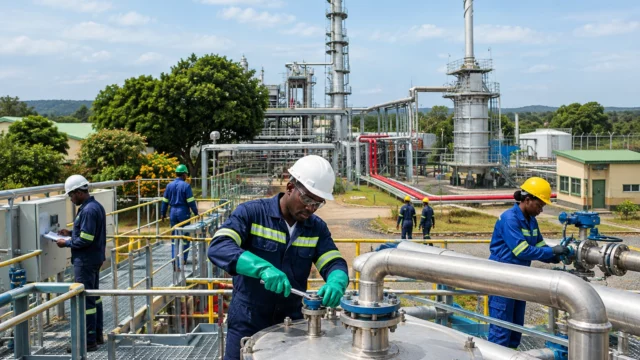
Lithium is central to this policy. The country has significant deposits of the metal used in batteries. Zimbabwe’s first lithium sulphate production is presented as a step towards a more complete value chain, moving from raw ore to chemicals for the battery industry.
The Arcadia project, near Harare, is being developed by Prospect Lithium Zimbabwe, a subsidiary of China’s Huayou Cobalt group. Zimbabwean mining-sector reports put the investment at about $400 million and describe the facility as the first of its kind in Africa.
The government wants to extend this approach to gold, platinum and iron. Local processing can create more industrial jobs, develop technical skills and increase the share of value retained in the country. It requires, however, reliable energy, suitable infrastructure, a skilled workforce and a predictable tax framework.
The mining sector also remains exposed to volatile global prices. A high lithium price can accelerate investment, but a market downturn can reduce revenue and undermine projects. Processing therefore does not remove dependence on international markets, though it may make that dependence less severe.
Two sectors linked by water, energy and income
There is a reason climate and industry have been placed on the same agenda. Mines consume water and electricity. Agriculture depends on them too. In mining provinces, trade-offs between industrial activity, community needs and the conservation of resources could become more pressing during dry periods.
Announced growth should therefore be examined beyond the national figures. Agricultural growth of 27.9% in 2025 does not show how income was shared among small-scale producers, commercial farms, traders and consumers. Similarly, increased mining output does not automatically guarantee lasting jobs in the areas concerned.
The strategy’s success will depend on practical measures: access to resilient seeds for farmers, dam maintenance, transparency in mining contracts, export controls and the ability to finance local infrastructure. It will also depend on how mining communities benefit from new processing activities.
A test for Southern Africa
Zimbabwe is therefore advancing on two fronts that matter across the continent. On the one hand, African countries are seeking to strengthen food self-sufficiency as seasons become more erratic. On the other, they want to avoid the global energy transition reproducing a model based on exporting raw minerals.
The next step will be implementation. Meteorological services will need to clarify regional trends by province and update alerts. The government will then have to turn its announcements into reserves, funding and measures accessible to farmers.
At the same time, the authorities will have to show that processing lithium and other minerals can deliver more than an export figure. For Zimbabwe, the challenge is to turn natural resources into industrial capacity without neglecting water, agriculture and the communities living around production areas.