Algeria
 Egypt
 Libya
 Morocco
 Sudan
 Tunisia
 Benin
 Burkina Faso
 Cabo Verde
 Côte d'Ivoire
 Ghana
 Guinea
 Guinea-Bissau
 Liberia
 Mali
 Mauritania
 Niger
 Nigeria
 Senegal
 Sierra Leone
 The Gambia
 Togo
 Cameroon
 Central African Republic
 Chad
 DR Congo
 Equatorial Guinea
 Gabon
 Republic of the Congo
 São Tomé and Príncipe
 Burundi
 Comoros
 Djibouti
 Eritrea
 Ethiopia
 Kenya
 Madagascar
 Malawi
 Mauritius
 Mozambique
 Rwanda
 Seychelles
 Somalia
 South Sudan
 Tanzania
 Uganda
 Angola
 Botswana
 Eswatini
 Lesotho
 Namibia
 South Africa
 Zambia
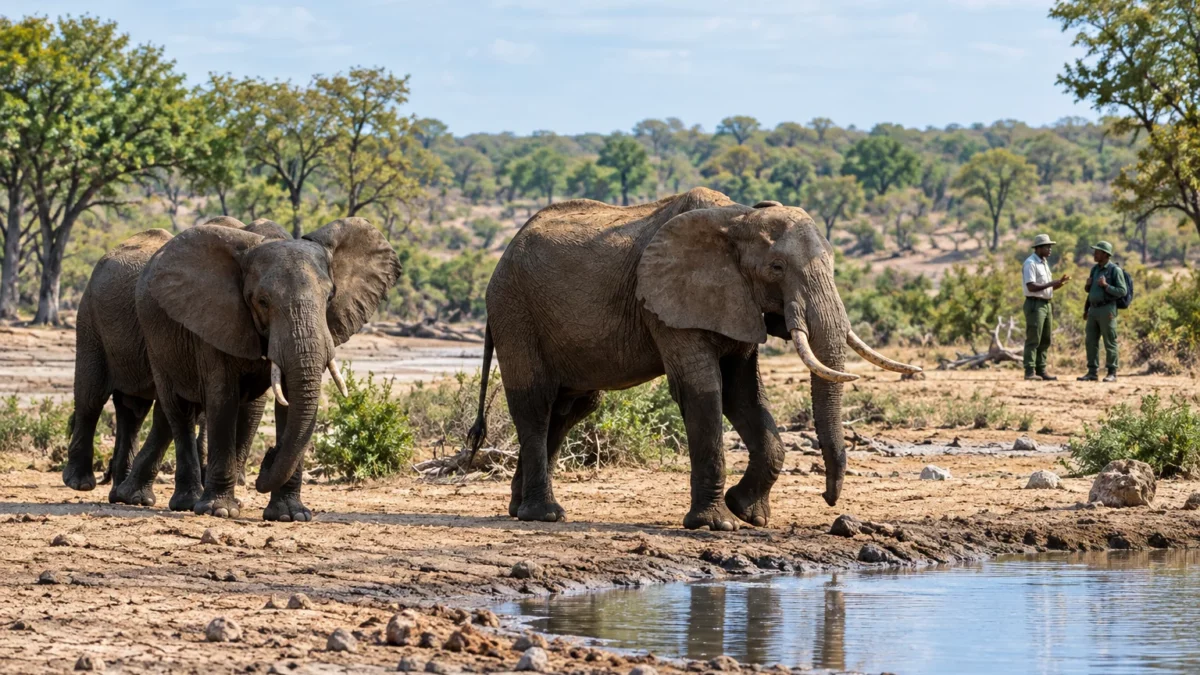
At Gonarezhou, in south-eastern Zimbabwe, drought is measured not only in lost harvests. As pools and rivers shrink, elephants have to travel further to find water and food. This pressure is changing their movements and testing the management of a park whose wildlife ranges beyond national borders.
A park at the heart of a transboundary landscape
Gonarezhou is in Masvingo province, an already dry region of Zimbabwe. Its name means “place of elephants” in Shona. The park covers about 5,053 km² and contains several habitats, including mopane woodlands and wooded savannah. Available estimates vary according to the surveys: the park’s management plan puts the figure at about 10,700 elephants, while the site manager estimates more than 11,500.
The park is part of the Great Limpopo Transfrontier Conservation Area, which links protected areas in Zimbabwe, Mozambique and South Africa. Animals do not follow borders drawn on maps. Their movements make cooperation between park managers and national authorities essential, particularly when water resources become scarce.
Gonarezhou is co-managed by Zimbabwe’s parks and wildlife agency and the Gonarezhou Conservation Trust. Monitoring animal populations, vegetation, fires and water resources is among the management priorities. This knowledge of the area helps distinguish the effects of drought from those of other factors, such as wildlife density or changes to the habitat.
Movements shaped by water and vegetation
In the account of local guide Forgive Hanyani, elephants move when vegetation becomes scarce in the heat and their habitat provides less food. He also describes trees shedding their leaves earlier and changes in the seasonal presence of migratory birds. These field observations shed light on changes experienced locally, but alone they do not constitute a scientific measure of their scale.
The general picture is consistent with the park’s ecological characteristics: Gonarezhou has a wet season, generally from November to March, followed by dry periods. In years when rainfall is lacking, the decline in available water can lead animals to concentrate their movements around permanent water sources. The consequences vary according to species, habitats and the condition of local resources.
Research conducted in the park also shows that changes in vegetation cannot be explained by a single cause. The presence of elephants, fires, floods and traces of past human activity can all affect woodlands, particularly near rivers. It is therefore important not to attribute every stripped tree or animal movement solely to climate change.
Regional drought, intertwined causes
The 2023-2024 rainy season was marked by an El Niño episode, which contributed to below-normal rainfall in several southern African countries. El Niño is a natural fluctuation in the climate system, but its effects unfold against a backdrop of long-term warming. Zimbabwe’s Meteorological Services Department described the season as one of the country’s most severe droughts in several decades.
The World Meteorological Organization also reported that Zimbabwe, along with other countries in the region, had experienced a severe drought. This confirms the regional context, but does not establish that every effect observed at Gonarezhou is directly attributable to climate change. Droughts depend on several factors: natural variability, temperatures, rainfall and conditions in each river basin.
The crisis is also affecting rural communities. In areas where agriculture depends on rainfall, a poor season reduces harvests and can undermine livestock farming. Families living near protected areas may also face greater competition for water sources or cultivated land when animals move away from their usual habitat. These risks are not uniform: they depend on livelihoods, access to water and local measures to prevent conflict between people and wildlife.
Managing conservation without setting wildlife against people
For managers, the task is not just to count elephants. It also involves monitoring their condition, water resources and habitat changes, then anticipating periods of stress. Management plans and aerial surveys provide benchmarks, but population estimates come with margins of uncertainty. A single figure therefore captures neither the distribution of the animals nor their ecological condition.
Cooperation across the Great Limpopo Transfrontier Conservation Area has a practical dimension here. Sharing information on wildlife movements and ecological conditions can help authorities coordinate their decisions. But conservation also depends on relations with communities living nearby: access to water, crop protection and warning systems must be considered alongside species protection goals.
Gonarezhou is a reminder that the effects of warming are not confined to fields or cities. They also affect ecosystems and the means of preserving them. For Zimbabwe and its southern African neighbours, the coming rainy seasons, ecological monitoring and cooperation within the Great Limpopo area will help better assess pressure on habitats and possible responses.
Sources used: Gonarezhou National Park management plan, official Gonarezhou website, Zimbabwe’s Meteorological Services Department, World Meteorological Organization and academic research on changes in riverine woodlands at Gonarezhou.