Algeria
 Egypt
 Libya
 Morocco
 Sudan
 Tunisia
 Benin
 Burkina Faso
 Cabo Verde
 Côte d'Ivoire
 Ghana
 Guinea
 Guinea-Bissau
 Liberia
 Mali
 Mauritania
 Niger
 Nigeria
 Senegal
 Sierra Leone
 The Gambia
 Togo
 Cameroon
 Central African Republic
 Chad
 DR Congo
 Equatorial Guinea
 Gabon
 Republic of the Congo
 São Tomé and Príncipe
 Burundi
 Comoros
 Djibouti
 Eritrea
 Ethiopia
 Kenya
 Madagascar
 Malawi
 Mauritius
 Mozambique
 Rwanda
 Seychelles
 Somalia
 South Sudan
 Tanzania
 Uganda
 Angola
 Botswana
 Eswatini
 Lesotho
 Namibia
 South Africa
 Zambia
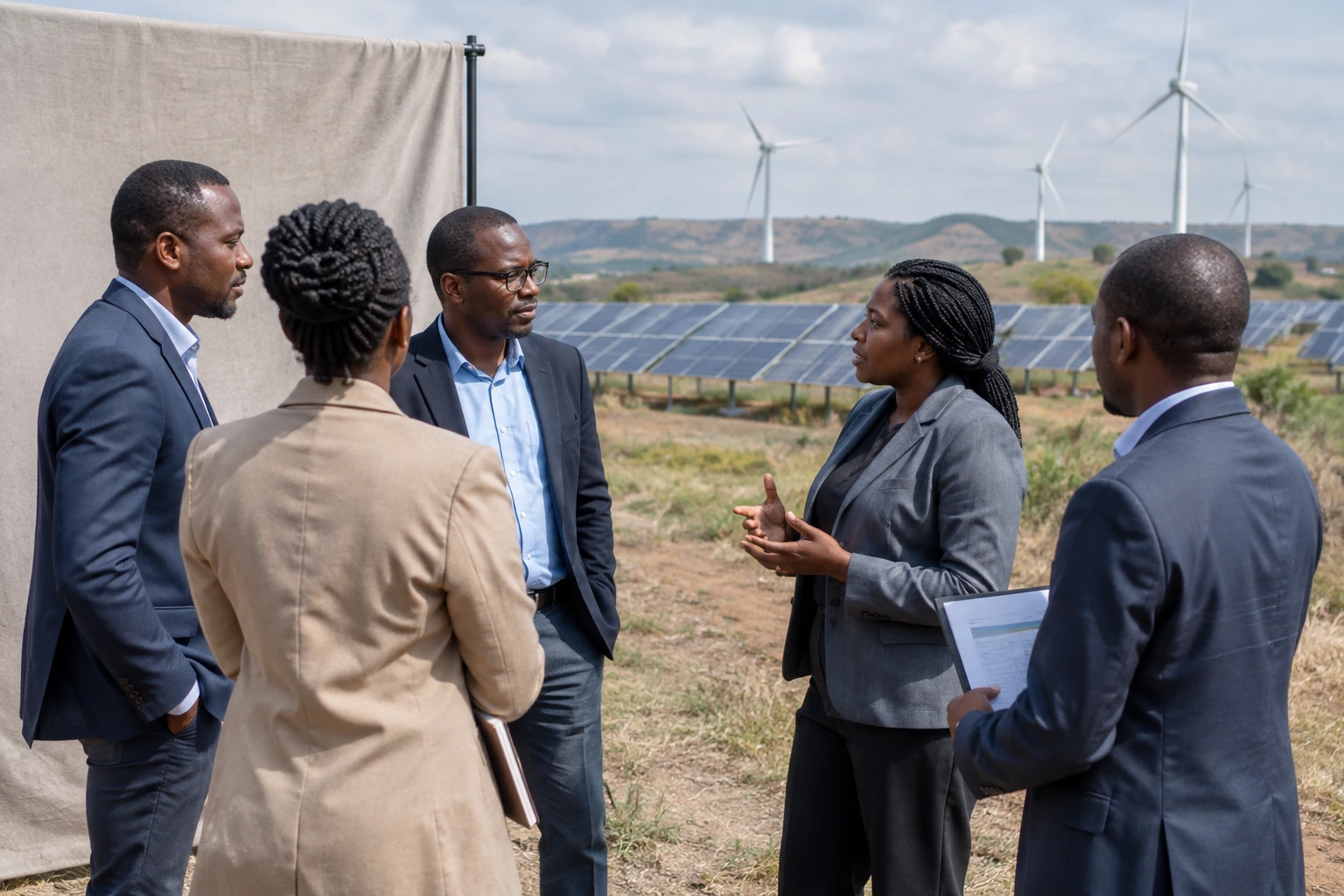
In Zimbabwe, diversifying electricity generation is no longer just a climate goal. It is also a way to reduce the vulnerability of households, businesses and public services to shortages when power stations cannot meet demand.
A hybrid project planned in the Guruve and Mazowe districts in the north of the country could contribute to this diversification. But its impact will still depend on financing, power sales agreements and an effective connection to the grid.
A power system exposed to the elements
Zimbabwe relies on several sources of electricity, including coal and hydropower. The latter depends on rainfall and the water level of Lake Kariba, a reservoir shared with Zambia on the Zambezi River. During droughts, hydropower output can fall and intensify supply pressures.
The challenges extend beyond power stations. Available capacity, the transmission network and the ability to import electricity also affect access to power. Outages affect activities unevenly: they disrupt businesses and equipment that depend on electricity, while rural households far from the grid face specific connection barriers.
At regional level, Zimbabwe belongs to the Southern African Development Community (SADC). It also participates in the Southern African Power Pool, a mechanism that enables the region’s operators to coordinate and trade electricity. This regional market can help manage deficits and surpluses, without guaranteeing that supply will be available when each country needs it.
A project combining wind, solar and batteries
On 3 November 2026, developers Modaso Energy, a subsidiary of the MISA Group, and Tatanga Energy announced a partnership to advance the Guruve-Mazowe project. The proposed configuration combines 128 megawatts (MW) of wind power, 100 MW of solar and batteries with a power rating of 50 MW and announced storage capacity of 100 megawatt-hours (MWh).
The estimated cost is $300 million. The developers project annual output of around 550 gigawatt-hours (GWh), or nearly 5% of Zimbabwe’s current annual electricity generation. This figure is a project estimate, not electricity already fed into the grid.
Most of the electricity is to be sold to ZESA, the state-owned utility, while ZimGreenCo, a company linked to regional trader Africa GreenCo, also plans to buy some of it. The power purchase agreements have yet to be finalised, however. Without commercial agreements in place, the volumes actually sold and the terms of delivery have not yet been established.
The project has evolved since its early stages. Tatanga Energy and Spanish company Enerfin initially worked on a 100 MW wind farm. A wind measurement campaign began in September 2021 to assess the site and help select turbines. The addition of solar and storage now broadens the proposed scheme.
More flexible generation, subject to conditions
The principle behind hybrid generation is to make use of sources whose production periods can complement one another. Solar panels generate electricity during the day; wind follows a different pattern depending on local conditions. Batteries can return some of the stored energy when generation falls or demand rises.
This combination could reduce reliance on hydropower, without replacing it. Nor does it remove the constraints associated with the grid: electricity will have to be transported from the site, fluctuations in generation integrated and the batteries operated. The project could therefore strengthen supply, but its benefits will also depend on infrastructure and the system’s capacity to absorb this energy.
For residents of the districts concerned, the benefits will depend in particular on construction work, the jobs actually created and the arrangements for access to connections. For ZESA customers, new capacity does not automatically mean uninterrupted power: power station availability, transmission, distribution and purchasing terms also matter.
National targets still to be delivered
Zimbabwe’s National Energy Compact, prepared under the World Bank and African Development Bank’s Mission 300 initiative, sets targets for 2030. It aims to increase renewable capacity from 1,282.3 MW in 2024 to 2,640 MW. The document also links generation expansion to a goal of universal access to electricity.
These targets are ambitious. The compact estimates that around 41% of households had access to electricity in 2024 and envisages a sharp acceleration in connections, combining the grid, mini-grids and off-grid solutions. A large power station can contribute to generation, but on its own it cannot address the challenges of supplying remote areas or the need for investment in distribution.
The Guruve-Mazowe project thus illustrates a challenge shared by several Southern African countries: diversifying sources while strengthening networks and regional electricity trade. Its next concrete step will be finalising the power purchase agreements and financing arrangements. Only then can the announced capacity be turned into electricity delivered to Zimbabwean consumers.
Details published in Zimbabwe on the Guruve-Mazowe project | Tatanga Energy’s account of the initial wind development | Zimbabwe’s National Energy Compact