Algeria
 Egypt
 Libya
 Morocco
 Sudan
 Tunisia
 Benin
 Burkina Faso
 Cabo Verde
 Côte d'Ivoire
 Ghana
 Guinea
 Guinea-Bissau
 Liberia
 Mali
 Mauritania
 Niger
 Nigeria
 Senegal
 Sierra Leone
 The Gambia
 Togo
 Cameroon
 Central African Republic
 Chad
 DR Congo
 Equatorial Guinea
 Gabon
 Republic of the Congo
 São Tomé and Príncipe
 Burundi
 Comoros
 Djibouti
 Eritrea
 Ethiopia
 Kenya
 Madagascar
 Malawi
 Mauritius
 Mozambique
 Rwanda
 Seychelles
 Somalia
 South Sudan
 Tanzania
 Uganda
 Angola
 Botswana
 Eswatini
 Lesotho
 Namibia
 South Africa
 Zambia
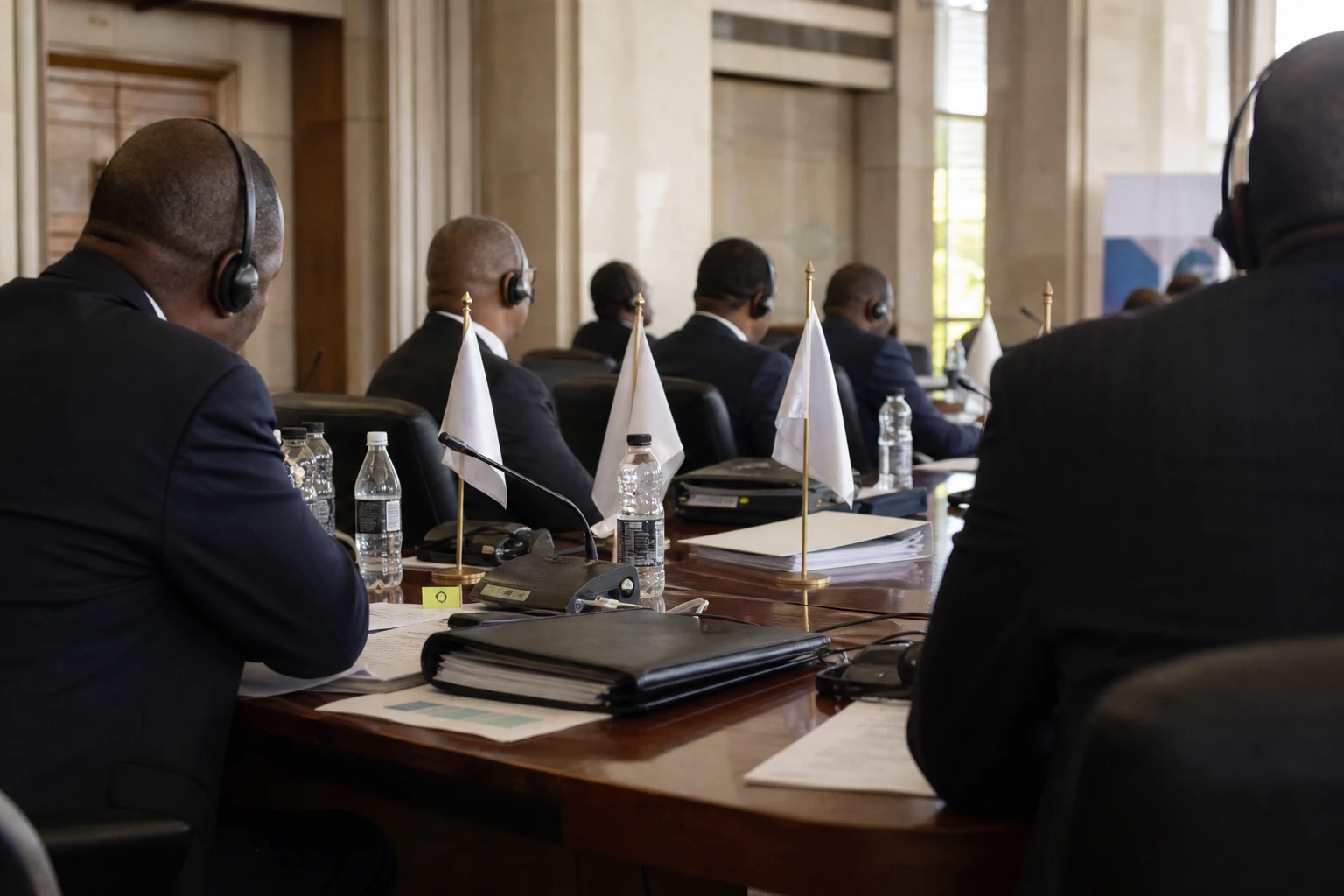
In Harare, monetary stability is no longer enough to reassure
In a country that has long lived through currency upheavals, the mere return of contained inflation does not tell the whole story. In Zimbabwe, the real question lies elsewhere: can the current stabilisation last long enough to convince households, businesses and creditors that the crisis is truly in the past?
The debate is far from theoretical. In southern Africa, Zimbabwe remains a useful economic player for SADC, the Southern African Development Community, which is pushing its members towards macroeconomic convergence, with benchmarks for inflation, the deficit and public debt. Harare, Zimbabwe’s capital, is seeking to show that it is returning to the zone of minimum stability demanded by regional partners and lenders.
Real improvement, but still fragile
The latest facts point in that direction. The IMF says that during its non-financing monitoring programme, Zimbabwe met all the quantitative targets for the first review, notably on the primary fiscal balance, net official reserves and growth in the monetary base of the ZiG, the currency introduced in April 2024 and backed by gold and foreign-currency assets. The institution also notes that growth strengthened in 2025 and maintained its momentum in 2026, driven by mining, still-high gold prices and an agricultural rebound.
Inflation figures confirm this improvement, although the picture remains incomplete. ZIMSTAT, the national statistics agency, published an annual rate of 2.9% for the ZiG in August 2026, down from 3.2% in July. Specialist local media reported the same trend, noting that the gap between inflation in ZiG and in US dollars had narrowed further. This convergence matters in an economy where both currencies are still used in everyday transactions.
The contrast with the recent past remains striking. The International Monetary Fund recalls that annual inflation reached about 736% in 2024 before falling sharply. Its August 2025 report had already projected a return to much lower levels, provided monetary and fiscal discipline was maintained. The current decline therefore represents less a miracle than a catch-up after years of monetary disorder and deep distrust of the local currency.
The mining engine and fiscal discipline
Zimbabwe’s recovery rests first on a clear productive base: mining. The country is rich in gold, platinum, lithium, chromium and other minerals, and the mining sector remains one of its main sources of foreign currency. The IMF attributes the growth momentum to the strength of the extractive sector, still-high gold prices and the agricultural recovery following the 2024 climate shock. The state is collecting more revenue from this, easing pressure on the budget.
The second pillar is monetary. The Reserve Bank of Zimbabwe presented the ZiG as a “structured” currency, meaning that it is backed by foreign-exchange and gold reserves. It put the currency into circulation on 5 April 2024 to replace balances in Zimbabwean dollars. The central bank says it began a reserve-building strategy in 2024 to support the new monetary unit. This foundation partly explains the recent fall in inflation and the relative stability of the official exchange rate.
The third pillar is fiscal. The IMF reports that the authorities have reduced their reliance on monetary financing of the deficit, a central issue in the history of Zimbabwe’s crises. The ten-month monitoring programme, approved in April 2026, is specifically intended to consolidate the gains in stability and establish a more credible macroeconomic framework. In a country where public spending was long supported by the printing press, this shift matters almost as much as the currency reform itself.
Debt remains the main political obstacle
Despite this progress, debt remains the decisive test. Zimbabwe has remained shut out of international markets since its 1999 default, and has since been de facto on the sidelines of concessional financing. Total public debt is estimated at $21.3bn, according to the official bulletin cited by local media and the Ministry of Finance. In late July and early August 2026, Harare also took an important political step: France and the United Kingdom agreed to co-chair a new Debt Consultative Group, tasked with structuring dialogue with creditors.
This group does not erase anything. It is neither debt cancellation nor a credit line. Rather, it serves as a platform for arbitration, linked to the debt-clearance roadmap and the IMF programme. For the Zimbabwean government, the goal is clear: to secure a credible path out of arrears and regain access to international capital. For creditors, the goal is equally clear: to assess whether the announced reforms can withstand shocks, particularly commodity-price volatility and domestic political fragilities.
This step also has regional significance. SADC closely monitors its members’ macroeconomic stability paths because persistently low inflation, sustainable debt and a credible currency facilitate trade, supply chains and intra-regional investment. Zimbabwe, a landlocked country at the heart of southern African corridors, depends on precisely this movement. Its return to financial credibility would therefore have effects beyond Harare: on mineral exports, regional transport and industrial projects connected to the region.
What the continent should take away
The Zimbabwean case offers a useful lesson for Africa as a whole: monetary stability cannot be decreed; it has to be built. It requires reserves, revenue, spending discipline and a clearer relationship with creditors. In this sense, Zimbabwe is not merely a country catching up. It is becoming a test of a different economic proposition in southern Africa: that recovery is possible without breaking with the demands of financial credibility, but without abandoning national production and employment priorities.
The next phase will hinge on three concrete developments: the ZiG’s ability to keep inflation low in the coming months, discipline in the 2026 budget, and progress in talks on debt and arrears. If these three hold, Zimbabwe can turn a recent improvement into a lasting trajectory. Otherwise, the gap between perception and reality, already highlighted by the IMF, will remain open.