Algeria
 Egypt
 Libya
 Morocco
 Sudan
 Tunisia
 Benin
 Burkina Faso
 Cabo Verde
 Côte d'Ivoire
 Ghana
 Guinea
 Guinea-Bissau
 Liberia
 Mali
 Mauritania
 Niger
 Nigeria
 Senegal
 Sierra Leone
 The Gambia
 Togo
 Cameroon
 Central African Republic
 Chad
 DR Congo
 Equatorial Guinea
 Gabon
 Republic of the Congo
 São Tomé and Príncipe
 Burundi
 Comoros
 Djibouti
 Eritrea
 Ethiopia
 Kenya
 Malawi
 Mauritius
 Mozambique
 Rwanda
 Seychelles
 Somalia
 South Sudan
 Tanzania
 Uganda
 Angola
 Botswana
 Eswatini
 Lesotho
 Namibia
 South Africa
 Zambia
 Zimbabwe
A Malagasy voice at a turning point
In Antananarivo, the press did more than report the end of the colonial world. It also served as a political workshop. Amid the ferment of the post-war years, a young Malagasy woman, Zèle Rasoanoro, spoke out in nationalist newspapers to defend the idea of a free Madagascar. Her story is a reminder that Africa’s independence struggles were not fought only by well-known leaders, but also by women whose names have long been absent from public accounts.
This matters for Madagascar, an Indian Ocean island and SADC member, where political memory remains shaped by questions of colonial legacies, social divisions and the relationship between the capital and the periphery. Zèle Rasoanoro’s story forms part of this history. It also sheds light on a broader reality: women’s place in nationalist movements, trade unionism and the production of ideas, well before independence was achieved in 1960.
From nationalist newspapers to solidarity organisations
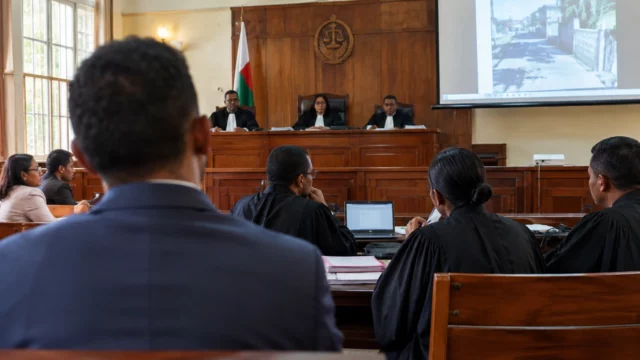
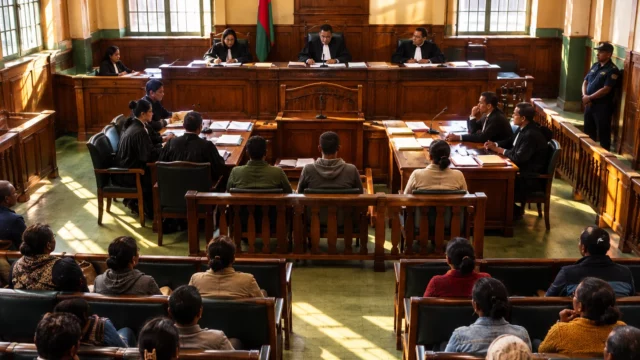
In the late 1940s, Zèle Rasoanoro wrote for newspapers linked to the MDRM, the Democratic Movement for Malagasy Renewal, a major nationalist organisation of the period. The MDRM was at the heart of anti-colonial opposition in Madagascar, amid tensions that would lead to the insurrection of 29 March 1947. French and Malagasy archives place this period between March 1947 and December 1948, confirming the timeframe of her activism.
According to a dissertation published in Madagascar, Zèle Rasoanoro is described as the first Malagasy woman journalist, a claim repeated in several local accounts of women in the nationalist movement. This attribution is chiefly preserved in Malagasy activist and historical memory, but it is consistent with what is known about the media landscape of the time: a sphere dominated by male writers, in which writing was itself a political act.
After the mass arrests prompted by the 1947 crackdown, she too was imprisoned in 1948. On her release in 1950, she joined a solidarity committee calling for an amnesty for political prisoners. This detail matters: the anti-colonial struggle was not limited to the call for independence. It also involved helping prisoners and their families, building support networks and defending survivors of a crackdown whose scale is still debated by historians.
Trade unionism, communism and political disillusionment
Zèle Rasoanoro’s story also shows how journalism and collective organising went hand in hand at the time. Malagasy sources say she was active in a local section of the CGT, alongside Gisèle Rabesahala and French communist activists. This connection with trade unionism was no minor detail. In Madagascar, as elsewhere in the French colonial empire, trade unions often served as political schools and places for training, circulating slogans and providing practical solidarity.
The national context helps explain this politicisation. Philibert Tsiranana founded the Social Democratic Party, the PSD, in Majunga on 28 December 1956. The PSD presented itself as a moderate, anti-communist force, supported by civil servants and coastal rural notables. This shift sheds light on Zèle Rasoanoro’s trajectory: she is said to have eventually joined the party in 1956, after years of police pressure and colonial harassment. The move carried political weight, signalling a shift from a revolutionary outlook towards caution, or even compromise.
This was not just an individual journey. It also speaks to the difficulty, in many newly independent African states, of turning a liberation struggle into a lasting social project. Madagascar gained independence in 1960, but the promise of emancipation did not automatically bring social justice, political openness or recognition for women activists. This is where Zèle Rasoanoro’s fate takes on wider significance: it links decolonisation to the still-relevant question of who writes national history.
What her story still says about Madagascar
This figure is also compelling because she remained out of the spotlight. Zèle Rasoanoro is not remembered as an official heroine. Rather, she represents a generation of women activists whose records are scattered, whose stories are fragmentary and whose recognition is incomplete. She died in 1987, alone and poor, according to testimonies collected by Malagasy historians. The contrast is striking: a woman who helped shape the language of independence ended her life in the shadows of a state that never fully honoured her.
For Madagascar, the stakes go beyond one person’s story. Antananarivo concentrates most of the institutions, media and places of remembrance, even though popular movements also took root in the countryside, suburbs and ports. Revisiting lives such as Zèle Rasoanoro’s helps rebalance the national narrative. It is a reminder that Malagasy political history was also shaped by women, trade unionists, journalists and solidarity networks, not only by presidents and party leaders.
Across the continent, this reassessment is part of a broader effort to revisit the role of women in anti-colonial struggles. From Dakar to Antananarivo, from Brazzaville to Nairobi, African historians are reopening the files, correcting blind spots and restoring women to their place in the fight for sovereignty. In a country such as Madagascar, a SADC member with its eyes on the Indian Ocean, this reassessment also matters for the future: it shows how a society chooses its role models, its silences and the names it passes on to the next generation.