Algeria
 Egypt
 Libya
 Morocco
 Sudan
 Tunisia
 Benin
 Burkina Faso
 Cabo Verde
 Côte d'Ivoire
 Ghana
 Guinea
 Guinea-Bissau
 Liberia
 Mali
 Mauritania
 Niger
 Nigeria
 Senegal
 Sierra Leone
 The Gambia
 Togo
 Cameroon
 Central African Republic
 Chad
 DR Congo
 Equatorial Guinea
 Gabon
 Republic of the Congo
 São Tomé and Príncipe
 Burundi
 Comoros
 Djibouti
 Eritrea
 Ethiopia
 Kenya
 Madagascar
 Malawi
 Mauritius
 Mozambique
 Rwanda
 Seychelles
 Somalia
 South Sudan
 Tanzania
 Uganda
 Angola
 Botswana
 Eswatini
 Lesotho
 Namibia
 South Africa
 Zimbabwe
New external financing could ease Zambia’s budget constraints. But it does not resolve the central question: how to protect households from shocks while curbing public spending that exceeds forecasts. This is the balance Lusaka will have to defend in its discussions with the International Monetary Fund (IMF).
An agreement in principle, not yet a loan disbursed
On 9 October 2026, IMF staff and the Zambian authorities reached an agreement in principle on a three-year programme worth about $1.5bn. This is a staff-level agreement: the Fund’s executive board still has to review it. The financing has therefore not yet been approved or disbursed.
The IMF mission, led by Edward Gemayel, was in Lusaka from 29 September to 9 October. According to information reported after the discussions, a board review is expected around December. If the programme is approved, disbursements would be made in seven tranches, at intervals of about six months. The first payment would represent nearly 15% of the total. These arrangements remain subject to approval of the programme and compliance with its conditions.
The proposed mechanism is an Extended Credit Facility. This IMF instrument provides medium-term financing to countries facing balance-of-payments difficulties, in exchange for economic commitments and reforms. The timetable, specific targets and conditions will therefore follow the agreement in principle at political level.
After debt restructuring, the challenge of public finances
This new cycle begins after the previous programme ended in January 2026. Approved in 2022, it resulted in disbursements of about $1.7bn. The restructuring of a large share of external debt and the rebuilding of stronger foreign-exchange reserves helped ease the pressures on the economy. But debt and the state’s capacity to fund its priorities remain sensitive issues.
The IMF’s assessment also highlights a gap between expected revenue and actual spending. Maize purchases by the Food Reserve Agency exceeded budget forecasts. The state agency buys and stores grain to build reserves and support supply. Such purchases can meet a food-security imperative, particularly after climate shocks. They can, however, add to public accounts and tie up funds that are then unavailable for other areas.
The debate is therefore about how to finance reserves, set the volumes purchased and make operations more transparent. Spending intended to cushion a harvest shock can protect consumers and producers. But if its cost is not anticipated or clearly included in the budget, it reduces the room available for public services and investment. The effects are not the same for everyone: farmers depend on market outlets and purchase prices, while urban households are directly affected by the price of food.
The IMF is also calling for stronger revenue collection and fiscal discipline. Broadening the tax base — that is, the number of activities and people actually subject to tax — is presented as one lever. The specific measures, their timetable and how the burden is distributed will need to be tracked. Tax reform can increase public resources, but its impact varies among the businesses, workers and consumers concerned.
Inflation down, purchasing power still at stake
Falling inflation is a gain to be preserved. Zambia’s national statistics agency measured annual inflation at 6.1% in September 2026, compared with 6.2% in August. The overall trend is improving, but this rate does not mean prices have fallen: it indicates that their rise over the year has slowed. The cost of maize and other food products remains particularly important for households.
This figure provides a national benchmark, but people’s experience of prices varies according to income, where they shop and their access to markets. Families spending a large share of their budget on food feel increases in some products more acutely. For the authorities, the challenge is to maintain price stability without neglecting responses to shortages or supply disruptions.
A negotiation watched across southern Africa
Zambia is now seeking to preserve the gains from stabilisation while giving greater weight to growth, private investment, exports and employment. The government and the IMF will have to clarify how these priorities fit with the fiscal targets. The trade-offs will attract all the more scrutiny because debt restructuring alone has not eliminated risks linked to climate shocks, public revenue or investment needs.
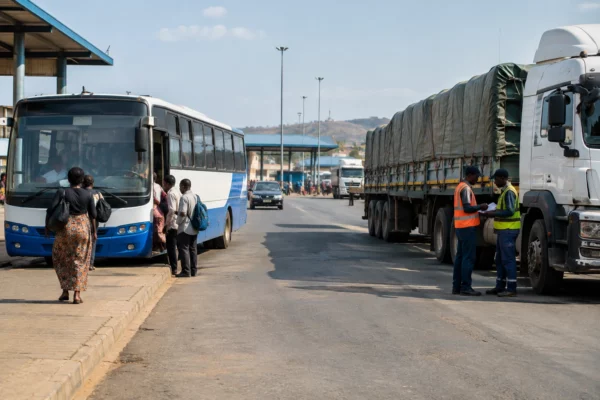
The implications extend beyond Zambia’s borders. As a member of the Southern African Development Community (SADC), a regional organisation for economic and political co-operation, the country is linked to neighbouring markets through trade, transport and agricultural exchanges. Maize stock management and prices may therefore also matter for regional flows, although the effects will depend on harvests and each country’s trade decisions.
For Zambians, the programme’s test will not come down to the amount announced. It will be necessary to see whether the tranches are approved, whether fiscal commitments are met and whether exceptional spending, particularly on food, remains controlled and transparent. The challenge is to consolidate stability without placing a disproportionate share of the cost of adjustment on households and economic actors who are least protected.
The facts and figures relating to the agreement and its timetable were cross-checked against Zambia Monitor, the Zambian outlet that followed the negotiations, and a Reuters report. The inflation figure comes from the Zambian Statistics Agency.