Algeria
 Egypt
 Libya
 Morocco
 Sudan
 Tunisia
 Benin
 Burkina Faso
 Cabo Verde
 Côte d'Ivoire
 Ghana
 Guinea
 Guinea-Bissau
 Liberia
 Mali
 Mauritania
 Niger
 Nigeria
 Senegal
 Sierra Leone
 The Gambia
 Togo
 Cameroon
 Central African Republic
 Chad
 DR Congo
 Equatorial Guinea
 Gabon
 Republic of the Congo
 São Tomé and Príncipe
 Burundi
 Comoros
 Djibouti
 Eritrea
 Ethiopia
 Kenya
 Madagascar
 Malawi
 Mauritius
 Mozambique
 Rwanda
 Seychelles
 Somalia
 South Sudan
 Tanzania
 Uganda
 Angola
 Eswatini
 Lesotho
 Namibia
 South Africa
 Zambia
 Zimbabwe
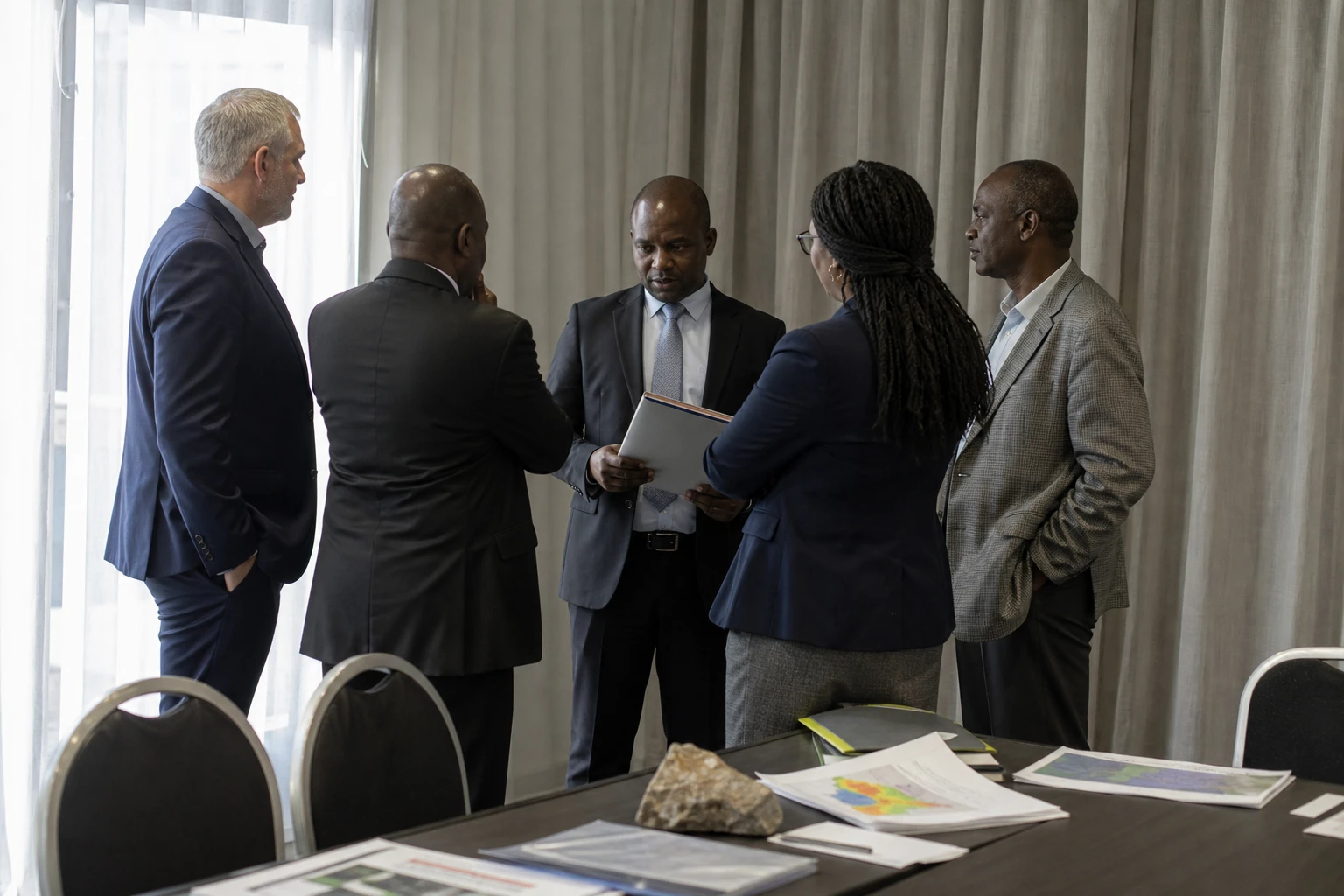
For Zambia, the challenge is not simply to attract another mining giant. It is also to gain a better understanding of its subsoil, strengthen national expertise and turn international interest into sustainable projects. It is in this context that Lusaka is drawing closer to BHP, the world’s largest copper producer, according to the company’s own description.
Zambia wants to map its mining potential more effectively
The Zambian government and BHP have reached an agreement aimed at strengthening the country’s geological exploration capacity. The initiative stems from discussions held at the Africa Down Under conference, which took place in Perth from 2 to 4 September 2026.
According to Zambia’s Ministry of Mines and Mineral Development, the initiative is to begin with technical support for the Geological Survey Department. This public service produces and maintains geological data used to identify areas with mining potential.
The agreement still needs to be reviewed by the Attorney General’s Chambers. At this stage, it is therefore neither a mining contract nor an equity stake in a Zambian mine. The stated initial objective is to strengthen expertise and exploration methods.
The ministry says BHP wants to deploy its so-called “mineral systems” approach. This method examines all the geological processes that led to the formation and concentration of an ore. It can help target exploration beyond areas already known in the Copperbelt.
This distinction matters. Zambia has a long mining history, but parts of its territory remain insufficiently studied. The country is therefore seeking to improve its data before accelerating the granting of new licences and the development of deposits.
A closer relationship that does not yet amount to mining investment
The memorandum is part of a series of contacts between BHP and the Zambian authorities. Discussions have intensified since representatives of the country took part in several international events focused on mineral resources.
However, the known terms of the agreement remain limited. No specific investment in an existing copper mine has been announced. Nor has any production timetable been provided. The next step will be to finalise a binding text, then define the activities, funding and responsibilities of each party.
For Lusaka, the benefits are twofold. The government wants to attract more capital into exploration. It also wants Zambian institutions to play a greater role in producing and using geological knowledge.
This priority addresses a long-standing weakness in the sector. Copper mining generates revenue, jobs and exports, but upstream activities such as mapping, geological research and specialist services are often less visible and less developed.
Strengthening the Geological Survey Department could therefore have effects beyond any potential partnership with BHP. Better data can reduce risk for investors. It can also enable the state to negotiate licences with more information about the potential value of the areas concerned.
BHP’s African strategy starts with exploration
The Australian group is currently stepping up its contacts with African companies and institutions. In Botswana, BHP has reached an agreement with Cobre Limited giving it the option to acquire up to 75% of the Kitlanya East and Kitlanya West projects, in exchange for funding of up to $25 million.
The partnership covers copper and silver exploration in the Kalahari Copper Belt. It demonstrates BHP’s current preference for phased commitments. The group initially funds geological work, then reserves the option to increase its stake if the results are promising.
In South Africa, several of Orion Minerals’ exploration companies have also joined the BHP Xplor 2026 programme. The programme provides funding without an equity stake, as well as access to technical experts and support to improve exploration concepts.
The assets concerned are in the Northern Cape province. They are not directly linked to the advanced Prieska and Okiep projects. BHP’s support is instead aimed at longer-term exploration opportunities.
These examples point to a cautious strategy. BHP is seeking to identify new resources without immediately committing capital on a scale comparable to an acquisition or the construction of a major mine. For the group, this approach limits risk. For African countries, it opens a door, but does not guarantee that an industrial project will go ahead.
Zambia faces the challenge of adding value
Zambia is one of Africa’s leading copper producers. Its economy remains heavily reliant on the metal, although the authorities are seeking to diversify mining activity and increase national production.
The government has set a target of raising annual copper production to 3 million tonnes by 2031. To achieve this, it will need to attract new investment while also addressing several constraints. These include access to electricity, transport infrastructure, the availability of finance and the stability of the regulatory framework.
The debate also concerns the share of value that remains in the country. Higher production will have different effects depending on whether it is limited to mining and exporting concentrates or is accompanied by smelters, cable manufacturers, mining services and technological expertise.
For Zambian workers and businesses, the agreement with BHP will therefore be judged by its tangible benefits. Training, contracts awarded to local suppliers and the use of data produced by national institutions will matter as much as any eventual influx of foreign capital.
The impact will also vary by region. The Copperbelt already has a dense mining industry. Other, less industrialised provinces could benefit from new exploration campaigns, but they will need appropriate infrastructure and consultation mechanisms.
A signal for SADC and the African copper market
The closer relationship between BHP and Zambia comes amid regional competition between producers of copper and so-called critical minerals. Zambia is a member of SADC, the Southern African Development Community, which also includes the Democratic Republic of the Congo, Botswana, Namibia and South Africa.
These countries are seeking to attract the same investors, but they also share infrastructure and common challenges. Rail corridors, electricity networks and regional processing projects can therefore become just as important as the quality of deposits.
In the short term, the point to watch will be the legal approval of the agreement announced in Lusaka. Its funding, the duration of technical assistance and the geological areas targeted will then need to be established. Until these details are specified, the closer relationship with BHP should be seen as a step towards exploration and institutional capacity-building, not as the announcement of a new mine.
The significance of the deal nevertheless extends beyond the relationship between an Australian company and the Zambian state. It illustrates how major mining groups are returning to the continent through targeted partnerships, while African countries seek greater control over their data, licences and the local processing of their resources.