Algeria
 Egypt
 Libya
 Morocco
 Sudan
 Tunisia
 Benin
 Burkina Faso
 Cabo Verde
 Ghana
 Guinea
 Guinea-Bissau
 Liberia
 Mali
 Mauritania
 Niger
 Nigeria
 Senegal
 Sierra Leone
 The Gambia
 Togo
 Cameroon
 Central African Republic
 Chad
 DR Congo
 Equatorial Guinea
 Gabon
 Republic of the Congo
 São Tomé and Príncipe
 Burundi
 Comoros
 Djibouti
 Eritrea
 Ethiopia
 Kenya
 Madagascar
 Malawi
 Mauritius
 Mozambique
 Rwanda
 Seychelles
 Somalia
 South Sudan
 Tanzania
 Uganda
 Angola
 Botswana
 Eswatini
 Lesotho
 Namibia
 South Africa
 Zambia
 Zimbabwe
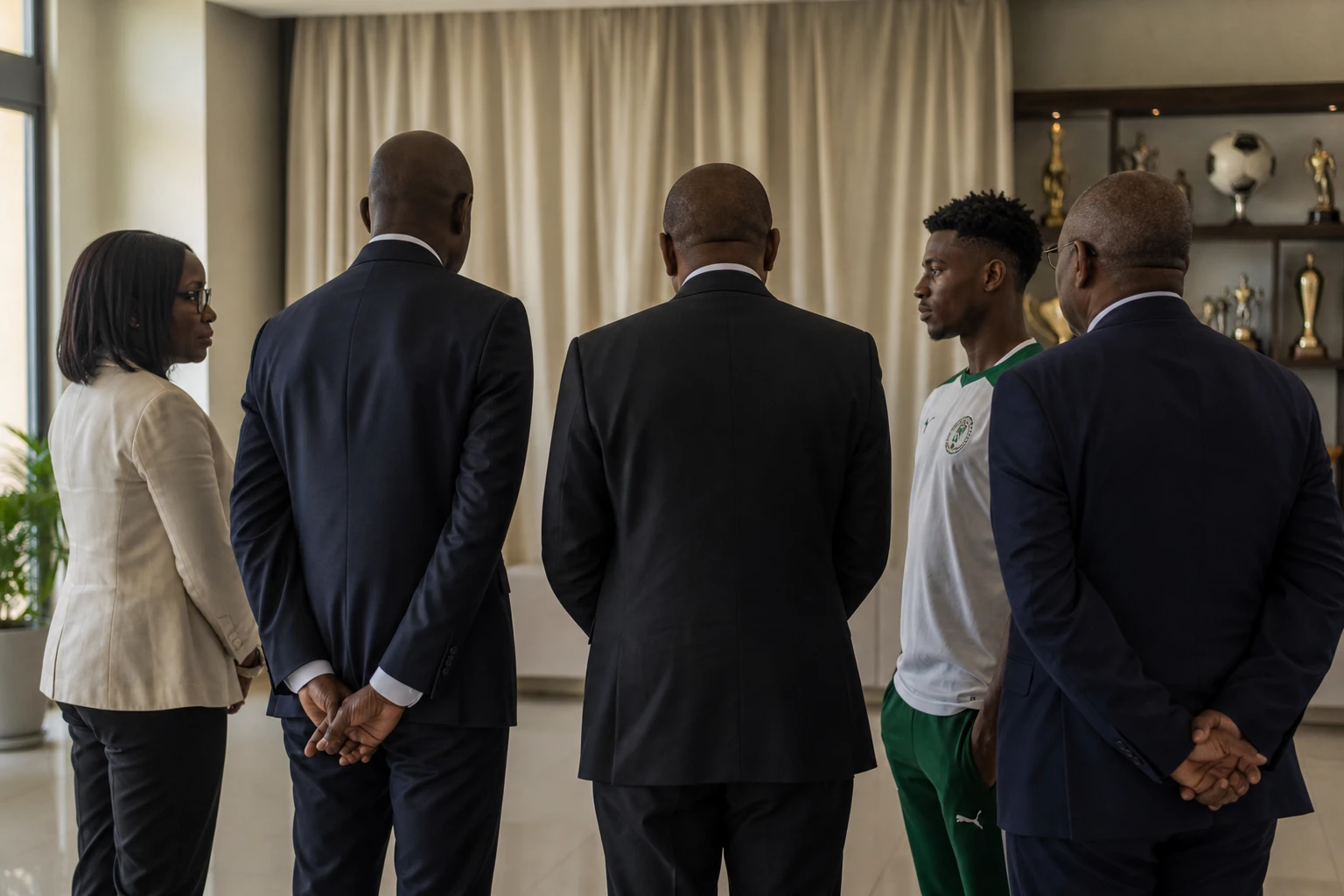
An Ivorian winger with a global profile
In Abidjan, football is never just about a transfer. It tells the story of a journey, a neighbourhood, a family and, often, a promise of social mobility. Yan Diomandé fits that pattern. At 19, the RB Leipzig winger has moved out of the prospect category and into the ranks of players closely watched by Europe’s biggest clubs. His name is now being discussed alongside his status as an Ivory Coast international and his performances in the Bundesliga and at the 2026 World Cup.
This rise also says something about sporting life in Côte d’Ivoire today. The country is drawing on a younger, more mobile generation with greater exposure than the teams of 2006, 2010 or 2014. Côte d’Ivoire did take part in the 2026 World Cup, and Diomandé was included in the squad selected by Emerse Faé, alongside other players established in Europe. CAF and FIFA both described the team as one of the tournament’s most promising.
From the Bundesliga to the big clubs, the market is already open
On the pitch, the Ivorian left-footer has confirmed what scouts had already seen. The Bundesliga describes him as a direct player, capable of beating opponents, creating chances and making an impact in attack. FIFA also highlighted his influence during the 2026 World Cup, where Côte d’Ivoire beat Ecuador before losing 2-1 to Norway in the last 16 in Dallas on 30 June 2026.
The transfer market then gathered pace. Several European media outlets report that Real Madrid have taken the lead, while Paris Saint-Germain have withdrawn from the race after deeming the demands too high. Leipzig, meanwhile, has indicated that it does not intend to sell its forward cheaply, and some reports put his valuation above €100 million. The deal should, however, be discussed in conditional terms until it is officially completed.
A transfer that goes beyond one player
For Côte d’Ivoire, the stakes extend beyond the career of one player. When an Ivorian international attracts Europe’s biggest clubs, the whole development pipeline gains visibility: training centres, scouting networks, support for young players, and families’ belief that a career begun locally can lead to the very top. Diomandé’s case illustrates that chain, from his early development in Côte d’Ivoire to his progress in Germany and then exposure on the world stage.
There is also a more social dimension. His story is a reminder that sporting success often emerges from fragile circumstances, where discipline, a support network and the right structures matter as much as raw talent. Without turning it into a dramatic tale, it is easy to see why his journey resonates with Ivorian supporters: it represents a possible rise, but never an automatic one. Football here remains a route to greater visibility, not an automatic solution to the vulnerabilities of everyday life.
What comes next will say much about the strength of Ivorian football
If Real Madrid confirm their interest, the Diomandé case will become an important marker of the place Ivorian players have secured in the European football economy. It would also send a signal to ECOWAS, a regional bloc where talent continues to move freely, but where financial value still depends heavily on exposure in Europe. At this level, every major transfer tells a story not only about a player’s ability but also about his country’s capacity to produce talent for export.
For the Côte d’Ivoire team, the other challenge is clear: to turn this generation into a lasting foundation. After returning to the forefront at the 2026 World Cup and seeing several attacking players confirm their quality, Côte d’Ivoire now wants to sustain that rise over the long term. Diomandé embodies this next step. He is more than a name in the transfer market. He is already one of the faces of a team seeking to establish itself at the summit of African football and make its presence count beyond a single tournament or transfer window.