Algeria
 Egypt
 Libya
 Morocco
 Sudan
 Tunisia
 Benin
 Burkina Faso
 Cabo Verde
 Ghana
 Guinea
 Guinea-Bissau
 Liberia
 Mali
 Mauritania
 Niger
 Nigeria
 Senegal
 Sierra Leone
 The Gambia
 Togo
 Cameroon
 Central African Republic
 Chad
 DR Congo
 Equatorial Guinea
 Gabon
 Republic of the Congo
 São Tomé and Príncipe
 Burundi
 Comoros
 Djibouti
 Eritrea
 Ethiopia
 Kenya
 Madagascar
 Malawi
 Mauritius
 Mozambique
 Rwanda
 Seychelles
 Somalia
 South Sudan
 Tanzania
 Uganda
 Angola
 Botswana
 Eswatini
 Lesotho
 Namibia
 South Africa
 Zambia
 Zimbabwe
A goal that tells more than the story of an English Sunday
At Stamford Bridge, a young Ivorian showed how a football match can turn on a few touches. Malick Yalcouyé scored his first Premier League goal in Chelsea’s 4-3 win over Brighton on Sunday 30 August 2026. Brighton were trailing 3-0 before fighting their way back into the game, helped in particular by the first goal from the midfielder, who came through the ranks in Côte d’Ivoire.
This kind of evening also resonates with Ivorian readers. Behind a goal in England lie a training centre, a channel for exporting talent and a simple question: how can these prospects be turned into lasting careers without losing their ties to Côte d’Ivoire, whose capital is Yamoussoukro? ASEC Mimosas, Yalcouyé’s former club, remains one of the most visible symbols of this pathway.
From ASEC Mimosas to the Premier League, the same thread of development
Yalcouyé’s journey follows a now familiar path in Ivorian football. Born on 18 November 2005, he came through ASEC Mimosas’s Académie MimoSifcom before joining Brighton after a spell in Sweden. The Abidjan club itself officially announced his signing for Brighton in July 2025, describing him as a young talent who had come of age within its development programme.
This pathway matters to Ivorian football because it helps drive the country’s growing presence on the international stage. ASEC is more than a trophy-winning club. It is also a talent factory, with a method, development cycles and a network for moving players abroad. In a country where football is both a sporting showcase and a vehicle for social mobility, every successful transfer bolsters the reputation of the local system as much as the player’s career.
The match against Chelsea showed this on the pitch. Brighton struggled, but Yalcouyé gave his team fresh impetus with a powerful volley at the far post, having helped build the move. The English club hailed his first Premier League start and his first goal in the competition. Manager Fabian Hürzeler, for his part, praised his character, work rate and ability to hold his own in a demanding environment.
The age controversy says more about the cruelty of social media
Attention soon spilled beyond the pitch. On social media, users questioned the player’s age because of his appearance and early hair loss. This kind of controversy is nothing new in African football, where young players are often subjected to unfounded suspicions as soon as they fail to fit expected physical stereotypes. Here, the debate is all the more tenuous because it rests on impressions, not publicly available medical evidence.
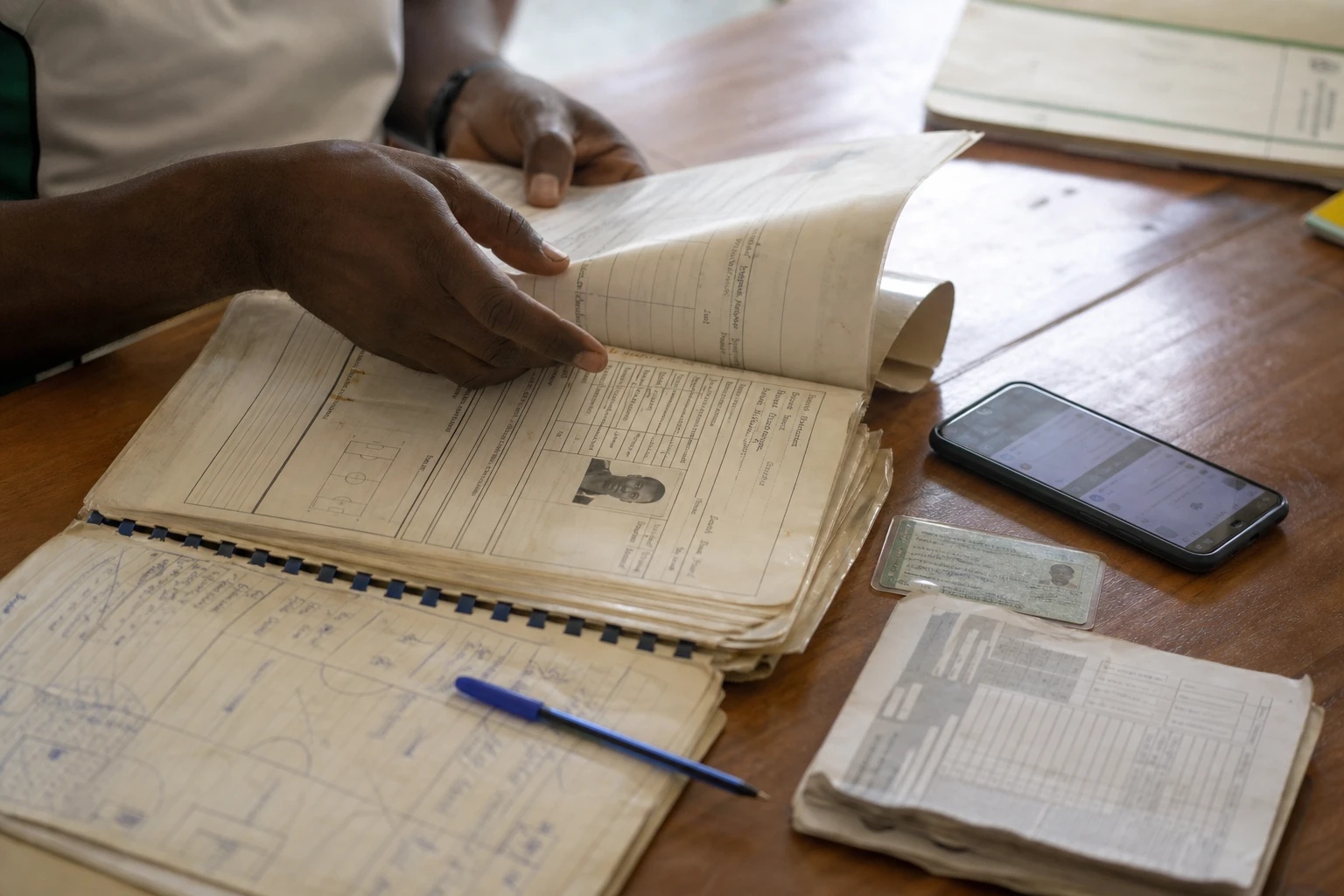
The strongest evidence remains the records of his former club. ASEC Mimosas publicly recalled the career of its former player, publishing images and calling for an end to speculation. The player’s official profile on the club’s website gives his date of birth as 18 November 2005. The official Premier League website lists the same date. This does not settle the matter medically, but it disproves the baseless insinuations being circulated.
In this context, the reference to chronic alopecia, repeated by an Ivorian sports commentator, is a publicly offered explanation, not a diagnosis confirmed by the player himself in the sources consulted. It should therefore be treated with caution. One point, however, is clear: physical appearance is not a valid reason to deny a footballer’s civil identity.
What this episode means for Côte d’Ivoire and the region
For Côte d’Ivoire, the episode has a dual significance. First, sporting: it confirms that Ivorian training centres continue to produce players capable of making their mark at the highest level of European football. Second, symbolic: it shows that a young player’s reputation can be attacked as quickly as it is built. In a football economy where image is worth almost as much as performance, protecting a player’s voice matters as much as the weekend’s result.
For ASEC Mimosas, this episode is also a reminder of its regional role. The Ivorian club does more than sell talent. It champions a complete development pathway, from beginners to elite level and then on to Europe. Its approach reflects a broader trend in West Africa, where academies are becoming economic, sporting and educational institutions. The player leaves, but the training centre remains at the heart of the story.
At regional level, the issue extends beyond Côte d’Ivoire alone. In West Africa, football is a market in which young players, agents, clubs and stories move quickly. Individual successes raise the profile of the West African talent pool at a time when ECOWAS, the regional economic community, remains a space for sporting and human mobility. The question now is whether these journeys will lead to greater local investment in academies, healthcare, physical preparation and psychological support.
The next step on the sporting front will be easy to follow: how Brighton manages this player over a long season, and how Yalcouyé turns this first goal into a lasting benchmark. For Côte d’Ivoire, the real question lies elsewhere: how to preserve the value of a young talent when success immediately triggers rumours, projections and character judgments. Sunday’s match provided an answer on the pitch. The rest is a collective responsibility for African football, from its development clubs to its supporters.