Algeria
 Libya
 Morocco
 Sudan
 Tunisia
 Benin
 Burkina Faso
 Cabo Verde
 Côte d'Ivoire
 Ghana
 Guinea
 Guinea-Bissau
 Liberia
 Mali
 Mauritania
 Niger
 Nigeria
 Senegal
 Sierra Leone
 The Gambia
 Togo
 Cameroon
 Central African Republic
 Chad
 DR Congo
 Equatorial Guinea
 Gabon
 Republic of the Congo
 São Tomé and Príncipe
 Burundi
 Comoros
 Djibouti
 Eritrea
 Ethiopia
 Kenya
 Madagascar
 Malawi
 Mauritius
 Mozambique
 Rwanda
 Seychelles
 Somalia
 South Sudan
 Tanzania
 Uganda
 Angola
 Botswana
 Eswatini
 Lesotho
 Namibia
 South Africa
 Zambia
 Zimbabwe
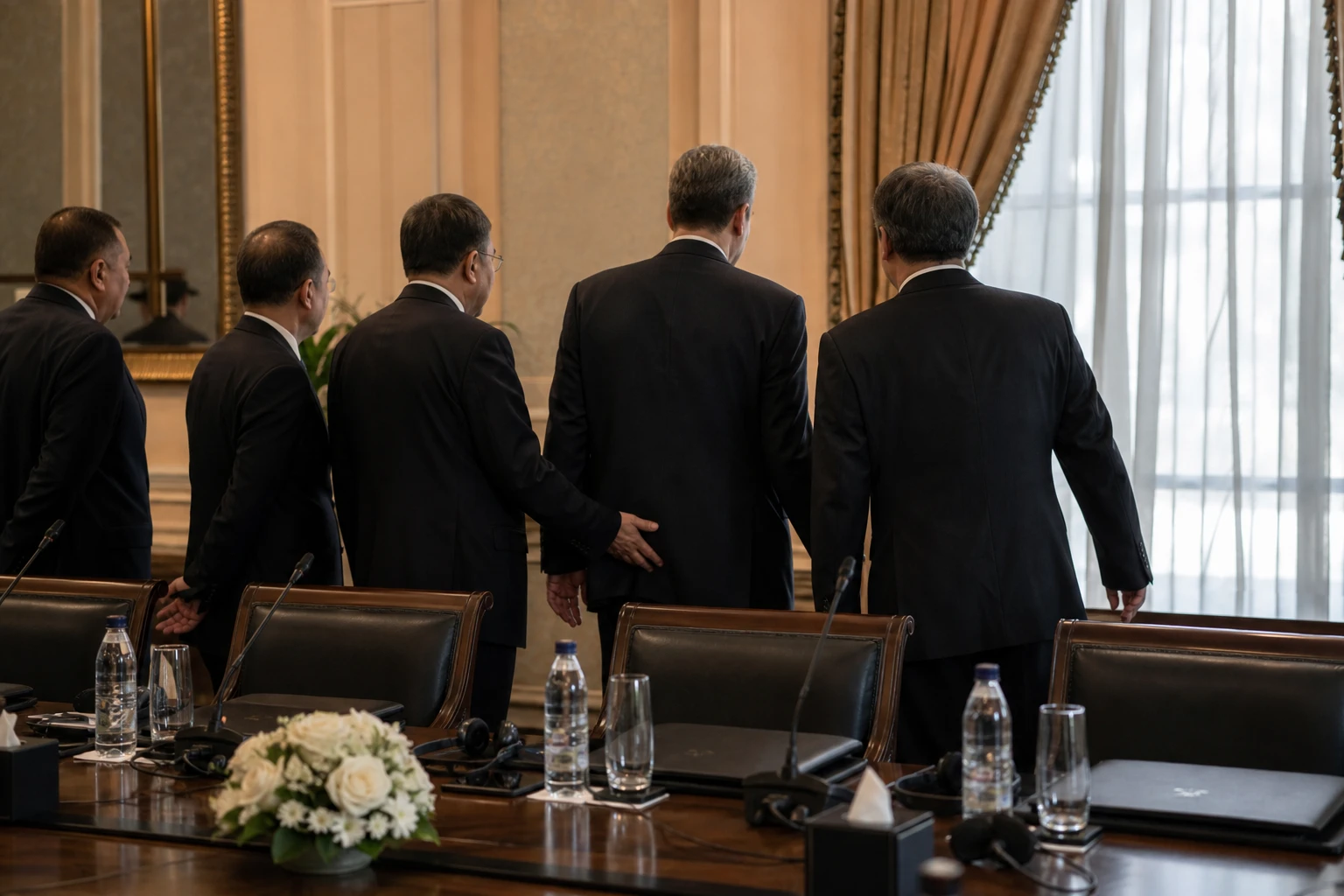
Cairo seeks room to manoeuvre, Beijing seeks footholds
In Cairo, major visits are never read solely through flags and handshakes. They also show where a state wants to preserve room for manoeuvre, whom it is willing to talk to, and which issues it wants to influence without being boxed in. Chinese President Xi Jinping’s visit to Egypt fits this logic. It comes as Cairo pursues a balance between its Western partners, its investment needs and regional upheaval linked to Gaza, the Red Sea and the trade routes that pass through the Suez Canal.
The visit also carries strong symbolic weight. Egypt and China celebrated the 70th anniversary of their diplomatic relations in 2026, established in 1956, making Egypt the first Arab and African country to recognise Beijing at this level. The two capitals recalled the date in opinion articles published on the occasion of the visit. Beijing now presents Cairo as a key partner in the Middle East and North Africa, while Egypt values a partnership that brings it financing, industry and international visibility.
Agreements, but above all a method
The heart of the visit is not just protocol. The two governments have announced their intention to deepen their comprehensive strategic partnership, formalised in 2014. Priorities discussed ahead of the talks ranged from artificial intelligence to transport, energy and investment in the Suez Canal Economic Zone. China’s objective is clear: secure markets, consolidate infrastructure projects and maintain a political presence in a region where competition with Washington remains a defining factor. For Egypt, the aim is to diversify its support without breaking with the United States, which remains a major military supplier to the country.
This calculation is longstanding, but it has taken on new urgency in the regional context. Egyptian authorities have highlighted maritime security in the Red Sea and the Strait of Hormuz, two vital arteries for global trade and Suez Canal revenues. The war in Gaza has also put Egypt back at the centre of mediation efforts between Israel and Palestinian groups, a role Beijing says it is following closely. China publicly supports a two-state solution, as does Cairo, but adds a pragmatic reading: multiply diplomatic footholds to establish itself as a useful interlocutor without appearing to be a direct confrontational actor.
On the economic front, the imbalance remains stark. Chinese customs authorities reported a trade surplus of $12bn with Egypt in the first seven months of 2026. More broadly, bilateral trade reached about $20.8bn in 2025, according to Egyptian official documents, compared with $17.37bn in 2024. The gap points to an intense but unbalanced relationship: Egypt imports many Chinese goods, while Beijing is seeking to move its investments up the value chain, particularly in industrial zones, equipment and logistics-related projects.
Cairo’s strategic autonomy: a constrained course
The visit also sheds light on how Egypt wants to manage its dependencies. Cairo’s official rhetoric emphasises “strategic autonomy”: not cutting itself off from Washington, not aligning fully with Beijing, but retaining enough options to serve its own priorities. In a region marked by fragmented alliances, this positioning is no mere embellishment. It responds to a very concrete reality: external debt, currency pressures, the need for productive investment and the vulnerability of canal revenues when regional shipping is disrupted.
China, for its part, advances in stages. It is multiplying partnerships with capitals that matter militarily, diplomatically or commercially. Egypt ticks several boxes at once: a pivotal Arab country, a member of the African Union, a foothold on the Mediterranean and the Red Sea, and a gateway to the African market. Beijing also has an interest in showing that it can engage with a longstanding US ally without demanding a break. This approach allows it to expand its influence without the political cost of a head-on confrontation.
For Egypt’s population, the expected benefits will be judged against very practical criteria: jobs, project costs, the movement of goods, effects on local industry and access to technology that is genuinely transferred. For the state, the challenge is to secure financing and fast-moving projects. For businesses, particularly in logistics, electronics and infrastructure, the partnership could open up markets. But it also raises a fundamental question: how can more local value be captured in a relationship dominated by mass imports and megaprojects in which the share of domestic manufacturing often remains limited?
An Egyptian issue, but a continental perspective
Seen from Africa, Xi Jinping’s trip goes beyond the bilateral relationship between China and Egypt. It is a reminder that Egypt remains a diplomatic hub linking North Africa, the Arab world and the rest of the continent. It also shows that the major powers are now engaging with African states through industrial, digital and logistics issues as much as through security. In this landscape, African governments are seeking less to choose a side than to negotiate room for manoeuvre, technology transfers and timelines.
The next thing to watch will be how the announcements are put into practice. Signings on artificial intelligence, transport, energy and the Suez Canal zone will show whether the visit leads to bankable projects or merely diplomatic theatre. In North Africa and across the continent, the message is clear: the contest for influence is now also being played out in industrial zones, ports, digital networks and the infrastructure that shapes economic sovereignty.