Algeria
 Egypt
 Libya
 Sudan
 Tunisia
 Benin
 Burkina Faso
 Cabo Verde
 Côte d'Ivoire
 Ghana
 Guinea
 Guinea-Bissau
 Liberia
 Mali
 Mauritania
 Niger
 Nigeria
 Senegal
 Sierra Leone
 The Gambia
 Togo
 Cameroon
 Central African Republic
 Chad
 DR Congo
 Equatorial Guinea
 Gabon
 Republic of the Congo
 São Tomé and Príncipe
 Burundi
 Comoros
 Djibouti
 Eritrea
 Ethiopia
 Kenya
 Madagascar
 Malawi
 Mauritius
 Mozambique
 Rwanda
 Seychelles
 Somalia
 South Sudan
 Tanzania
 Uganda
 Angola
 Botswana
 Eswatini
 Lesotho
 Namibia
 South Africa
 Zambia
 Zimbabwe
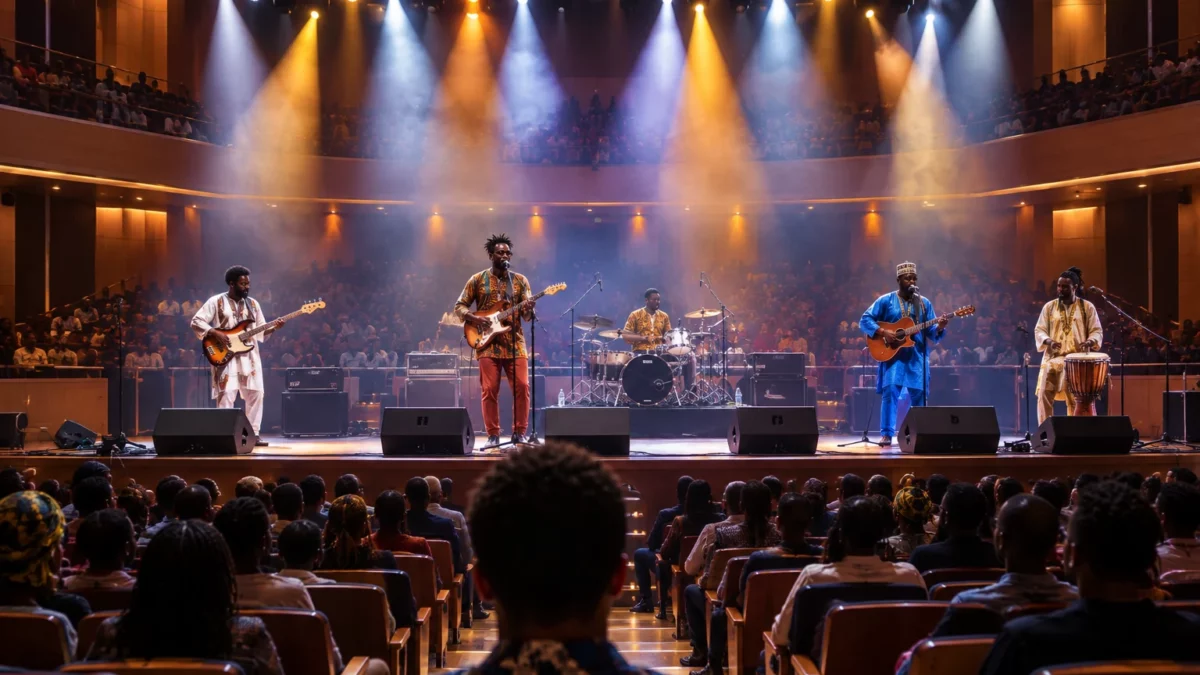
For an artist, being booked on an international stage is not always enough to build a career. They also need to meet bookers, producers and partners who can help their music travel beyond a single concert. Visa For Music put this bridge between creativity and the industry centre stage in Rabat from 18 to 21 November 2026.
Rabat, a musical crossroads between Africa and the Middle East
Founded in 2014, Visa For Music combines a festival with a professional market. The event brings together artists as well as people involved in producing, promoting and booking shows. For Morocco, it is part of a broader strategy to raise the country’s cultural profile and develop its creative industries.
The 13th edition took place at several venues in the Moroccan capital. The programme included concerts, conferences, workshops, training sessions and professional networking events. These activities address a practical need: artists require stages, but also networks and opportunities to organise tours and secure partnerships.
The festival presents itself as a space dedicated to music from Africa and the Middle East, while also welcoming acts from other regions. This openness gives Rabat a role as a meeting point for different artistic scenes. It also enables Moroccan professionals to connect with international counterparts, without reducing the event to a showcase aimed solely at exporting music.
Strong application numbers, a tightly curated line-up
According to figures released by the organisers and reported by the Moroccan press, the 2026 edition received more than 900 applications from 92 countries. Only some were selected for the programme. The number of applications reflects the interest generated by the event; on its own, it says nothing about the contracts or tours that may result.
The selection brought together a range of styles, from traditional music to contemporary forms. Beninese artist OPA was among those on the bill. His appearance came a few months after he was named the winner of the 2026 RFI Discovery Award, announced in March. Moroccan singer Sara Moullablad also performed, with a sound combining jazz and North African instruments.
The opening ceremony also featured the Burundi National Ballet. The programme thus reflected a diversity of practices: concerts, contemporary creations and performances rooted in musical heritage. This plurality matters in a sector where African artists are sometimes presented internationally through overly narrow categories that confine them to a single tradition or genre.
The organisers also arranged meetings between artists and professionals, as well as workshops and round-table discussions. The aim is to turn a stage appearance into working exchanges. But what follows depends on the resources available, bookers’ schedules and the ability of artists’ teams to follow up on the contacts made in Rabat.
Beyond the concert: what it takes to build a career
In music, visibility does not guarantee a regular income. Taking a show on the road often requires funding, production teams, properly managed rights and distribution networks. Independent artists and smaller organisations may face different obstacles from established production companies. A professional market can bring people together, but it cannot replace these resources.
For Moroccan artists, hosting such an event in the capital can make it easier to meet international professionals while strengthening ties within the domestic sector. For artists from other countries, the trip offers a chance to present their work and expand their networks. The benefits are not the same for everyone, however: travel costs, administrative procedures and unequal access to funding affect the ability to take part and sustain collaborations.
The local economic impact should also be considered cautiously. A festival uses venues, technical crews and hospitality services. However, the information available does not make it possible to quantify the impact on Rabat precisely or determine how it is shared between larger organisations and independent players.
A regional event to watch over time
Visa For Music operates in a landscape where several African countries are developing their own professional platforms and festivals. These spaces can complement international networks by encouraging collaborations between artists and organisers across the continent. They also help works circulate between African markets, rather than making Europe or North America the sole destination.
For Morocco, the challenge is to make the event a lasting fixture: bringing professionals together is a first step; what follows can be measured by partnerships put into practice, shows that travel and collaborations that outlast the festival calendar. The question is similar across pan-African networks. A growing number of events is not enough if artists cannot access the networks, funding and management tools they need to work beyond a single edition.
The next step, then, will be less about the number of applications than about following up on the relationships formed in Rabat. Announcements of tours, co-productions or bookings in other countries will make it possible to assess more concretely the springboard role claimed by the market. The 2026 edition brought together artists from Morocco, Benin, Burundi and other countries, as well as professionals from a range of backgrounds. The question is which collaborations will move beyond meetings to become lasting projects.