Algeria
 Egypt
 Libya
 Morocco
 Sudan
 Tunisia
 Benin
 Burkina Faso
 Cabo Verde
 Côte d'Ivoire
 Ghana
 Guinea
 Guinea-Bissau
 Liberia
 Mali
 Mauritania
 Niger
 Nigeria
 Senegal
 Sierra Leone
 The Gambia
 Togo
 Cameroon
 Central African Republic
 Chad
 DR Congo
 Equatorial Guinea
 Gabon
 Republic of the Congo
 São Tomé and Príncipe
 Burundi
 Comoros
 Djibouti
 Eritrea
 Ethiopia
 Kenya
 Madagascar
 Malawi
 Mauritius
 Mozambique
 Rwanda
 Seychelles
 Somalia
 South Sudan
 Tanzania
 Angola
 Botswana
 Eswatini
 Lesotho
 Namibia
 South Africa
 Zambia
 Zimbabwe
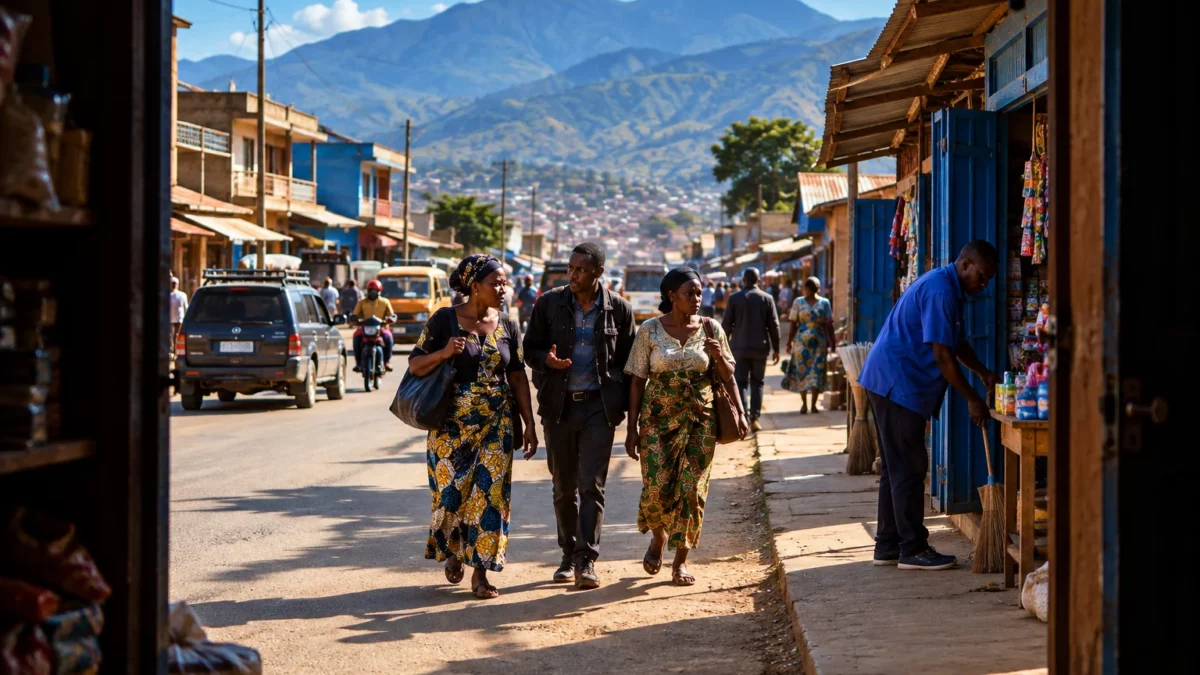
In Lubero, the announced departure of Ugandan soldiers does not necessarily mean the end of their presence in the east of the Democratic Republic of the Congo. It instead raises an immediate question: who will ensure security if Congolese troops take over the positions concerned on their own, while several armed groups remain active in the region?
Withdrawal announced, but still limited to Lubero
On 27 November 2026, the Ugandan army announced that its soldiers would begin leaving Lubero, in North Kivu province, « within the next two weeks ». According to its spokesperson, Colonel Chris Magezi, the Armed Forces of the DRC (FARDC) are to take responsibility for security in the area. For now, this is an announcement of a disengagement; the precise arrangements and timetable for the handover remain to be seen.
The scope matters. The announcement concerns Lubero and does not confirm a general withdrawal of Ugandan forces from eastern Congo. Kampala says its troops will continue the fight against the Allied Democratic Forces (ADF), an armed group active in the border provinces and affiliated with the Islamic State organisation. Congolese authorities, for their part, describe the troop movement as a reorganisation intended to bring operations closer to areas where the ADF remain active.
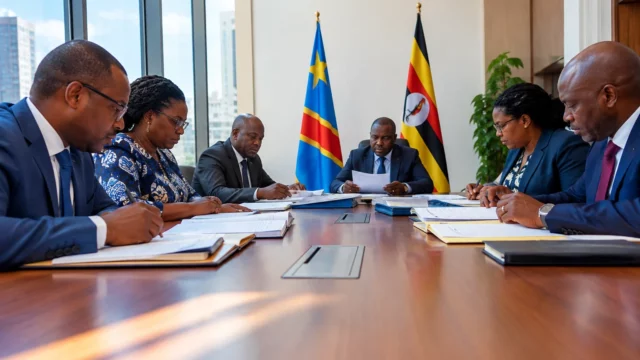
Congolese Agriculture Minister Muhindo Nzangi has rejected the idea of a breakdown in cooperation. He referred to a « misinterpretation » and said the Ugandan army continued to operate alongside the FARDC, including in Lubero and other sectors. The two accounts therefore describe the scope of the announced departure differently: a transfer of security for Kampala, an operational adjustment according to Kinshasa.
Military cooperation becomes a diplomatic issue
The joint Shujaa operation between the two countries was launched on 30 November 2021 against the ADF. Since then, the Congolese and Ugandan armies have conducted operations in eastern DRC. In January 2025, the UPDF, the Ugandan army, extended its deployment to Lubero amid fighting and the advance of the M23, an armed group backed by Rwanda, according to United Nations reports. The proximity of the fronts has made it harder to discern the role of each foreign force.
A 2025 report by the UN Group of Experts highlights this ambiguity. It says additional Ugandan deployments in North Kivu and Ituri exceeded the troop numbers and areas previously agreed officially with Kinshasa. The report also notes that the proximity of Ugandan soldiers to AFC/M23 positions raised questions about Kampala’s objectives. These findings do not prove that the Lubero withdrawal is linked to coordination with the M23; they do, however, shed light on the mistrust surrounding any foreign military presence.
Tensions have increased following public statements by General Muhoozi Kainerugaba, the head of the Ugandan army and son of President Yoweri Museveni. Kinshasa summoned a Ugandan diplomat to seek an explanation after remarks concerning, among other places, Walikale. In this climate, a military announcement can be interpreted as a political gesture, even if the two governments do not attach the same meaning to it.
Civilian security remains the decisive issue
The handover to the FARDC will not be judged solely by the number of soldiers leaving Lubero. It will also depend on the Congolese forces’ ability to hold the positions, protect residents and prevent the ADF from returning. Rural areas, where travel is difficult and attacks can isolate communities, are likely to feel any decline in military presence sooner than administrative centres.
In a separate statement, the UPDF accused militias it says are close to Kinshasa of targeting civilians, particularly in Hema and Tutsi communities. These are accusations made by the Ugandan army; the available information does not independently substantiate them. They should therefore not be presented as a confirmed account. Fighting reported in Ituri between Congolese forces and the Convention for the Popular Revolution (CRP), a group associated with Thomas Lubanga, nevertheless adds another source of instability on the north-eastern border.
For residents, the tangible risk lies in the proliferation of armed actors and confusion over their mandates. If the Congolese army assumes sole responsibility for security in Lubero, it will have to coordinate its operations with local authorities and prevent armed groups allied with the government from taking the place of regular forces. The UN report has already documented Kinshasa’s use of Wazalendo groups, militias fighting the M23 among others, and called for stronger oversight of the forces and their allies.
A test for the balance of power in the Great Lakes
The DRC and Uganda are both members of the East African Community (EAC), a regional framework for economic and political cooperation. The DRC is also part of the Southern African Development Community (SADC), which is involved in regional security discussions. These memberships provide channels for dialogue, but do not by themselves resolve disagreements over military operations, armed groups and border controls.
The announced withdrawal should therefore be monitored on two fronts: the effective handover of positions to the FARDC and whether Ugandan operations continue elsewhere in the east. It will also be important to watch whether Kinshasa and Kampala publicly agree on Shujaa’s mandate and on civilian protection. Without clarification, a local troop movement could fuel further suspicion between neighbours at a time when fighting in North Kivu and Ituri is already stretching the Congolese state’s resources.
In Lubero, the issue is not simply which flag will remain over the military positions. It is whether the handover reduces risks for residents without creating a security vacuum or sparking a new dispute between Kinshasa and Kampala.