Algeria
 Egypt
 Libya
 Morocco
 Sudan
 Tunisia
 Benin
 Burkina Faso
 Cabo Verde
 Côte d'Ivoire
 Ghana
 Guinea
 Guinea-Bissau
 Liberia
 Mali
 Mauritania
 Niger
 Nigeria
 Senegal
 Sierra Leone
 The Gambia
 Togo
 Cameroon
 Central African Republic
 Chad
 DR Congo
 Equatorial Guinea
 Gabon
 Republic of the Congo
 São Tomé and Príncipe
 Burundi
 Comoros
 Djibouti
 Eritrea
 Ethiopia
 Kenya
 Madagascar
 Malawi
 Mauritius
 Mozambique
 Rwanda
 Seychelles
 Somalia
 South Sudan
 Tanzania
 Uganda
 Angola
 Botswana
 Eswatini
 Lesotho
 Namibia
 Zambia
 Zimbabwe
When Kampala looks to Pretoria for answers
In Uganda, the issue is not just training more teachers. They also need help to assess and correct pupils’ work more effectively, and to help them progress in the classroom. This is where part of the quality of schooling is determined, far more than in speeches about curricula.
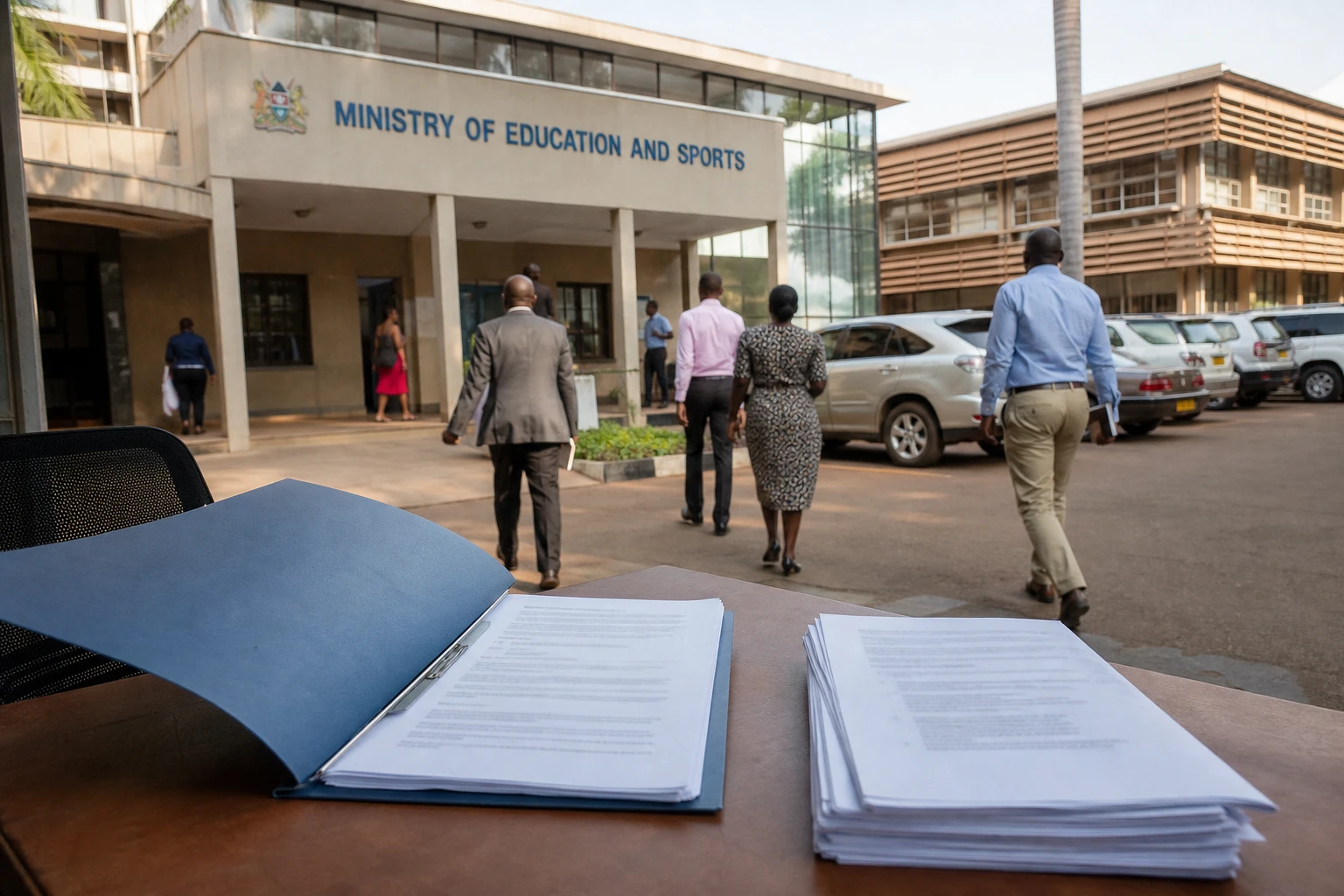
Against this backdrop, Kampala is looking to Pretoria. A delegation of 24 officials from Uganda’s Ministry of Education travelled to South Africa to observe a training method considered useful to the ongoing reform. The choice is telling: this is a South-South exchange between two African education systems facing large classes, strong social expectations and the need to improve learning without copying outside models.
A training reform that goes beyond national borders
The visit took place at the Soshanguve South campus of Tshwane University of Technology in Pretoria. There, Professor Anil Kanjee presented a four-year initial teacher training programme. It combines formative assessment, summative assessment and the practical use of these tools in the classroom.
In other words, trainee teachers do not just learn how to grade. They learn to observe progress, provide targeted feedback and adapt their teaching. This approach is described as rare on the continent, not because it is exotic, but because it directly links the measurement of learning outcomes to improvements in teaching.
Ugandan Under-Secretary Julius Tayebwa defended the trip to South Africa with a simple argument: African challenges call for African solutions. Uganda’s Ministry of Education is currently revising its curriculum policies and assessment methods. Looking to Pretoria for comparison therefore allows the national reform to be assessed against a neighbouring country’s experience, in an institutional setting closer to realities on the ground than some imported solutions.
What the figures say about Uganda’s education system
The need for reform has not come out of nowhere. The Baseline Education Census 2025 by the Uganda Bureau of Statistics shows that the country’s public primary schools are under considerable pressure from pupil numbers. The census puts the national pupil-teacher ratio in primary schools at 34 to one, with wide variations across areas and grades. In some localities, the ratio is much higher, making it harder to monitor individual children.
This is central. When a class is too large, teachers spend less time marking work, explaining things differently and spotting early difficulties. Classroom assessment then becomes mechanical. It loses its role in supporting learning and is reduced to a simple test.
The challenge is even greater at continental level. UNESCO estimates that sub-Saharan Africa will need an additional 15 million teachers by 2030. The shortage is not only about recruitment. It also affects initial training, support for new teachers, retention in the profession and the quality of assessment tools.
The African Union’s new Continental Education Strategy for Africa, CESA 26-35, puts teachers at the heart of its priorities. The document stresses recruitment, continuing professional development, the appeal of the profession and stronger school leadership. Cooperation between Uganda and South Africa is therefore part of a broader trend: several African countries are now seeking to build regional reference points rather than depend on expertise from further afield.
Why Pretoria is becoming a regional point of support
South Africa has a rare advantage here: an established institutional track record in teacher training and assessment policies. The South African Ministry of Education considers its reforms to have made the country a point of reference for other African education systems. Discussions are under way to formalise this cooperation through a memorandum of understanding between Tshwane University of Technology and the two ministries involved.
If the agreement goes ahead, it could cover teacher training and inclusive education. This is a sensitive issue. In African education systems, reforms are often designed for the average classroom. But realities are more diverse: overcrowded urban schools, isolated rural schools, children with learning difficulties, pupils with disabilities and novice teachers left to manage on their own. An effective policy must be able to address all these cases without losing its impact.
For the authorities, the stakes are political. For teachers, they are professional. For families, they are very tangible: the question is whether public schools can genuinely help children make progress. In a capital such as Kampala, as in more remote districts, the promise is the same: a classroom where learning is easier to track, a better-equipped teacher and closer monitoring of pupils’ progress.
This cooperation also says something about East Africa as a whole. At a time when the East African Community is pursuing a range of harmonisation initiatives, education remains a decisive area, but one often dealt with country by country. Yet the exchange of practices between African states can speed up reforms without eroding national sovereignty.
A development to watch closely
The Ugandan visit to South Africa is therefore not just a study tour. It signals a deeper shift: African ministries are no longer content to import models. They are seeking evidence, methods and results from their neighbours. This is an important change in the way education policies are conceived on the continent.
What happens next will depend on how the meeting is translated into institutional action. If the proposed memorandum goes ahead, it will provide a framework for more lasting exchanges on teacher training and inclusive education. Otherwise, the visit will remain one more good idea. The challenge now is to make this cooperation a measurable tool for reform, serving Uganda’s schools and, more broadly, Africa’s educational ambitions.