Algeria
 Egypt
 Libya
 Morocco
 Sudan
 Tunisia
 Benin
 Burkina Faso
 Cabo Verde
 Côte d'Ivoire
 Ghana
 Guinea
 Guinea-Bissau
 Liberia
 Mali
 Mauritania
 Niger
 Nigeria
 Senegal
 Sierra Leone
 The Gambia
 Togo
 Cameroon
 Central African Republic
 Chad
 DR Congo
 Equatorial Guinea
 Gabon
 Republic of the Congo
 São Tomé and Príncipe
 Burundi
 Comoros
 Djibouti
 Eritrea
 Ethiopia
 Kenya
 Madagascar
 Malawi
 Mauritius
 Mozambique
 Rwanda
 Seychelles
 Somalia
 South Sudan
 Tanzania
 Angola
 Botswana
 Eswatini
 Lesotho
 Namibia
 South Africa
 Zambia
 Zimbabwe
A local vote with much broader stakes
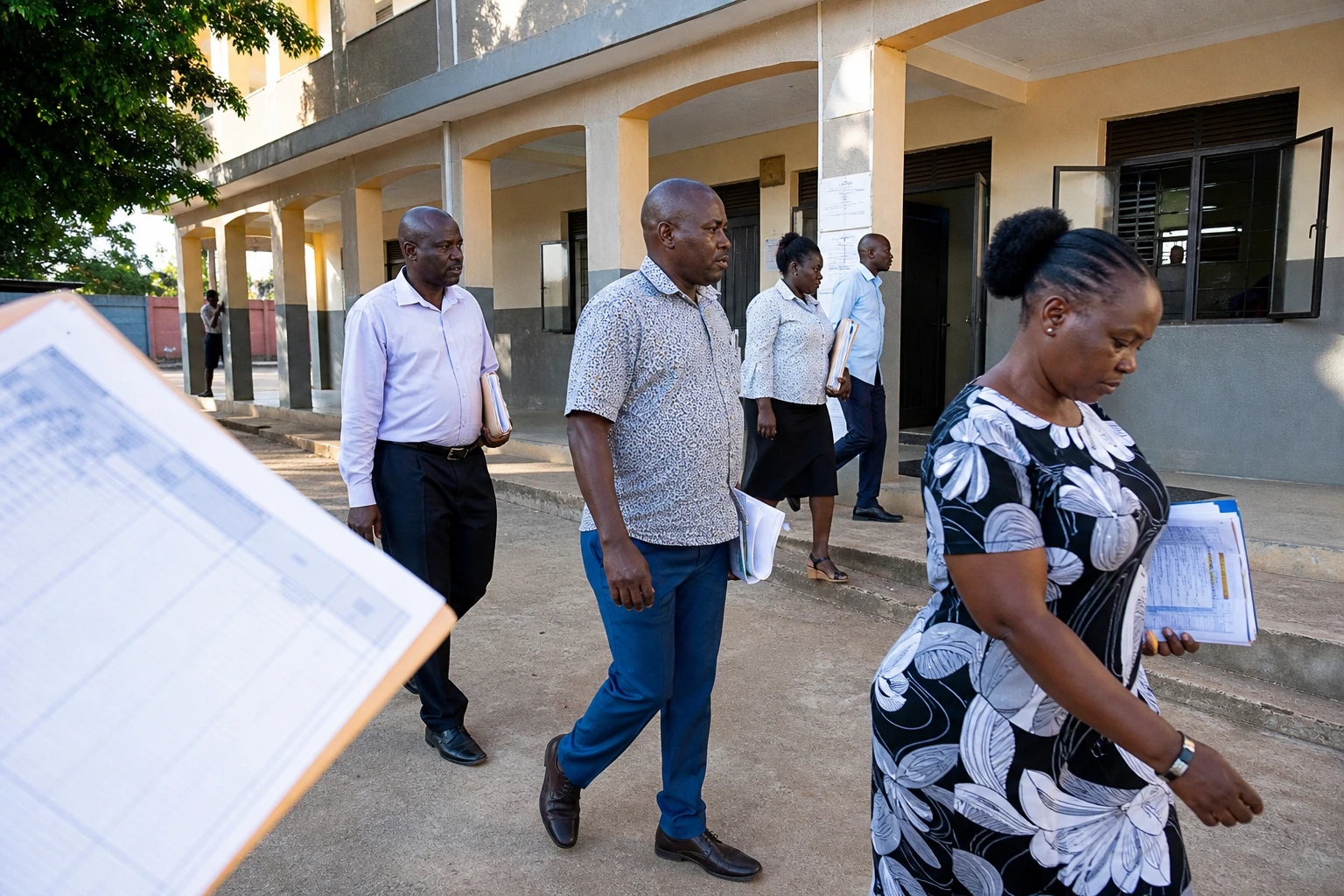
In many Ugandan villages, power is not first seen in Kampala, but in less visible structures. This is where neighbourly disputes are settled, administrative decisions are relayed and political presence on the ground is built, stone by stone. The parish elections, held on Monday 10 August 2026, do more than change names on a local board: they also offer an indication of the parties’ real strength among residents.
This level of governance corresponds to LC II, the parish administrative council. In Uganda, the local government system is organised by the Constitution around districts and administrative units established by law. The parish in rural areas, and the ward in urban areas, serve as links between the village and the next tier of government. This structure is not merely symbolic: it shapes access to the state in a country where local administration remains an essential channel for day-to-day governance.
What parish councils actually do
Ugandan law assigns parish and village committees practical responsibilities. They help maintain order, relay public decisions, monitor projects and serve as a channel of communication between the authorities and the population. In practice, they also deal with straightforward disputes, such as disagreements over plot boundaries, before a case is referred to higher levels. It is this mediating role, little seen from the capital, that explains their importance.
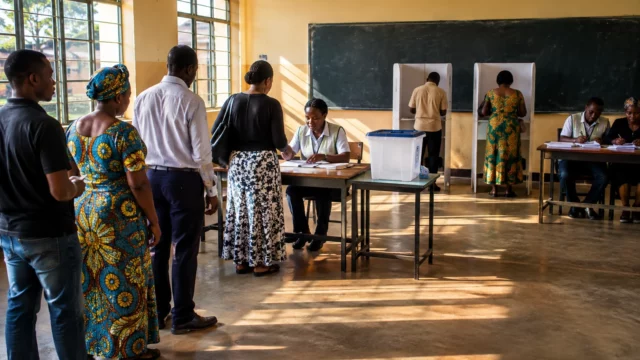
The 10 August vote is, however, unusual. It is not a direct election open to all residents. The Electoral Commission has said that parish chairpersons are chosen by an electoral college made up of village officials who have already been elected. In other words, voters in this second-tier local poll themselves come from the first level. This mechanism makes the vote less visible, but heightens its political character.
The Ugandan Electoral Commission set 10 August 2026 as the voting date for LC II, following the village poll on 28 July. The institution also said national results were due to be published by the end of the week. At the same time, it set out a precise timetable for women’s councils, a sign that the renewal of local structures is part of a broader electoral cycle.
The party battle behind the ballot
Officially, the local election is open to registered parties. In practice, however, the balance of power has already been shaped by the village vote, where candidates sometimes line up physically behind their chosen option. This is an old method, easy to organise but often criticised for its limited ability to guarantee the secrecy of the vote. Parish-level candidates therefore start out with a substantial political legacy already in place.
The National Resistance Movement, the party of President Yoweri Museveni, has a clear advantage. Ugandan media have reported in recent months on the party’s systematic mobilisation in villages and parishes, precisely where local coalitions are built. This strategy is no minor matter. It relies on grassroots structures that also serve to promote government programmes, such as the Parish Development Model, designed to channel development at parish level.
The system reinforces this advantage. When village councils are predominantly aligned with the NRM, the electoral colleges formed from them tend to reproduce the same political colour at parish level. This is less a shift than a chain of continuity. Competition exists, but it starts from an uneven footing, with stronger networks, resources and activist presence on the side of the ruling party.
This dynamic also sheds light on Uganda’s recent political trajectory. In the January 2026 general elections, the NRM retained strong national dominance, according to official results and international media reports. The August local vote should therefore not be seen as an isolated episode, but as an extension of the same process of consolidation.
What this means for Kampala, the EAC and the near future
For residents, the stakes are first and foremost practical. A clearly identified parish council can speed up the resolution of a dispute, relay a complaint or monitor a local construction project. Conversely, when these structures are little known, they can operate without genuine citizen oversight. This is where part of the gap between the state and everyday life is played out. In towns, this relationship often runs through wards; in the countryside, it remains more directly tied to plots, secondary roads and nearby public projects.
For the central government, the test is as political as it is administrative. Uganda is a member of the East African Community, where several states are relying on decentralisation to bring basic services closer to the population. But decentralisation only works if its local tiers are credible, transparent and genuinely competitive. When the same networks successively control villages, parishes and then higher levels, participation remains formal while the political hierarchy reproduces itself.
The next immediate step will therefore lie less in speeches than in the publication of results and the Electoral Commission’s ability to limit disputes. After tensions during the village vote in late July, the Commission’s report of no major incidents by midday counted as a sign of relative calm. But the real indicator will lie elsewhere: in the level of contestation, the final make-up of the councils, and the way these locally elected officials do—or do not—connect Uganda’s population with Kampala.