Algeria
 Egypt
 Libya
 Morocco
 Sudan
 Tunisia
 Benin
 Burkina Faso
 Cabo Verde
 Côte d'Ivoire
 Ghana
 Guinea
 Guinea-Bissau
 Liberia
 Mali
 Mauritania
 Niger
 Nigeria
 Senegal
 Sierra Leone
 The Gambia
 Togo
 Cameroon
 Central African Republic
 Chad
 DR Congo
 Equatorial Guinea
 Gabon
 Republic of the Congo
 São Tomé and Príncipe
 Burundi
 Comoros
 Djibouti
 Eritrea
 Ethiopia
 Kenya
 Madagascar
 Malawi
 Mauritius
 Mozambique
 Rwanda
 Seychelles
 Somalia
 South Sudan
 Tanzania
 Angola
 Botswana
 Eswatini
 Lesotho
 Namibia
 South Africa
 Zambia
 Zimbabwe
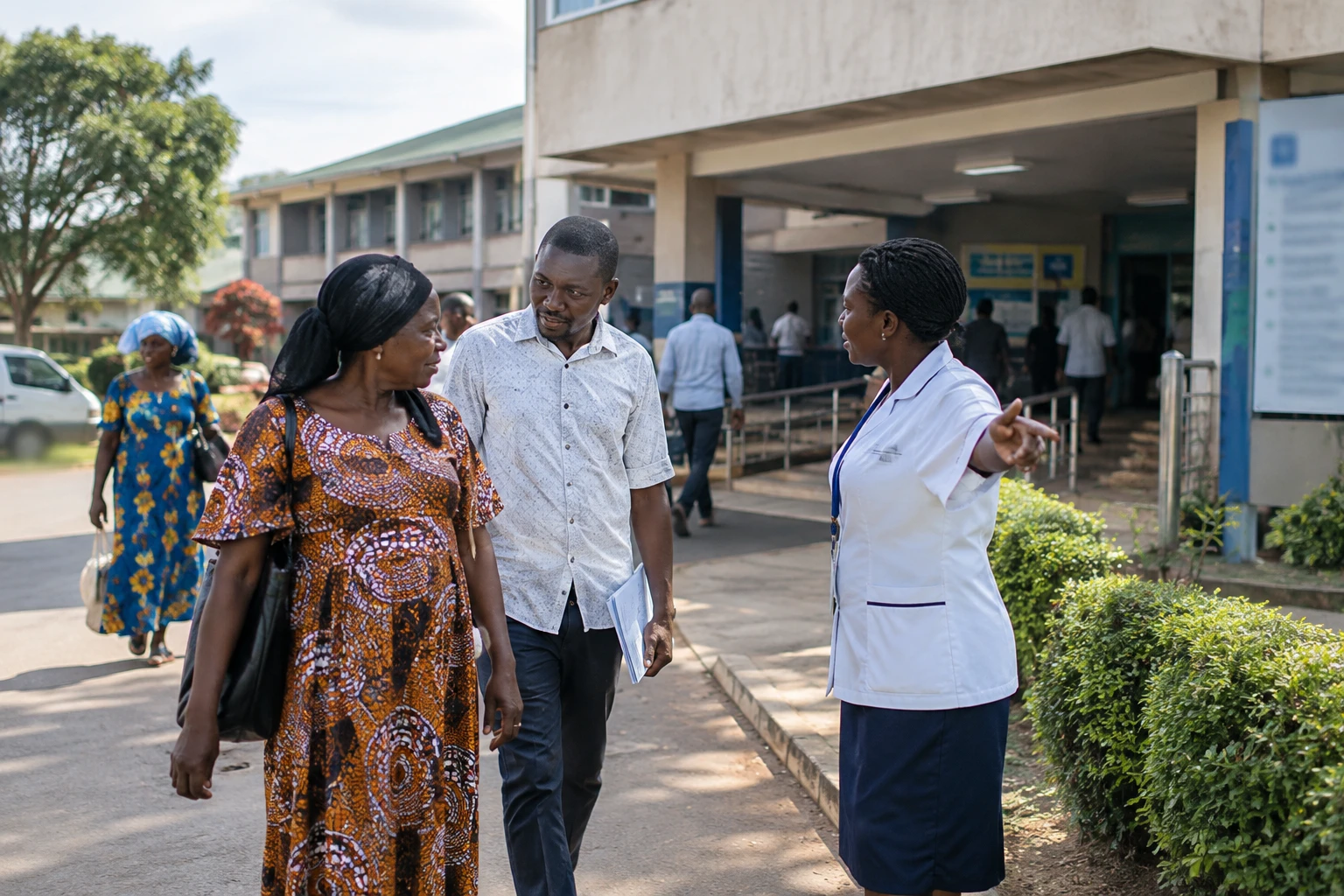
For a family in western Uganda, a specialist appointment in Kampala can mean hours on the road, transport costs and sometimes accommodation. A proposed oncology centre in Mbarara aims to bring tests and treatment closer to patients. But the project still depends on a loan subject to parliamentary scrutiny.
A proposal under review, not yet secured funding
The Ugandan government is seeking authorisation to borrow €31.98 million from France to build and equip the regional centre in Mbarara, in the country’s south-west. The proposal was presented to parliament on 29 September 2026 and then referred to committees for review. On 14 October, State Minister for Health Charles Ayume was still defending the project before MPs. These steps do not, in themselves, amount to final approval or disbursement.
The total announced cost is €33.58 million. The French loan would cover most of it, while the Ugandan state would contribute €1.6 million and pay related expenses, including taxes and administrative support. The terms presented are a 25-year maturity, a 10-year repayment grace period and an annual interest rate of 0.347%. They remain the terms of the proposal submitted to Uganda’s institutions.
The proposed site is on the Kihumuro campus of Mbarara University of Science and Technology, less than five kilometres from the regional referral hospital. Construction would include inpatient wards, clinical rooms and imaging facilities, including a CT scanner. The financing would also cover medical equipment, furniture, and design and supervision services.
Decentralising care from Kampala
The centre is intended to address a geographical imbalance: specialist care remains heavily concentrated in Kampala, home to the Uganda Cancer Institute (UCI), the national referral institute based at Mulago. Patients from distant districts often have to bear the cost of travel and of an accompanying person. For lower-income households, these costs can make it harder to access diagnosis and maintain continuity of care.
Figures provided by the authorities illustrate the pressure on the institute. In 2025, the UCI reportedly recorded 8,764 new patients, more than 67,043 outpatient clinic days and 90,732 inpatient days. Its bed occupancy rate reportedly exceeded 200%. Uganda’s Ministry of Finance also says the number of new cancer cases has more than doubled since 2015. These figures are attributed to the authorities: they describe the institute’s activity, but do not, by themselves, constitute a comprehensive count of needs across the country.
The announced strategy extends beyond Mbarara. The government plans a network of regional centres in Mbarara, Gulu, Arua and Mbale. According to projections presented by the authorities, their operation could raise the share of the population with access to cancer care from 24% to about 85%. This estimate is a target, not an outcome already observed. It will depend in particular on the completion of the centres, the availability of staff and equipment, and the capacity to provide treatment over time.
The loan must translate into accessible services
Building a facility is not enough to decentralise oncology. A centre needs specialists, medicines, reliable power and functioning supply chains. It must also organise the pathway from screening and diagnosis to treatment and follow-up. Without these resources, patients could still have to travel to Kampala for a substantial part of their care.
The proximity of the regional referral hospital and the university could make medical referrals and links with training easier. However, publicly available documents do not yet establish the full construction timetable, the number of professionals to be recruited or the annual operating costs. These factors will shape patients’ real access, both in the city and in rural districts in the west.
The financial question also matters. At the end of June 2025, Uganda’s public debt stood at $32.33 billion, or 51.3% of gross domestic product, according to the Ministry of Finance’s bulletin. The ministry and Ugandan daily Daily Monitor reported figures that were in line with one another. The proposed loan carries a low interest rate and a grace period, but it is still public borrowing: its health benefits will need to be weighed against its total cost, implementation and the spending required to operate the centre.
A regional issue too
For western Uganda, Mbarara could become a link between district hospitals and the national institute in Kampala. The expected impact will depend on coordination between these facilities and clear rules for referring patients. The network is also being followed in a regional context: Uganda is a member of the East African Community (EAC), which brings together several neighbouring countries and promotes co-operation on cross-border issues, including health.
The next immediate step is parliamentary: MPs must examine the loan terms and the state’s commitments before any approval. After that, the decisive indicators will be concrete: the start and completion of construction, equipment installed, staff available and patients actually treated outside Kampala. The project’s impact will be measured at that level, beyond the announced amount.