Algeria
 Egypt
 Libya
 Morocco
 Sudan
 Tunisia
 Benin
 Burkina Faso
 Cabo Verde
 Côte d'Ivoire
 Ghana
 Guinea
 Guinea-Bissau
 Liberia
 Mali
 Mauritania
 Niger
 Nigeria
 Senegal
 Sierra Leone
 The Gambia
 Togo
 Cameroon
 Central African Republic
 Chad
 DR Congo
 Equatorial Guinea
 Gabon
 Republic of the Congo
 São Tomé and Príncipe
 Burundi
 Comoros
 Djibouti
 Eritrea
 Ethiopia
 Kenya
 Madagascar
 Malawi
 Mauritius
 Mozambique
 Rwanda
 Seychelles
 Somalia
 South Sudan
 Tanzania
 Angola
 Botswana
 Eswatini
 Lesotho
 Namibia
 South Africa
 Zambia
 Zimbabwe
The loss of a cultural monarchy unsettles a broader symbolic balance
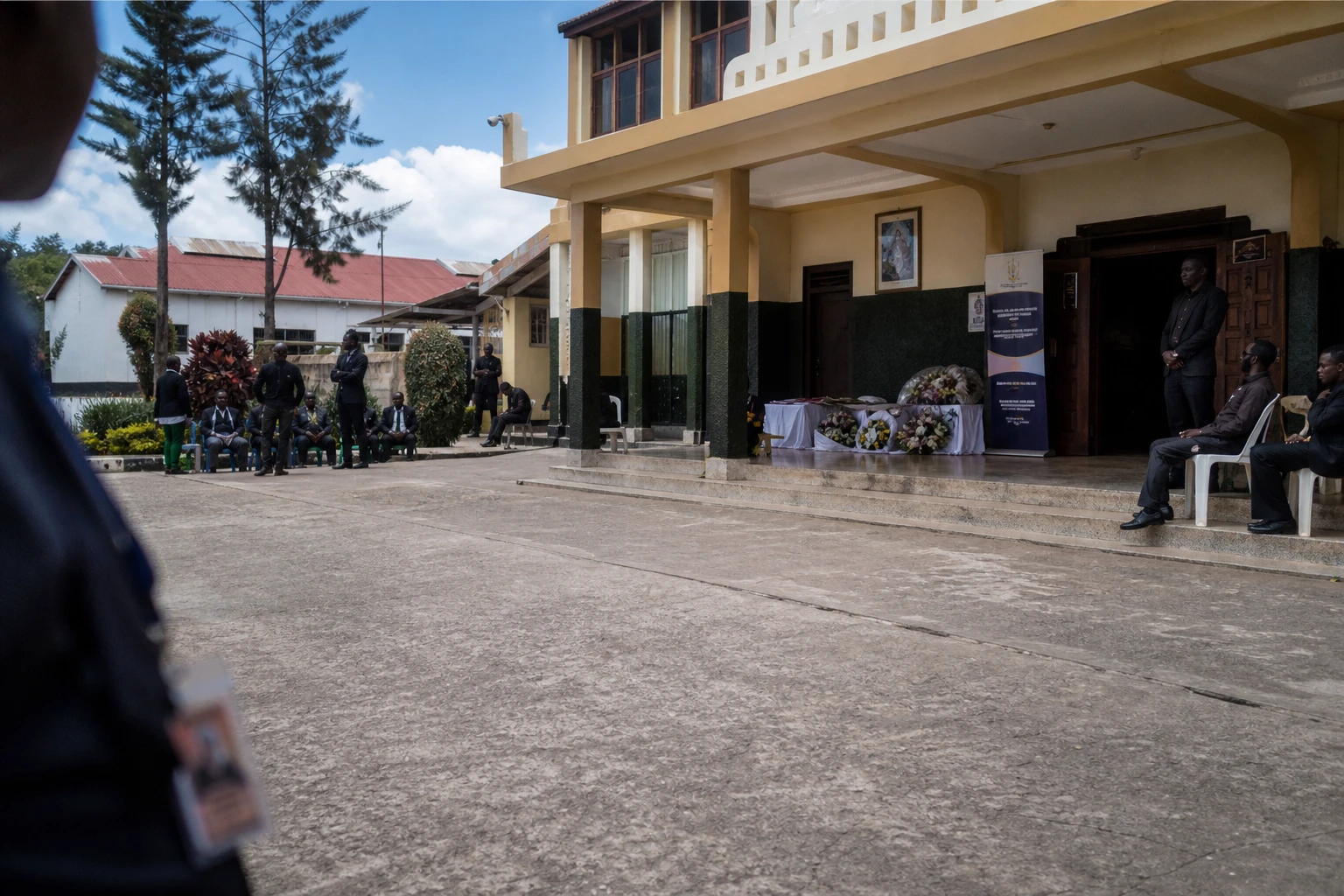
In Fort Portal, grief is visible not only on people’s faces. It also points to something broader: in Uganda, traditional institutions remain touchstones of memory, identity and moral authority, even without executive power. The death of Oyo Nyimba Kabamba Iguru Rukidi IV, King of Tooro, has brought this reality back into focus in a country where the republic coexists with cultural kingdoms recognised by the Constitution.
The Kingdom of Tooro, whose historic seat is in Fort Portal and whose Karuzika Palace is one of its most visible symbols, holds a special place in western Uganda. Its reach extends beyond the royal court: the Tooro Sub-Region comprises several districts and is home to more than 3.3 million people, according to the 2024 census, giving any royal occasion genuine social resonance far beyond matters of protocol.
The facts: a solemn return, organised mourning and a succession to clarify
On 4 September 2026, the sovereign’s body arrived at Entebbe International Airport. President Yoweri Museveni came to receive the coffin, before it was taken to Kyegegwa and then Fort Portal for the funeral rites. The kingdom began a nine-day period of mourning, and the burial was set for 12 September 2026 at the royal tombs in Karambi, Fort Portal. The date also marks the 31st anniversary of the king’s coronation.
Oyo died on 27 August 2026 in the United States, aged 34, while receiving treatment for a cancer described as aggressive by Uganda’s head of state. The government says it helped fund his treatment, first in Germany and then in the United States. Kingdom authorities have confirmed that the young heir to the throne will be presented later, putting dynastic continuity at the centre of the transition.
The funeral procession’s journey says much about Tooro’s place in the national imagination. Preparations around Karuziika and Karambi have brought together the kingdom, the royal family and public services, including an engineering brigade of the Ugandan army to repair access routes. The government has also declared three days of national mourning.
The influence of a king without political power
Uganda’s Constitution recognises traditional or cultural leaders but prohibits them from exercising administrative, legislative or executive powers. In practice, this puts the King of Tooro in a distinctive position: he does not govern the state, but embodies a historical, social and ritual continuity that matters in Ugandan public life. That status explains President Museveni’s presence at the funeral and the attention paid by parliament and several other kingdoms.
Oyo had a remarkable story. Born on 16 April 1992, he ascended the throne at the age of three, in 1995, after his father’s death. Guinness World Records long described him as the world’s youngest reigning monarch. Often reduced to a curiosity, the record spoke to a deeper reality: a reign that began under regency, continued through childhood and was taken up in adulthood in a country undergoing institutional change.
As he grew older, the king took an interest in issues beyond palace ceremonies: youth, health, the environment and social cohesion. In a region where population growth puts significant pressure on schools, roads, health centres and land, this kind of royal presence retains practical value. Today’s mourning therefore touches on family memory, cultural heritage and a space for local mediation between the state and communities.
What Oyo’s death means for Uganda and East Africa
Oyo’s death opens a delicate period for Tooro. The kingdom must reconcile customary practices, the expectations of clans and signals from the central government, while avoiding tensions over succession. Museveni has stressed the continuity of the dynasty, but the kingdom’s first responsibility is to ensure a clear transition for its subjects, as the funeral rites also serve to reaffirm the symbolic order.
Nationally, the event is a reminder that Uganda’s cultural monarchies are not relics. They continue to shape a sense of belonging, sometimes mobilise communities, and complement public action in areas such as tourism, civic education and the stewardship of memory. In Uganda, this coexistence between the republic and traditional institutions remains a lasting political compromise, enshrined in the Constitution and in everyday practice.
Regionally, Tooro also looks towards East Africa. Uganda is a member of the East African Community, an integration bloc in which national capitals, border towns and local identities remain closely connected. In this context, the death of a cultural sovereign known far beyond Fort Portal has a quiet diplomatic significance: it is a reminder that sources of authority in East Africa are not limited to states, but also include royal houses, chieftaincies and institutions of memory. The next occasion will therefore be as much ritual as political: the burial on 12 September, which will close a long era that began in 1995.