Algeria
 Egypt
 Libya
 Morocco
 Sudan
 Benin
 Burkina Faso
 Cabo Verde
 Côte d'Ivoire
 Ghana
 Guinea
 Guinea-Bissau
 Liberia
 Mali
 Mauritania
 Niger
 Nigeria
 Senegal
 Sierra Leone
 The Gambia
 Togo
 Cameroon
 Central African Republic
 Chad
 DR Congo
 Equatorial Guinea
 Gabon
 Republic of the Congo
 São Tomé and Príncipe
 Burundi
 Comoros
 Djibouti
 Eritrea
 Ethiopia
 Kenya
 Madagascar
 Malawi
 Mauritius
 Mozambique
 Rwanda
 Seychelles
 Somalia
 South Sudan
 Tanzania
 Uganda
 Angola
 Botswana
 Eswatini
 Lesotho
 Namibia
 South Africa
 Zambia
 Zimbabwe
When heat surges, the risk is no longer theoretical
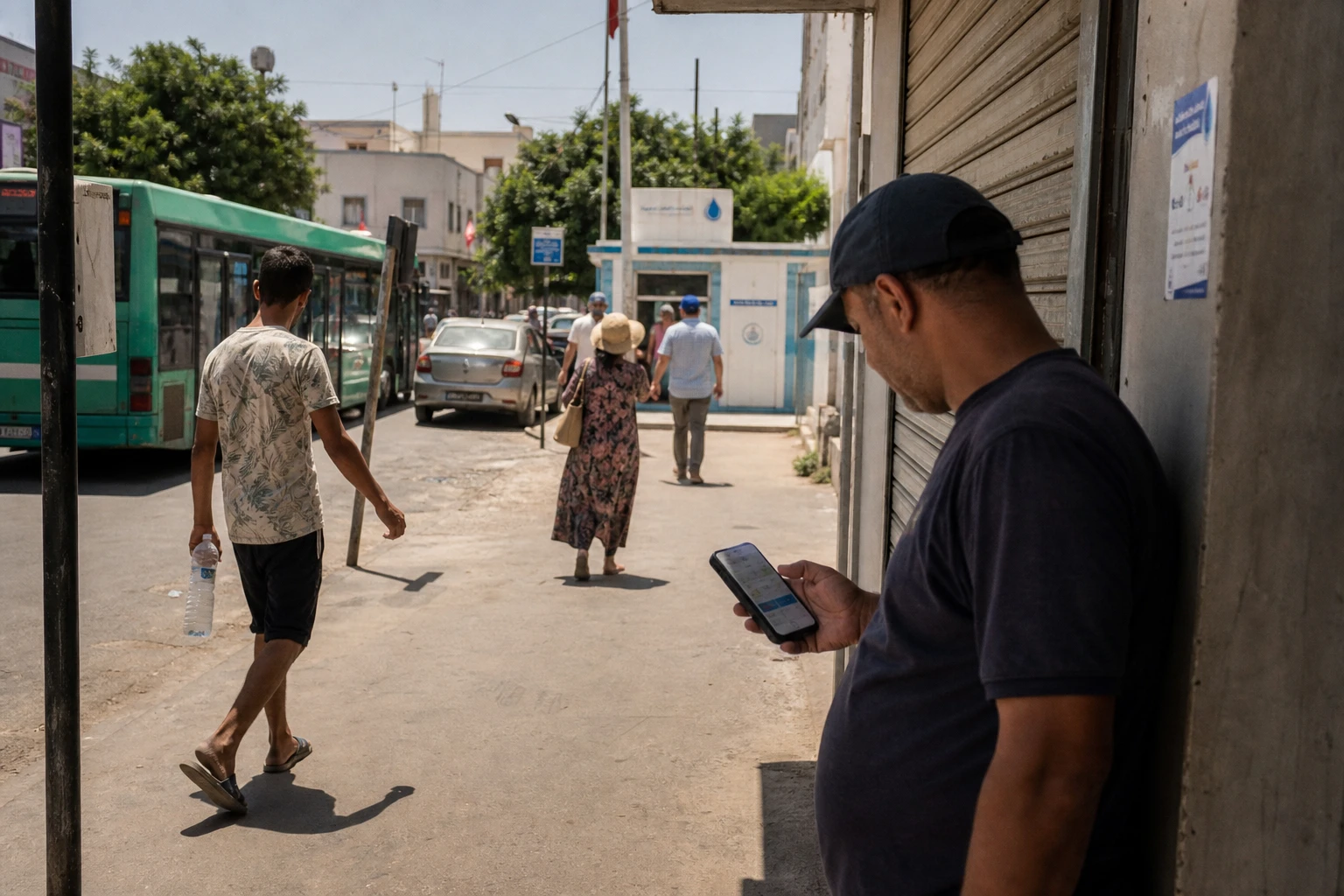
In Tunisia, the heatwave did more than send temperatures soaring. It also stretched emergency services, forests and villages in the north-west to their limits. In a country where summer is already a season of heightened vigilance, the July 2026 episode showed how rising temperatures can turn an entire region into an alert zone, from Tunis to the mountains of Kef.
Such episodes do not affect only major cities. They weigh first on rural areas, forest edges, farms and municipalities with few material resources to prevent fires from breaking out. In Tunisia, this reality is part of a climate trend already documented by meteorological services and national planning documents, which point to hotter summers and more frequent extreme events.
Fires brought under control, but one front remains open
Between 20 and 22 July, Tunisian emergency services recorded 900 fire outbreaks in 72 hours, according to a senior Civil Protection official quoted by AFP and reported by several media outlets. Most of the fires were brought under control. Two major fires nevertheless remained active, including one in the Kef region, at Sakiet Sidi Youssef, in the country’s north-west.
On the ground, the response involved heavy equipment. At Sakiet Sidi Youssef and on Mount Takrouna, Civil Protection teams deployed water tankers, forestry vehicles and a water-bomber aircraft. Tunisian authorities also requested outside assistance: one Italian aircraft and two Algerian aircraft took part in firefighting operations, a sign that the scale of the episode exceeded ordinary response capacity.
At the same time, the National Institute of Meteorology placed much of the country on high alert. Twenty of the 24 governorates were affected on 20 and 21 July, and the institute then maintained its alert for the heatwave and sirocco winds, hot, dry winds that further desiccate already weakened vegetation. On Tuesday, temperatures ranged from 40 °C to 49 °C across the regions, 8 to 14 degrees above seasonal norms.
Burnt forests, pressure on water, impossible trade-offs
Forestry figures give an indication of the season’s scale. According to the General Directorate of Forests, about 4,400 hectares of forest land burned between 1 May and 23 July 2026, compared with 2,705 hectares over the same period in 2025. The contrast is stark. It cannot be attributed to a single factor, but to a dangerous combination: extreme heat, local drought, wind and, according to the authorities, probably negligence or criminal acts.
This assessment matters because it changes the public response. If fires are caused solely by climate conditions, the urgent response is mainly meteorological. If they are also fuelled by carelessness, poorly controlled burns or deliberate acts, prevention becomes as much a matter for the police as for agriculture and forestry services. In the mountainous regions of the north-west, every fire threatens vegetation cover, grazing land, water resources and the incomes of families already dependent on a fragile rural economy.
The political leadership has itself recognised the seriousness of the situation. On 22 July in Carthage, the Tunisian presidency brought together several ministers and the heads of STEG and SONEDE, the state-owned electricity and water companies. The meeting addressed both power cuts and fires. The message is clear: the heatwave is not only affecting the environment; it is also putting essential infrastructure under strain, as households already feel the combined effects of heat, outages and pressure on ageing networks.
Tunisia, a testing ground for a harsher Mediterranean summer
The situation in Tunisia extends beyond its borders. Across the Mediterranean, extreme heat episodes are becoming longer, more intense and more costly to manage. Tunisia has also identified the rise in heatwaves, drought and flooding as a long-term trend in its recent climate documents. The country is therefore not starting from scratch: it has weather alerts, coordination between the National Institute of Meteorology and Civil Protection, and forecasting tools already in place, but their effectiveness depends on resources and how quickly teams can respond on the ground.
This episode also has significance for Africa. Across the continent, the question is no longer whether states need to adapt, but how quickly they can do so. North African countries face growing pressure on water, forests, agriculture and public health. Tunisia shows this particularly clearly: a heatwave is enough to bring several emergencies together at once, from civil protection to water supply and the protection of natural areas.
One immediate point remains under watch: the progress of the fires still active in Kef, any fall in temperatures and wind speeds, and the final tally of land destroyed. The issue is not simply how many hectares have been lost. It is also whether alert systems, coordination and firefighting capacity can keep pace with a climate that is already accelerating.