Algeria
 Egypt
 Libya
 Morocco
 Sudan
 Benin
 Burkina Faso
 Cabo Verde
 Côte d'Ivoire
 Ghana
 Guinea
 Guinea-Bissau
 Liberia
 Mali
 Mauritania
 Niger
 Nigeria
 Senegal
 Sierra Leone
 The Gambia
 Togo
 Cameroon
 Central African Republic
 Chad
 DR Congo
 Equatorial Guinea
 Gabon
 Republic of the Congo
 São Tomé and Príncipe
 Burundi
 Comoros
 Djibouti
 Eritrea
 Ethiopia
 Kenya
 Madagascar
 Malawi
 Mauritius
 Mozambique
 Rwanda
 Seychelles
 Somalia
 South Sudan
 Tanzania
 Uganda
 Angola
 Botswana
 Eswatini
 Lesotho
 Namibia
 South Africa
 Zambia
 Zimbabwe
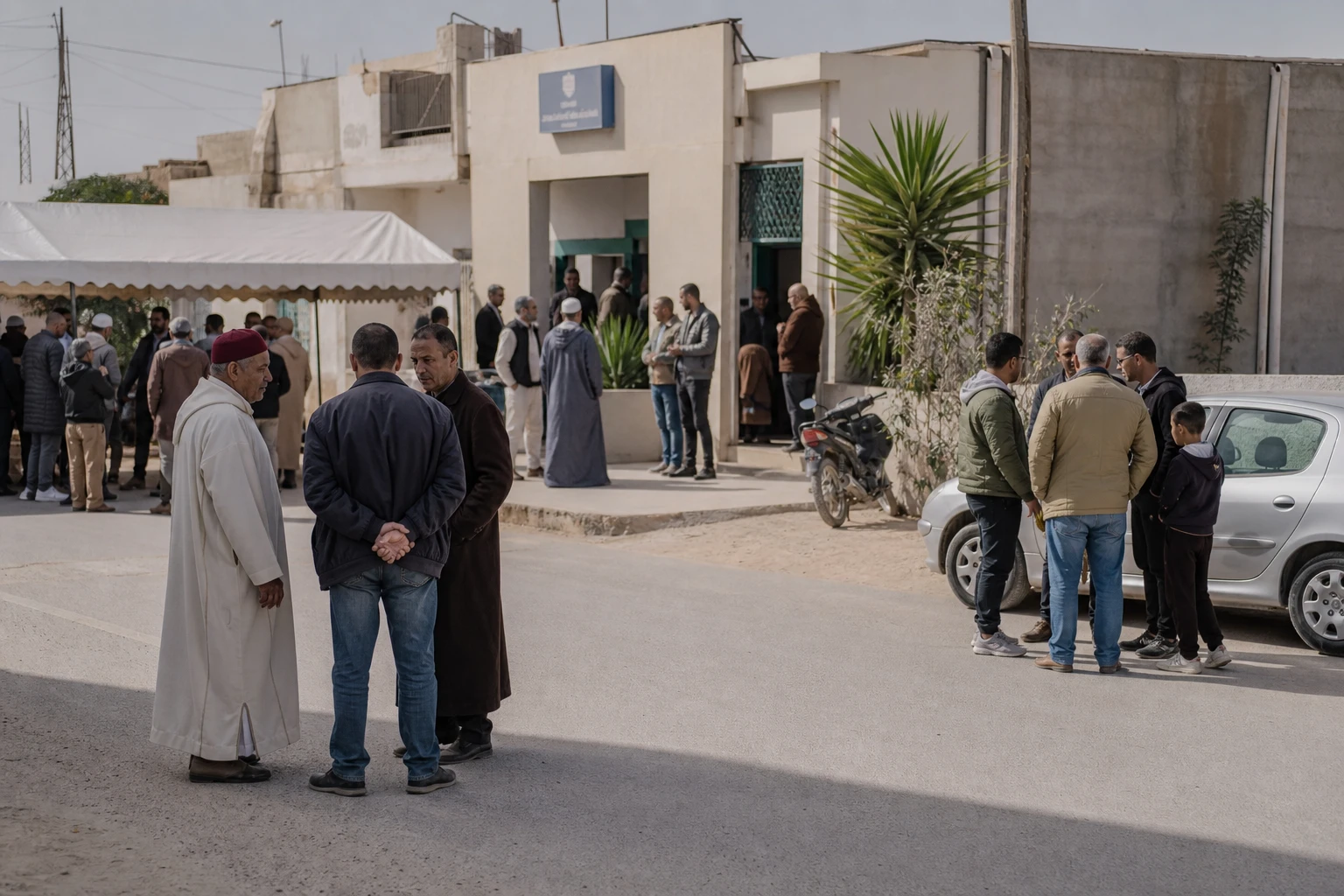
In Ben Gardane, mourning also reflects a fragile border
In southern Tunisia, the sea does not merely separate two shores. At times, it becomes the riskiest way out for young people who see no future in their town, even though it remains a busy crossroads with Libya. In Ben Gardane, the tragedy took a very concrete form: eight coffins, a shared grief, and a community once again reckoning with the human cost of irregular departures.
Ben Gardane, in the governorate of Médenine, lies near the Libyan border and has for years lived to the rhythm of cross-border trade, disruptions at the Ras Jedir crossing and attempts to revive legal commerce. The town sits at the intersection of several forces: the movement of goods, informal employment, migration pressure and an increased presence of authorities at the edges of Tunisian territory.
What we know about the shipwreck
Searches after a boat carrying irregular migrants sank off the coasts of Zarzis and Ben Guerdane led to the rescue of one survivor. According to the Directorate General of the National Guard, the survivor said the boat was carrying 15 people, including 13 from Ben Guerdane and one from Zarzis. Maritime units, supported by a helicopter, continued search operations after the national rescue plan was activated.
On Wednesday 26 August 2026, eight of the young victims were buried in Ben Gardane, at Sidi Khelif cemetery, amid grief that swept through the whole town. According to the Tunisian press, the tragedy claimed the lives of several young people who had set out by sea in search of a better future. The essential fact remains unchanged: the crossing ended in tragedy, and families had to receive bodies instead of news.
One of the deadliest migration routes
The Tunisian shipwreck occurred along a well-documented migration corridor. The International Organization for Migration says the Central Mediterranean route remains the deadliest in the world among routes to Europe, with more than 26,500 deaths and disappearances recorded along this route, which links North Africa to Italy among other places, since 2014. The organisation also notes that deaths and disappearances remain undercounted, as many incidents are never reported.
For Tunisia, this reality is evident on two levels. First, the country has become a place of departure, transit and control, where clandestine departures remain frequent despite increased coastal patrols. Second, the Ben Gardane–Ras Jedir axis remains a vital economic outlet to Libya. When cross-border trade slows, the local economy contracts. When it picks up again, its benefits are not shared equally. Young people in particular remain exposed to insecurity and the appeal of migrant smuggling networks.
The tragedy also brings to mind a point often overlooked in outside assessments of migration from Tunisia: this is not simply a route between Africa and Europe. It is a deeply local phenomenon, rooted in border areas where informal incomes, intermittent crossing closures, partial reopenings and promises of economic integration meet without always creating stable jobs.
What this grief reveals about Tunisia and the region
The shipwreck’s significance extends beyond Ben Gardane. It touches on border governance in North Africa, cooperation with Libya and, more broadly, the management of movement on the southern shore of the Mediterranean. Tunisia recently announced plans to prepare a continental trade corridor from Ras Jedir towards sub-Saharan Africa, as part of an economic integration strategy and a drive for African connectivity endorsed by the authorities. But this ambition coexists with a harsher reality: as long as opportunities remain unequal, the sea will continue to swallow up individual journeys that the local economy cannot hold on to.
For families, the immediate tasks are to bury the dead, find the missing and understand the circumstances of the departure. For the Tunisian state, the challenge is twofold: rescue, then prevent. The maritime authorities launched search operations, opened a judicial investigation and mobilised air and naval resources. But prevention is not limited to policing the coast. It also means jobs, public services, legal mobility and stabilising border areas such as Ben Gardane, where young people often find themselves at the intersection of several forms of vulnerability.
The message sent across the continent is clear. Migration routes in the Mediterranean basin cannot be reduced to figures or deterrence rhetoric. They tell of income gaps, peripheral economies, border tensions and choices made to survive. In North Africa, as elsewhere on the continent, every shipwreck confirms that migration is first and foremost a question of protection, movement and local development. And Tunisia, by virtue of its position between the Maghreb, the Mediterranean and the Sahelian-Libyan region, bears a visible part of that burden.