Algeria
 Egypt
 Libya
 Morocco
 Sudan
 Tunisia
 Benin
 Burkina Faso
 Cabo Verde
 Côte d'Ivoire
 Ghana
 Guinea
 Guinea-Bissau
 Liberia
 Mali
 Mauritania
 Niger
 Nigeria
 Senegal
 Sierra Leone
 The Gambia
 Togo
 Cameroon
 Central African Republic
 Chad
 Equatorial Guinea
 Gabon
 Republic of the Congo
 São Tomé and Príncipe
 Burundi
 Comoros
 Djibouti
 Eritrea
 Ethiopia
 Kenya
 Madagascar
 Malawi
 Mauritius
 Mozambique
 Rwanda
 Seychelles
 Somalia
 South Sudan
 Tanzania
 Uganda
 Angola
 Botswana
 Eswatini
 Lesotho
 Namibia
 South Africa
 Zambia
 Zimbabwe
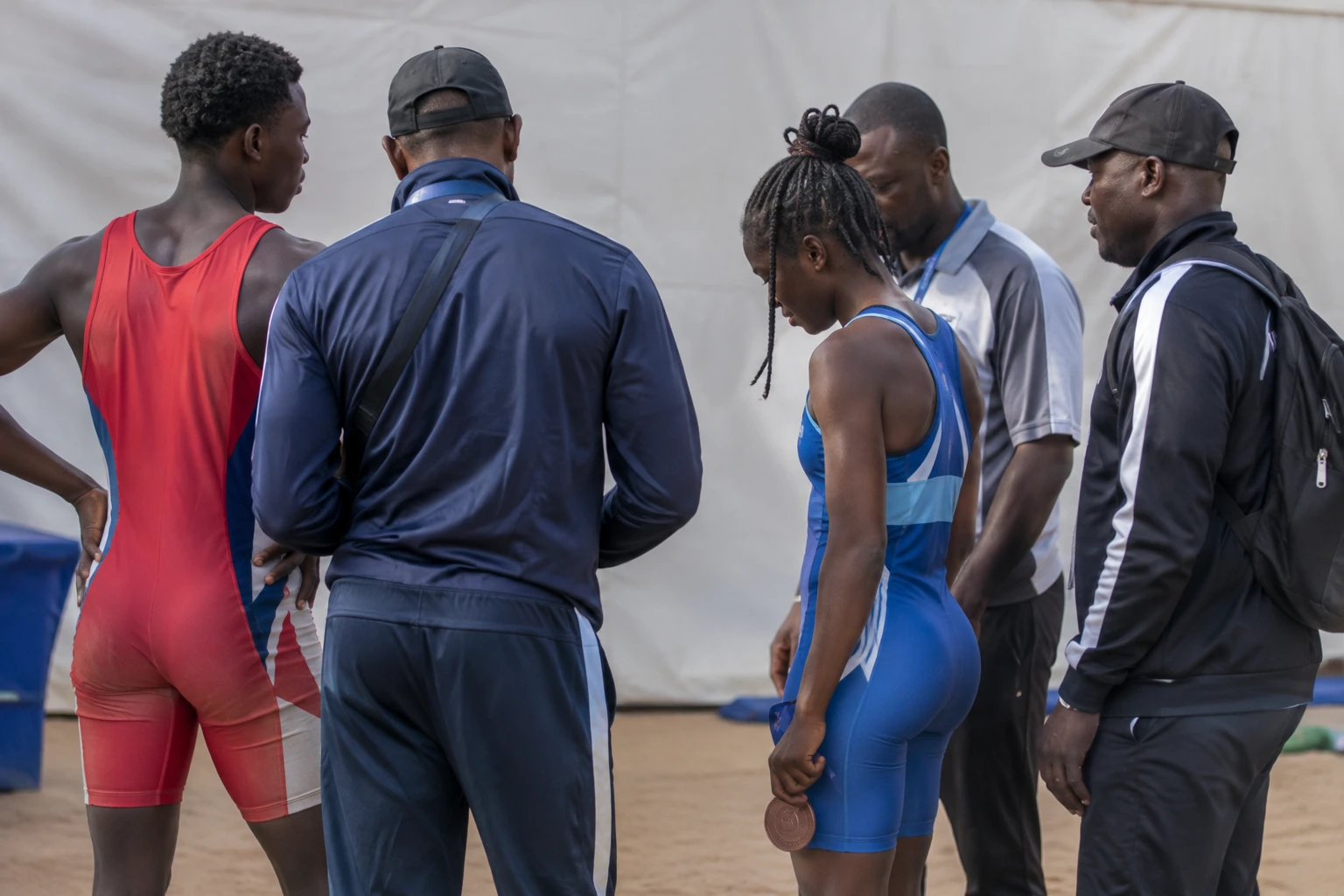
In Dakar, a bronze medal gave the Democratic Republic of the Congo its first podium finish at the Youth Olympic Games (YOG). For Stéphanie Tsimba Manzanza, the reward came on the sand, at the end of a day of wrestling. For the Congolese delegation, it also marks a milestone in a competition in which nine young athletes represented the country.
A Congolese podium finish at a historic edition
The YOG are taking place from 31 October to 13 November 2026. Dakar, Diamniadio and Saly are hosting events at this first Olympic event to be held on the African continent. Senegal’s selection gives these Games particular significance: Africa is not only represented by its athletes, it is also hosting the event and organising the competitions.
The Democratic Republic of the Congo entered nine athletes in several disciplines, including athletics, cycling, judo, swimming, fencing, taekwondo, beach volleyball and wrestling. The Congolese Press Agency (ACP) reported the composition of the delegation in September. The YOG bring together athletes aged 14 to 17: they are an international youth competition, distinct from the senior Olympic Games.
This distinction matters. The Congolese Ministry of Sports presented Tsimba Manzanza’s result as the country’s first Olympic medal. More precisely, cross-checked information establishes that it is the DRC’s first medal at this edition of the YOG. The result should therefore not be confused with an overall record across all Olympic competitions.
Five bouts on the way to bronze
The Ministry of Sports says the wrestler contested five bouts. She won three in the group stage before losing in the semi-final to a Japanese opponent. She then won the bronze-medal bout against a representative of Azerbaijan. Congolese media place the medal on Saturday 7 November, in the women’s under-55kg category.
The account of her progress and the opponent in the bronze-medal bout is reported by separate Congolese sources: the Ministry of Sports and the outlet Studio Hirondelle RDC. The athlete’s name appears in different forms across publications — Stéphanie Tsimba Manzanza, Stéphanie Nsimba or Stephie Tsimba. The available reports do not clearly establish the origin of these variations. The full name used by the ministry is used here.
Beach wrestling is practised on a sand surface and adapts wrestling bouts to a circular area. The discipline brings new visibility to athletes who often compete far from major sporting facilities. But the medal alone says nothing about the wrestler’s training conditions or the resources mobilised by her federation.
Beyond the result, the question of continued support
For an athlete of this age, a podium finish can open up prospects: greater recognition, more visible access to sports structures and valuable international experience. These benefits are not automatic, however. They depend in particular on support after the Games, the regularity of competitions and federations’ ability to nurture young talent.
The contrast is significant between a result achieved on the international stage and the less visible work that makes it possible. In Kinshasa, as in other regions of the DRC, sporting pathways differ. Access to coaches, equipment and travel can vary by discipline and location. None of the public information cross-checked in the material consulted makes it possible to measure these disparities in Congolese wrestling. It would therefore be excessive to draw a general assessment of sports funding or access to sport in the country from this medal alone.
The ministry attributes the performance to the federation’s work and government support. This official account underlines the importance of coaching and support, but does not constitute an independent assessment of the resources committed. What happens next will show whether Dakar’s visibility is accompanied by sustained support beyond the ceremony and announcements linked to the Games.
An African showcase, with follow-up still to be confirmed
The Dakar YOG also resonate across the region. The DRC belongs to the Southern African Development Community (SADC), while host country Senegal is in West Africa. The competition thus brings together delegations from different parts of the continent without erasing their distinct sporting realities. For young athletes, the gathering offers a setting for comparison and international experience.
The significance of the result will be measured above all after the Games, which end on 13 November. Whether the athlete remains on a high-performance pathway, the competitions she can take part in and the support provided by Congolese sports officials will be more tangible indicators than the symbolic significance of the bronze alone. In Dakar, Tsimba Manzanza put the DRC on the medal table. The challenge now is to turn this one-off performance into a milestone for the rest of her career and for the next generation of Congolese wrestlers.
Cross-checked sources: DRC Ministry of Sports, Studio Hirondelle RDC, DayNews RDC, Congolese Press Agency and International Olympic Committee.