
 Algeria
 Egypt
 Libya
 Morocco
 Sudan
 Tunisia
 Benin
 Burkina Faso
 Cabo Verde
 Côte d'Ivoire
 Ghana
 Guinea
 Guinea-Bissau
 Liberia
 Mali
 Mauritania
 Niger
 Nigeria
 Senegal
 Sierra Leone
 The Gambia
 Togo
 Cameroon
 Central African Republic
 Chad
 Equatorial Guinea
 Gabon
 Republic of the Congo
 São Tomé and Príncipe
 Burundi
 Comoros
 Djibouti
 Eritrea
 Ethiopia
 Kenya
 Madagascar
 Malawi
 Mauritius
 Mozambique
 Rwanda
 Seychelles
 Somalia
 South Sudan
 Tanzania
 Uganda
 Angola
 Botswana
 Eswatini
 Lesotho
 Namibia
 South Africa
 Zambia
 Zimbabwe
A legal battle that goes beyond the text itself
In Kinshasa, the constitutional debate is no longer confined to lecture halls. It is already weighing on the streets, political parties and the political calendar. In the Democratic Republic of the Congo, the question of a referendum has become a test of trust between institutions and the opposition, in a country where every word about the Constitution is read as a signal of the balance of power.
This issue comes amid a broader context. The DRC has been a member of both the East African Community since 2022 and SADC, giving its internal tensions immediate regional significance. In the Great Lakes region and southern Africa, any tensions over the rules of the institutional game are closely watched, as they can have repercussions for security, trade and diplomatic mediation.
What the Constitution provides, and what the executive is doing
At the heart of the issue is a mechanism provided for in the Congolese Constitution: Article 137 allows the President of the Republic to ask Parliament to reconsider a law or certain of its articles. This second reading cannot be refused, and the text can then be adopted in its original or amended form by an absolute majority in each chamber. It is a standard procedure, but takes on particular significance when it concerns a referendum.
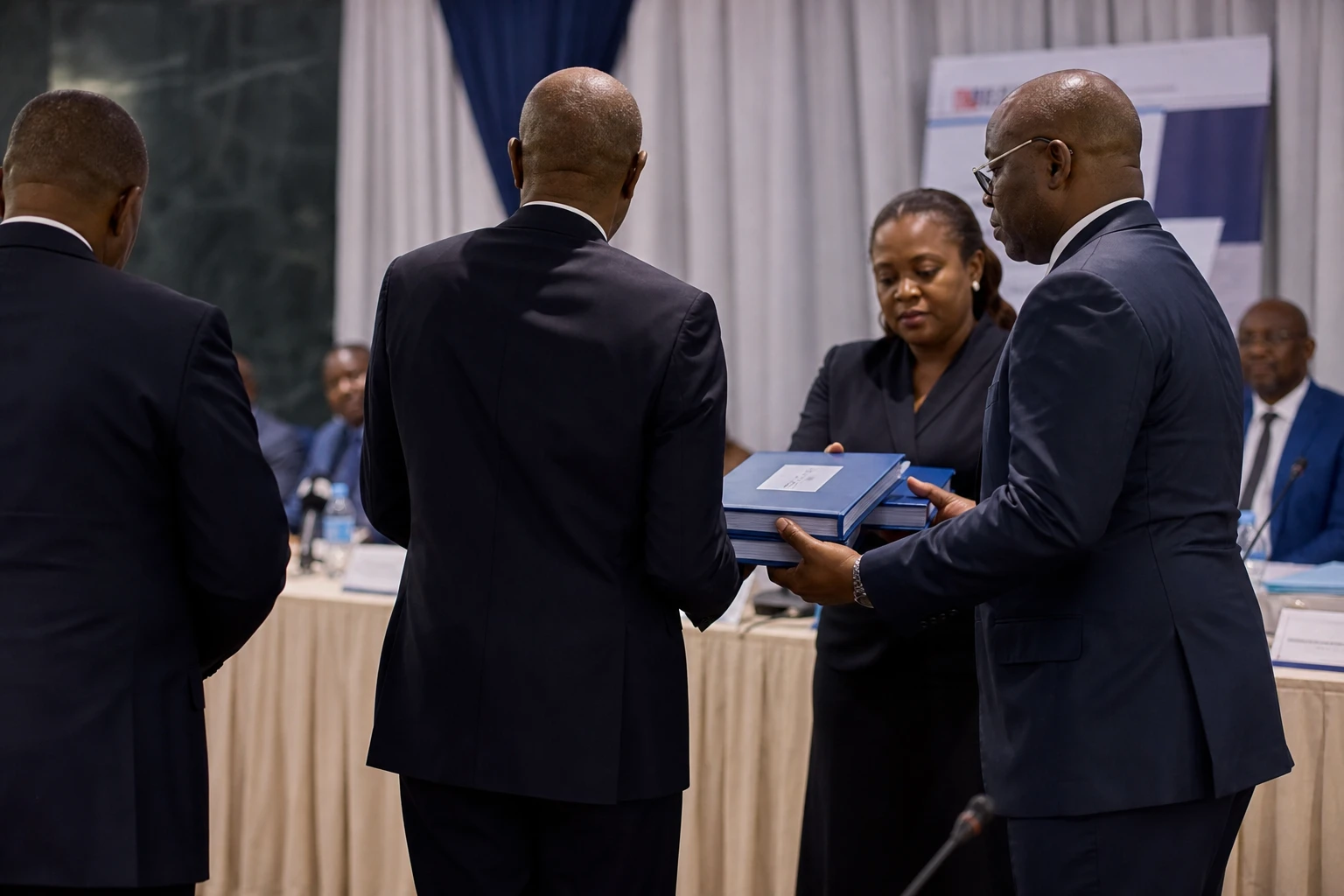
In this context, Félix Tshisekedi referred the matter to Parliament after the Constitutional Court’s ruling of 28 July 2026. The high court declared the law on the organisation of the referendum to be constitutional, while attaching interpretative reservations to 13 articles, according to Radio Okapi and several Congolese media outlets. The National Assembly Bureau then said these observations required the deletion, replacement or rewriting of certain provisions.
The sequence is therefore clear: the text has not been shelved, but sent back to Parliament for correction before possible promulgation. According to information made public by the parliamentary institutions and reported by the Congolese press, this reconsideration is to be placed on the agenda of the September 2026 session. In practice, the issue is moving from constitutional review to a political showdown.
A united opposition faces a majority under scrutiny
For the opposition, the stakes go beyond legislative procedure. The C64 coalition, which includes Martin Fayulu, Moïse Katumbi, Jean-Marc Kabund, Delly Sesanga and Augustin Matata Ponyo, has made any challenge to provisions protecting term limits a red line. The platform rejected the Constitutional Court’s ruling and set a political gathering for 15 August 2026, while calling for an inclusive national dialogue.
This mobilisation comes amid an already tense period. In June 2026, demonstrations against the referendum law turned violent in Kinshasa, according to the Associated Press and Africanews, with clashes between security forces and opponents outside Parliament. Protesters in the east of the country also marched against the prospect of constitutional reform, which they saw as a means of circumventing term limits. The protest is therefore not confined to the capital.
Jean-Marc Kabund, a former deputy leader of the UDPS and now an opposition figure, has taken a harder line, denouncing a “disastrous project” in the referendum law. His message is aimed above all at the long term: he says a text adopted today could tomorrow be used to lock in power for another camp. This reading, political as much as legal, reflects a broader concern within the Congolese opposition: that reforming the framework for referendums could open the door to a new constitutional structure without sufficient national consensus.
What this issue means for the Congolese
For the leaders, the issue is one of institutional procedure. For citizens, it concerns very tangible guarantees: the stability of the electoral calendar, the predictability of terms of office and trust in checks and balances. In the DRC, where political life remains highly centralised in Kinshasa, every debate about the Constitution ultimately translates into concern about governance, the provinces and succession at the top of the state.
The presidential camp, for its part, argues that a referendum can be an expression of popular sovereignty. In its reading of Article 5 of the Constitution, the Constitutional Court also recalled that sovereignty belongs to the people and can be exercised directly through a referendum or indirectly through their representatives, according to Congolese media that analysed the ruling. But this legal argument is not enough to dispel political mistrust, as the opposition suspects the reform is geared more towards the future of executive power than towards a neutral modernisation of the fundamental text.
The impact also extends beyond everyday economic life. In a country where traders, transport operators, civil servants and mining companies already live with the rhythms of internal security and institutional deadlock, a protracted political crisis weighs on confidence, prices and travel. The east of the country, in particular, remains vulnerable to armed insecurity, adding to the sensitivity of any debate about constitutional order and the state’s ability to honour its commitments.
Regional implications of interest to Central and East Africa
The DRC is not acting in isolation. Its membership of both SADC and the East African Community places its institutional debates within a broader arena of political and diplomatic engagement. A referendum, or even the prospect of a change to the Constitution, could therefore affect regional mediation, partners’ perceptions and the balance between neighbouring states.
Across the continent, this issue resonates far beyond Kinshasa. It raises a distinctly African question: how can a Constitution be adapted without creating the impression that the red lines protecting the transfer of power are being shifted? In several countries across the continent, this kind of debate has already crystallised tensions between the principle of popular sovereignty, term limits and trust in institutions. In the DRC, the September 2026 parliamentary session will show whether the text becomes a simple legal adjustment or the starting point of a longer political chapter.



