
 Algeria
 Egypt
 Libya
 Morocco
 Sudan
 Tunisia
 Benin
 Burkina Faso
 Cabo Verde
 Côte d'Ivoire
 Ghana
 Guinea
 Guinea-Bissau
 Liberia
 Mali
 Mauritania
 Niger
 Nigeria
 Senegal
 Sierra Leone
 The Gambia
 Togo
 Cameroon
 Central African Republic
 Chad
 Equatorial Guinea
 Gabon
 Republic of the Congo
 São Tomé and Príncipe
 Burundi
 Comoros
 Djibouti
 Eritrea
 Ethiopia
 Kenya
 Madagascar
 Malawi
 Mauritius
 Mozambique
 Rwanda
 Seychelles
 Somalia
 South Sudan
 Tanzania
 Uganda
 Angola
 Botswana
 Eswatini
 Lesotho
 Namibia
 South Africa
 Zambia
 Zimbabwe
A dialogue designed from the grassroots, not Kinshasa’s salons
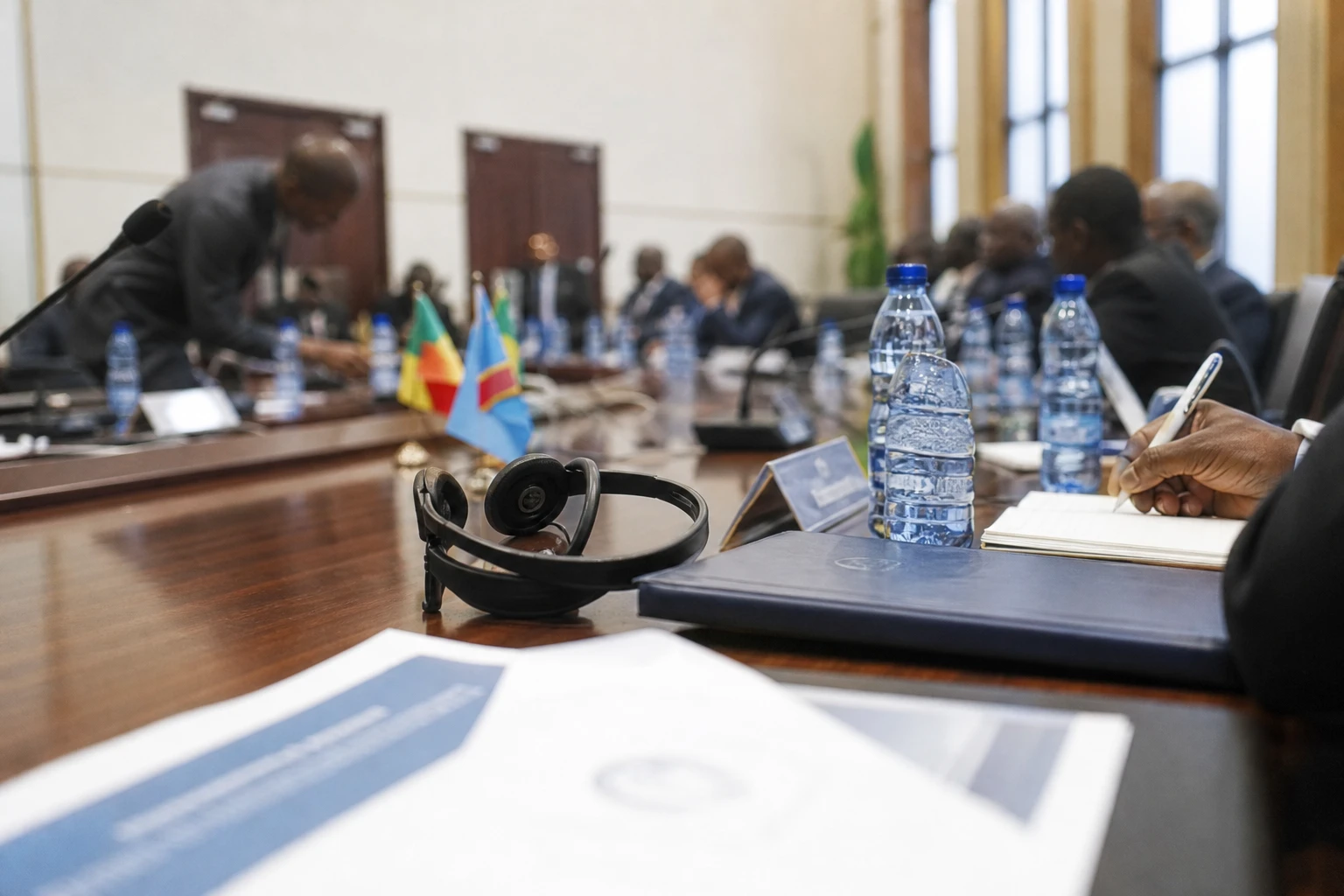
In the Democratic Republic of the Congo, the word “dialogue” never refers simply to a meeting of politicians. It immediately touches on a broader question: how to mend a vast country riven by local tensions, political divisions and a persistent war in the east? On 27 August 2026, Félix Tshisekedi sought to meet that expectation by setting out a precise framework for a “National Dialogue for Peace, Cohesion and the Refoundation of the State”.
The chosen format breaks with conventional consultations. The process is to begin in the 26 provinces before national talks are held in Kinshasa. The presidency describes it as an extensive political and technical consultation involving provincial elected representatives, traditional authorities, religious denominations, governing and opposition parties, as well as economic, academic and professional circles and vulnerable groups.
This choice is not neutral. It reflects the view that Congolese crises cannot be resolved only at the top. They are also felt in provincial capitals, in land disputes, community tensions, administrative delays and the gap between the central state and territories demanding a greater public presence.
What the timetable provides for, and what it excludes
The head of state has set a maximum duration of three months for the entire process. No start date has yet been announced, but an ordinance must first establish an organising committee responsible for administrative and logistical preparations. A second ordinance will formally convene the dialogue and create a preparatory commission tasked with drawing up the road map.
Under its design, the dialogue is to remain open to the country’s political and social diversity, but not to all armed actors. Félix Tshisekedi has set a red line: those still fighting with weapons, occupying areas by force or illegally administering part of the territory will not be able to participate as political components. In the current context, this rule is aimed at AFC/M23, while the Doha framework remains in place for that issue.
The presidency is therefore separating two arenas. On one side is internal dialogue among Congolese. On the other are external processes related to the conflict in the east, notably Doha for discussions with AFC/M23 and Washington for the interstate track with Rwanda. This distinction has already featured in recent diplomatic exchanges on regional security.
The president has also rejected the idea of a general amnesty for war crimes, crimes against humanity, serious sexual violence and other crimes that are not subject to a statute of limitations. He also says the dialogue will not suspend institutions established through elections. The message is clear: consultations must produce political agreements, not usher in a de facto transition.
A political test for the governing camp, opposition and churches
The current phase is above all a contest over method. Opposition figures, including Martin Fayulu, have called for a shorter format and mediation led by religious denominations. Groups close to former president Joseph Kabila, for their part, have called for mediation they consider neutral, with African and UN support. Félix Tshisekedi has chosen a different path: an initiative conducted in the DRC under Congolese leadership.
This disagreement is not merely institutional. It is about trust. In the DRC, national dialogues have often been accused of producing temporary political balances rather than reforms that are followed through. The president says he wants to break with this practice by requiring a public matrix of commitments, an implementation timetable and a national monitoring mechanism.
Religious denominations nevertheless remain central to the process. They will not lead the dialogue alone, but are to take part in the preparatory commission and help build trust. In a country where churches often play a role in social mediation, their presence gives the process useful moral legitimacy, even if it does not resolve the question of how political voices will be shared.
The announced political de-escalation will also be closely watched. Opposition voices are demanding concrete steps: the release of political prisoners, the return of exiles, equitable access to public media and the lifting of certain restrictions. The presidency has not detailed the measures under consideration, but says it wants to create the conditions for Congolese currently on the margins to return to national unity.
The implications extend beyond Kinshasa
The issue’s significance extends beyond the Congolese context. The DRC remains at the centre of a regional knot involving ECCAS, the African Union, Rwanda, Burundi, Uganda and peace mechanisms backed by international partners. The ECCAS Commission worked in Kinshasa as recently as May 2026 on strengthening regional dialogue in Central Africa, evidence that stabilising the DRC remains a subregional concern.
In the east of the country, the war continues to absorb much of the state’s political and budgetary capacity. The Geneva and Doha exchanges in August 2026 show that security issues are advancing along several tracks at once, with Qatar, the United States, the African Union and Switzerland around the table. Kinshasa’s national dialogue is therefore part of an already dense diplomatic landscape, but its task is to produce domestic consensus.
For Congolese institutions, the challenge is twofold. First, they must prevent the consultation from becoming a mere forum for political horse-trading. They must then show that the consolidation of the state can take place without challenging universal suffrage. For the population, particularly in provinces affected by insecurity, the stakes are more concrete: access to administration, security, land, public services and clear rules.
The next three months will show whether this framework generates credible momentum. The points to watch are already clear: the make-up of the organising committee, the procedures for selecting provincial delegates, the substance of the de-escalation measures and how Kinshasa will coordinate this dialogue with Doha and Washington. In the DRC, this is often where the difference between a political promise and an institutional turning point is decided.



