Algeria
 Egypt
 Morocco
 Sudan
 Tunisia
 Benin
 Burkina Faso
 Cabo Verde
 Côte d'Ivoire
 Ghana
 Guinea
 Guinea-Bissau
 Liberia
 Mali
 Mauritania
 Niger
 Nigeria
 Senegal
 Sierra Leone
 The Gambia
 Togo
 Cameroon
 Central African Republic
 Chad
 DR Congo
 Equatorial Guinea
 Gabon
 Republic of the Congo
 São Tomé and Príncipe
 Burundi
 Comoros
 Djibouti
 Eritrea
 Ethiopia
 Kenya
 Madagascar
 Malawi
 Mauritius
 Mozambique
 Rwanda
 Seychelles
 Somalia
 South Sudan
 Tanzania
 Uganda
 Angola
 Botswana
 Eswatini
 Lesotho
 Namibia
 South Africa
 Zambia
 Zimbabwe
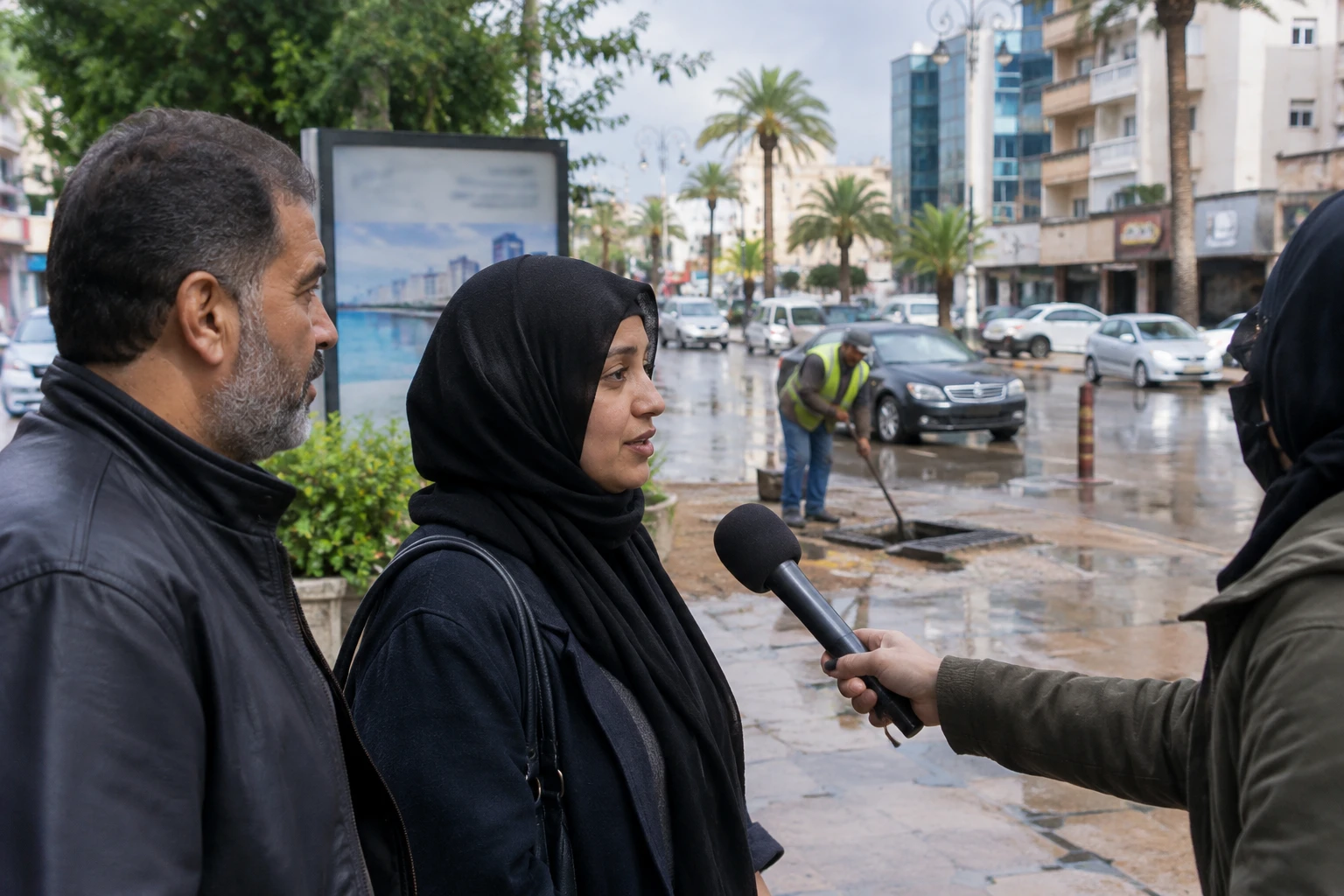
In Tripoli, heavy rain was enough to turn streets into traps: submerged cars, blocked traffic and affected public buildings. The death of a bank employee is a reminder that, in a city, water and electricity can pose an immediate danger. The emergency response matters. But the episode also raises a broader question: can urban networks absorb sudden downpours?
A capital under water, services mobilised
On Tuesday 13 October 2026, heavy rainfall flooded several parts of Tripoli, the capital of Libya. Images shared by local media showed vehicles filled with water and motorists trying to get out. Streets and buildings in the centre were also affected, including the central hospital, where water reportedly entered corridors.
Jumhouria Bank announced the death of one of its employees, who was electrocuted as he arrived at its headquarters. According to the bank, water had submerged electrical cabinets. The death has been reported by the bank and Libyan media; the information available does not provide a broader independent casualty toll. To reduce the risk, the General Electricity Company cut power in some neighbourhoods.
The authorities asked public services to pump out the water. Security forces closed the ring road, while municipal teams pumped water, mud and debris from major roads. The previous evening, the National Meteorological Centre had forecast heavy rain in the north of the country and warned residents living near wadis — often temporary waterways — and in valleys.
Jumhouria Bank also suspended operations at its Tripoli branches as a safety measure, according to the Libyan news agency LANA. The details and duration of the service interruptions had not yet been specified in published reports. LANA’s announcement that the branches had been suspended offers a glimpse of the practical consequences for customers and employees.
Recurring rain puts networks to the test
Flooding is not new to Tripoli. Every summer, local authorities work to clear drains and manholes ahead of the rainy season. Wind-blown sand can block these outlets. Despite this maintenance, streets are regularly inundated when rainfall is heavy.
This is not enough to determine the precise cause of Tuesday’s flooding. It does, however, underline how an intense downpour tests several links at once: drainage, roads, electricity supplies and access to healthcare facilities. When a road is closed, residents and emergency services can also find it harder to get around. The information available does not yet make it possible to assess the extent of the damage or how long the disruption will last.
The effects are not felt equally. An affected hospital must protect its patients and maintain its operations; a power cut is intended to prevent electrocutions, but can also disrupt services. Motorists and workers exposed on the streets face an immediate risk. Shops and their customers, meanwhile, are affected by closures and difficulties getting around.
A local response in a country with fragmented institutions
Libya remains marked by a political divide between rival authorities in the west and east of the country. This fragmentation complicates national coordination, although the teams mobilised in Tripoli in this case are part of local and public services. It makes the ability of municipalities, weather agencies, electricity operators and healthcare facilities to share alerts quickly and coordinate their response all the more important.
The United Nations Support Mission in Libya (UNSMIL) is supporting a political process aimed, among other things, at bringing institutions closer together and preparing for elections. At the end of August 2026, representatives of rival camps signed an agreement on the next political steps. This agenda will not solve a city’s technical problems, but the continuity of public services also depends on cooperation and resources available beyond a single municipality. UNSMIL has outlined the next steps in the political process.
At regional level, Libya is a member of the Arab Maghreb Union (AMU), which brings together the countries of the Maghreb. Severe weather events do not stop at borders, so alerts and the experience of emergency services may be of interest to neighbouring countries. This does not mean that the rainfall in Tripoli affected the entire region: the reported events concern the capital and forecasts for northern Libya. The list of AMU member countries sets out this regional framework.
What to check in the coming days
The first priority is immediate and human: confirm the reports of the death, prevent electrical accidents and restore safe conditions around flooded buildings and roads. The second is to resume services in affected neighbourhoods, particularly access to the hospital and bank branches. The authorities had not yet issued a consolidated damage assessment in the information available.
Finally, this episode calls for scrutiny of how weather alerts are implemented and drainage networks maintained, without confusing an emergency response with a lasting solution. For Tripoli, the issue is not limited to pumping water away after the rain: it also concerns protecting equipment, keeping traffic moving and maintaining services when streets are submerged. These developments, more than the dramatic images, will make it possible to assess the public response.