Algeria
 Egypt
 Libya
 Morocco
 Sudan
 Tunisia
 Benin
 Burkina Faso
 Cabo Verde
 Ghana
 Guinea
 Guinea-Bissau
 Liberia
 Mali
 Mauritania
 Niger
 Nigeria
 Senegal
 Sierra Leone
 The Gambia
 Togo
 Cameroon
 Central African Republic
 Chad
 DR Congo
 Equatorial Guinea
 Gabon
 Republic of the Congo
 São Tomé and Príncipe
 Burundi
 Comoros
 Djibouti
 Eritrea
 Ethiopia
 Kenya
 Madagascar
 Malawi
 Mauritius
 Mozambique
 Rwanda
 Seychelles
 Somalia
 South Sudan
 Tanzania
 Uganda
 Angola
 Botswana
 Eswatini
 Lesotho
 Namibia
 South Africa
 Zambia
 Zimbabwe
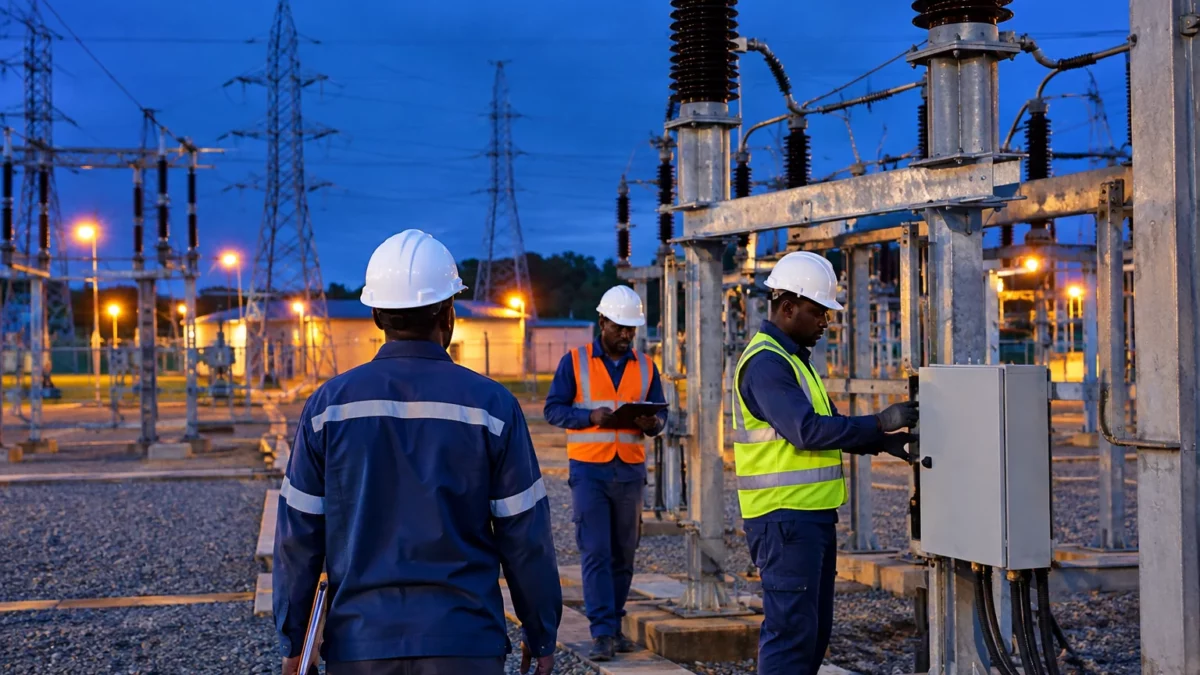
In northern Côte d’Ivoire, the significance of a solar power plant is not measured by its capacity alone. It also lies in its ability to complement an expanding electricity grid and reduce the role of generation that relies heavily on thermal power. At Tongon, the funding is now in place; construction, however, remains subject to the project’s final conditions.
An electricity mix seeking to diversify
The plant is planned for M’Bengué, in the Poro region of northern Côte d’Ivoire. It forms part of a trajectory in which generating capacity has risen sharply, while solar remains under-represented. Data published by the authorities show that in 2024 the country had 3,019 megawatts of installed capacity, including 30 megawatts of solar. This snapshot measures available capacity, not the amount of electricity actually generated during the year.
Côte d’Ivoire’s strategy combines several sources: thermal power plants, hydroelectric dams and renewable energy projects. Solar can help diversify this supply, but it cannot on its own replace the transmission, distribution and balancing infrastructure needed to deliver electricity. This is particularly important outside major urban centres, where access to the grid and the quality of service can vary from one locality to another.
The development of plants in the north is also part of a movement already under way. The Boundiali solar plant, commissioned in stages, paved the way for projects with greater capacity. In October 2026, the authorities launched work on Tongon, following the laying of its foundation stone in M’Bengué on 23 October. Other announced installations in the north show that solar is becoming a more prominent part of national electricity planning.
€42.4 million secured over 18 years
The Tongon financing agreements were signed on Friday 20 November 2026, on the sidelines of the International Exhibition of Extractive and Energy Resources, held in Abidjan. According to the Ivorian Press Agency and the government’s official portal, they cover €42.4 million, or about 27.8 billion CFA francs, over 18 years. The amount covers all the funding sought by the developer.
The financing structure brings together the Emerging Africa Infrastructure Fund, managed by Ninety One, as lead lender and arranger, and DEG, a subsidiary of Germany’s KfW Group, as senior co-lender. A European Union guarantee, backed by the European Fund for Sustainable Development Plus, also supports the deal. It is intended to reduce some of the risk associated with the financing; it does not mean that construction has been completed or that electricity is available.
The project is being developed by Tongon Solaire SAS. The photovoltaic plant is expected to have a capacity of 52 megawatt-peak, a unit that expresses its output under reference sunlight conditions. It is due to come online by mid-2028 at the latest. Before construction can effectively begin, the company must still meet the conditions precedent to financial close, details of which have not been made public.
The benefits will also depend on the grid
The authorities estimate that the installation could help supply electricity to nearly 300,000 people. This figure, announced at the launch, is an estimate of the project’s reach: it does not mean that every person concerned will automatically have an individual connection. The electricity generated will have to be integrated into the grid and then distributed to homes and businesses.
The construction phase is expected to employ about 500 workers at the site, according to official announcements. This figure relates to the construction project and is not a promise of permanent jobs after the plant opens. The company plans to operate the plant for 25 years. For residents of M’Bengué and the Poro region, the tangible impact will therefore depend on local recruitment, the construction timetable and the grid’s ability to carry power beyond the site.
The plant could also help limit dependence on thermal generation, but it would be premature to infer a specific reduction in costs or national emissions. The impact will depend on actual output, its integration into the system and which sources it effectively replaces. The funding secured is an important step; it does not, on its own, resolve questions of grid connection, maintenance and continuity of service.
A regional signal, with milestones to watch
For Côte d’Ivoire, which aims to strengthen its role as an electricity supplier in West Africa, diversifying generation also has a regional dimension. Electricity exchanges between neighbouring countries nevertheless depend on transmission capacity, commercial agreements and coordination between grids. An additional power plant strengthens national potential, without automatically guaranteeing increased exports to ECOWAS member states, the Economic Community of West African States.
The financing structure also highlights the role of private funding and public or multilateral guarantees in energy infrastructure. EAIF, DEG and the European guarantee provide different instruments; their involvement does not remove the need to monitor the developer’s obligations or the project’s local benefits. For the Ivorian authorities, the challenge will be to turn the financing agreement into a completed project and actual generation.
The next milestones are clear: meeting the financing conditions, the construction timetable, connection to the grid and commissioning, announced for mid-2028. These deadlines will show whether Tongon becomes a measurable contribution to Côte d’Ivoire’s electricity system. They will also make it possible to assess the actual share of solar in a generation mix still dominated by thermal and hydroelectric power, beyond the capacity announced.
Sources consulted: Ivorian Press Agency, official Ivorian government portal, Directorate-General for Energy, sectoral data on electricity in Côte d’Ivoire and African Press Agency.